
Key Takeaways
- Make a simple plan for the location, group, equipment, and return time before leaving Huntsville.
- Review the forecast and reassess wind, clouds, heat, and visibility throughout the day.
- Match the outing to the least experienced person in the group.
- Wear properly fitted life jackets, rather than storing them out of reach.
- Respect other swimmers, anglers, paddlers, and boaters sharing the water.
- Turn back early when weather, fatigue, equipment, or traffic creates a concern.
A lake day near Huntsville can be as relaxed as a short paddle close to shore or as active as a full afternoon of boating, fishing, swimming, or towing. The best outings start with a practical plan that leaves room for changing conditions, crowded ramps, and the needs of everyone in the group.
For visitors and residents who want time on the water without handling the logistics of ownership, starting by renting boats in Huntsville can make it easier to choose equipment that suits the group and planned activity. Whether heading toward Lake Guntersville, Wheeler Lake, or another Tennessee Valley destination, preparation helps keep the focus on enjoying the day.
1. Start With a Simple Lake-Day Plan
Write down the essentials before loading the vehicle: where you will launch, when you expect to arrive, who is bringing what, and when you intend to return. Share that plan with a person who is not joining the outing. It gives someone a useful starting point if your group is delayed or unreachable.
- Choose one primary activity instead of trying to do everything in one trip.
- Assign responsibility for transportation, food, safety gear, and communication.
- Build extra time into the schedule for parking, launching, loading, and cleanup.
- Set a return time that does not depend on rushing back after dark.
2. Check Weather and Water Conditions Before Leaving
Weather can change quickly across North Alabama, particularly when wind or thunderstorms develop. Check the forecast the evening before and again immediately before departure. Review local alerts, wind, temperature, and changing conditions on the Huntsville National Weather Service forecast page.
- Look for thunderstorms, strong wind, heat, and reduced visibility.
- Consider whether the forecast fits the group’s experience and equipment.
- Set a time during the outing to check conditions again.
- Head in before dark clouds, rising waves, or lightning become immediate problems.
3. Match the Activity to the Group
A calm shoreline paddle may be appropriate for first-time paddlers, while open-water boating, tubing, or wake activities require more attention, strength, and coordination. Plan for the least experienced participant, not the most confident one. Young children, weak swimmers, people recovering from illness, and anyone uneasy around open water may need a shorter route, closer supervision, or a different activity.
4. Wear the Right Safety Gear
Every person should have a properly sized, serviceable U.S. Coast Guard-approved wearable life jacket available for the activity. Wearing it is the safer choice during paddling, boating, towing, and other situations where a fall or capsize is possible. Pack a whistle, drinking water, sunscreen, a small first-aid kit, dry clothes, towels, and a waterproof case for your phone.
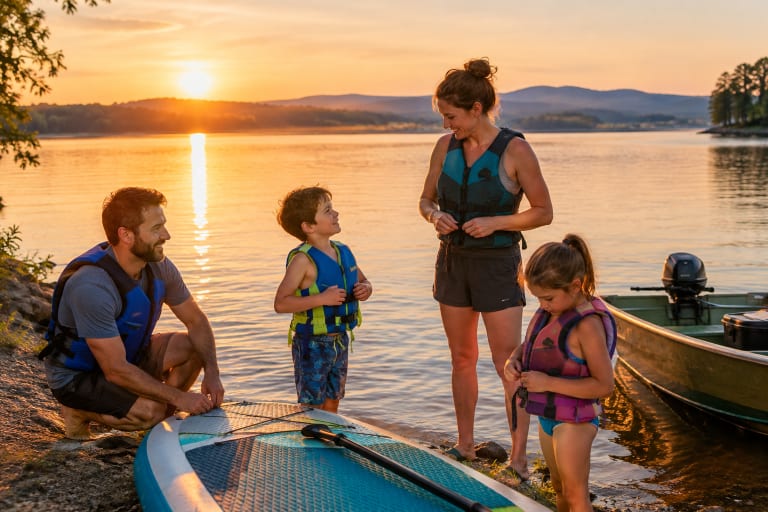
Alabama rules require a wearable personal flotation device for each person aboard or being towed, and children younger than eight must wear a secured approved life jacket while aboard a vessel, with limited enclosed-cabin exceptions. The state’s boating rules and regulations also require people on personal watercraft and those being towed to wear approved wearable flotation devices.
5. Keep Shared Waterways in Mind
Huntsville-area lake trips often put swimmers, fishing boats, paddlecraft, sailboats, motorboats, and personal watercraft in the same general area. Keep a broad view of the water, avoid abrupt turns, and give slower or less maneuverable users plenty of room. Reduce speed near ramps, docks, shorelines, swimmers, and congested areas. Wake and noise can affect people well beyond your boat.
6. Prepare Equipment Before Launching
A quick inspection at home or in the parking area is easier than solving a problem after leaving shore. Check straps, seats, handles, ropes, drains, batteries, fuel, and inflation where applicable. Secure coolers and loose bags so they cannot slide or pose a hazard. If renting or using unfamiliar equipment, ask for a demonstration of the controls, emergency shutoff, and safe loading limits before departure.
7. Plan for Towing, Transport, and Launching
The lake day begins at the driveway and ramp. Inspect trailer tires, lights, tie-downs, and hitch connections before traveling. At a busy launch, prepare the boat and supplies away from the ramp when possible, then move efficiently when it is your turn. Use a second person to guide the driver while reversing, keep children away from moving vehicles, and follow posted parking and access instructions.
8. Set Clear Rules for the Group
A two-minute briefing before leaving shore prevents confusion later. Identify the operator, explain where passengers should sit, and agree on a signal to slow down or return. Tell everyone what to do if someone falls in: stay calm, keep visual contact, alert the operator, and follow the operator’s instructions. Assign an adult to actively supervise children and weaker swimmers rather than assuming someone else is watching.
9. Know When to Turn Back
Ending early is a sound decision, not a spoiled trip. Return toward shore if wind starts pushing the group away from the launch area, waves build, visibility drops, equipment fails, or anyone becomes cold, tired, dizzy, anxious, or distracted. Do not separate the group without a clear plan and reliable communication. Leaving with enough energy to load equipment safely is part of a successful day on the lake.
10. Leave the Area in Better Shape
Before heading back to Huntsville, collect trash, check the shoreline and launch area for forgotten gear, and secure all equipment for transport. Follow local instructions for cleaning, draining, or drying boats and paddling gear. Careful cleanup protects the next visitors’ experience and helps keep public access areas welcoming.
Common Questions About Lake-Day Safety
What should be checked first before a lake trip?
Start with the forecast, access details, group experience, and equipment condition. Those basics determine whether the planned activity is appropriate for the day.
Should life jackets be worn or stored nearby?
They are most useful when worn and properly fitted. A life jacket stored under bags or inside a closed compartment may be difficult to reach during an emergency.
How can beginners feel more comfortable on the water?
Choose calm conditions, stay close to shore, keep the outing short, wear the right safety gear, and avoid putting pressure on yourself to perform. Skills and confidence can grow gradually over several low-stress trips.
Conclusion
A safer lake day in Huntsville, Alabama, comes down to a few repeatable habits: plan ahead, check conditions, use suitable gear, communicate with the group, and respect everyone else on the water. Those choices reduce avoidable stress and leave more time for the reason everyone came to the lake in the first place.