
Table of Contents
- Why Seasonal Tire Changes Matter
- Choosing the Right Tire Type
- When to Change Tires in Toronto
- Pre-Change Tire Inspection
- Seasonal Tire Change Checklist
- Pressure and TPMS Checks
- Off-Season Tire Storage
- Alignment and Balancing
- Common Mistakes to Avoid
- Final Road-Ready Check
Toronto drivers deal with rapid seasonal shifts, from slushy side streets and lake-effect snow to hot pavement and long-weekend highway trips. Planning a tire change in Toronto before the weather turns gives you time to inspect your tires, confirm fitment, and avoid the last-minute rush that often arrives with the first major snowfall.
A seasonal swap is not simply a matter of putting a different set of wheels on the vehicle. It is an opportunity to check the tread, sidewalls, air pressure, wheel condition, and how the vehicle handles, helping you start the next driving season with fewer surprises.
Why Seasonal Tire Changes Matter
Tires are the vehicle’s connection to the road, so their rubber compound, tread pattern, pressure, and condition matter in every season. Toronto roads can move quickly from wet pavement to freezing temperatures, packed snow, salt, potholes, and slush. A tire choice that feels adequate during a mild commute may not provide the same control during a snowy early-morning drive or a highway trip outside the city.
For cold, snowy, or icy conditions, winter tires on all four wheels help maintain more consistent handling and stability. A downtown driver who can delay travel during storms may have different needs than a commuter driving to Mississauga, Markham, or Barrie every day. Still, both should assess real road and weather conditions rather than rely on the calendar alone.
Choosing the Right Tire Type
Start with the tire specifications listed on the driver’s door placard and in the owner’s manual. The correct size, load index, and speed rating are important for safe fitment and vehicle performance.
Common Tire Categories
- Winter tires: Built for low temperatures, snow, ice, and slush. Look for the three-peak mountain snowflake symbol when choosing a winter-specific tire.
- Summer tires: Intended for warm-weather handling and grip. They are not designed for winter road conditions.
- All-season tires: Made for a broad range of everyday conditions, but they may not provide the same winter traction as dedicated winter tires in severe cold or snow.
- All-weather tires: Designed to offer year-round flexibility, with winter capability that can exceed that of many conventional all-season options.
Before buying or reinstalling tires, consider your typical temperatures, how often you encounter snow or ice, how much highway driving you do, whether you tow or carry heavy loads, and the manufacturer’s requirements for your vehicle.
When to Change Tires in Toronto
Seasonal tire changes should follow conditions, not one fixed date. In autumn, watch overnight temperatures and the forecast for recurring cold, snow, or icy roads. Transport Canada notes that all-season and summer tire compounds can lose elasticity below 7°C, while winter tires are designed to remain flexible at lower temperatures.
In spring, wait until sustained warmer conditions arrive before removing winter tires. Driving winter tires through extended warm weather can increase wear because their compounds are designed for cold conditions. Booking early is practical in Toronto, especially before the first major winter weather event and again during the spring changeover.
Simple Seasonal Planning Guide
- Warm weather to cold weather: Review tire type, tread depth, air pressure, sidewall condition, wheel damage, and storage space for the outgoing set.
- Cold weather to warm weather: Check winter tires for road damage and unusual wear, then inspect summer or all-season tires before installation.
Pre-Change Tire Inspection
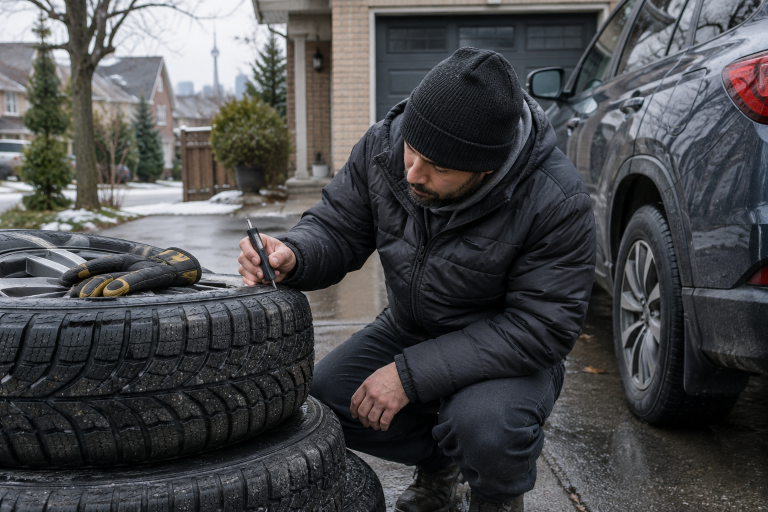
Inspect every tire before it goes back on the vehicle. Look for cuts, cracks, bulges, punctures, exposed cords, objects embedded in the tread, and uneven wear across the inner, center, and outer sections. Check the built-in treadwear indicators and examine the wheel for bends, corrosion, or visible damage around the rim.
It is also helpful to record the tire size, load index, speed rating, and production date code. Regular tire care should include checks of inflation, tread, damage, rotation, balance, and alignment, as outlined in routine tire maintenance guidance. If a tire has a serious defect or visible cord damage, do not reinstall it.
Seasonal Tire Change Checklist
- Park on a stable, level surface and secure the vehicle.
- Confirm that the replacement tires and wheels match the manufacturer’s specifications.
- Inspect tires, rims, wheel studs, lug nuts, and mounting surfaces.
- Install directional tires on the correct side and in the correct position.
- Tighten lug nuts in the correct pattern.
- Use a torque wrench set to the vehicle manufacturer’s specified torque.
- Set tire pressure while the tires are cold.
- Reset or confirm the tire pressure monitoring system, if applicable.
- Take a short, careful drive and check for warning lights, noise, vibration, or pulling.
Pressure and TPMS Checks
Temperature changes can affect tire pressure, so it should be checked regularly, especially before longer trips. Use the cold pressure listed on the vehicle placard or in the owner’s manual, not the maximum pressure molded into the tire sidewall. That sidewall figure is a tire limit, not the normal inflation target for your specific vehicle.
Check all four tires, plus the spare if your vehicle has one. If a TPMS light stays on after inflation or a seasonal swap, confirm each tire’s pressure first. A flashing or persistent warning may indicate that the system needs attention or relearning according to the vehicle manufacturer’s procedure.
How to Store Off-Season Tires
Clean salt, mud, and road debris from the tires and wheels, then allow them to dry completely. Mark each tire’s former location if you plan to use that information for future rotation. Store tires in a cool, dry, dark place away from direct sunlight, heaters, solvents, and electric motors.
Mounted tires can generally be stacked or hung, while unmounted tires are best stored upright and should not be placed on heavy objects. Poor storage can contribute to distortion, cracking, and premature deterioration.
When Alignment and Balancing May Be Needed
Wheel balancing addresses how the wheel and tire rotate together. An imbalance can show up as vibration in the steering wheel, seat, or vehicle body at certain speeds. Wheel alignment concerns the angles of the wheels relative to the vehicle and road. Symptoms can include pulling, an off-center steering wheel, or uneven tread wear.
Toronto potholes, curb contact, and rough pavement can affect wheels and suspension components. Have the vehicle inspected if it feels different after the swap, especially if vibration or pulling continues after correct installation and inflation.
Common Seasonal Tire Mistakes
- Waiting until the first major snowstorm to book service.
- Mixing incompatible tire types, sizes, or tread patterns.
- Ignoring cracks, bulges, uneven wear, or damaged wheels.
- Using the tire sidewall maximum instead of the vehicle’s recommended pressure.
- Skipping a TPMS check after the installation.
- Leaving off-season tires outdoors or beside a heat source.
- Ignoring vibration after a pothole strike or tire change.
Final Road-Ready Check
Before your first longer trip, confirm that all four tires are set to the correct cold pressure, no warning lights remain on, and the tread and sidewalls look sound. Verify that the lug nuts were tightened correctly, then drive slowly in a safe area and pay attention to steering response, unusual sounds, and vibration. Recheck the tires after several days of driving for added confidence.
Seasonal tire changes are one of the simplest ways Toronto drivers can prepare for changing road conditions. Careful inspection, proper pressure, suitable storage, and quick action when handling changes can help make every commute, school run, and weekend road trip safer and smoother.