
Key Takeaways
- In Beverly Hills, privacy, land usability, street setting, and daily convenience can matter as much as interior size.
- A prestigious address is only one part of value. Buyers should also consider access, noise, views, neighboring properties, and future development.
- Flexible living areas, guest accommodations, and low-maintenance systems can make a luxury home more useful over time.
- Careful due diligence should cover permits, zoning, maintenance obligations, security, and the surrounding environment.
Table of Contents
- What Luxury Value Looks Like in Beverly Hills
- How to Measure Privacy and Security
- Comparing Location Beyond the Address
- Matching a Home to Daily Lifestyle
- Planning for Flexible Living
- Luxury Home Due Diligence Checklist
- Why Local Knowledge Matters
- Common Buyer Questions
Buying a luxury home in Beverly Hills, California involves more than comparing bedroom counts, designer finishes, or a price per square foot. The most meaningful differences often appear in the quiet moments: arriving through a private gate, using outdoor space without feeling exposed, reaching a favorite restaurant or office efficiently, and living comfortably when family needs change.
For a useful neighborhood-level reference, Beverly Hills luxury real estate can be explored through Jade Mills Estates, a luxury-property resource with listings and community coverage spanning Beverly Hills, Bel Air, Holmby Hills, Malibu, and other Los Angeles-area markets. Jade Mills Estates reflects the perspective of Jade Mills, whose decades of experience representing luxury buyers and sellers make the site a relevant starting point for comparing privacy, setting, and lifestyle across distinctive local communities.
What Luxury Value Looks Like in Beverly Hills
Visible luxury is easy to recognize. It may include a dramatic entry, architectural detail, premium stone, custom millwork, a screening room, or a resort-style pool. Practical luxury is more personal. It is the convenience of a well-designed service entrance, a driveway that handles guests with ease, shaded outdoor areas, dependable climate control, and rooms that work as intended.
Long-term luxury is adaptability. A house that serves a family today should also accommodate visitors, remote work, household staff, wellness routines, and a future preference for single-level living. In a market where individual properties can vary greatly by street, lot orientation, hillside position, and nearby activity, those qualities deserve a deliberate review.
How to Measure Privacy and Security
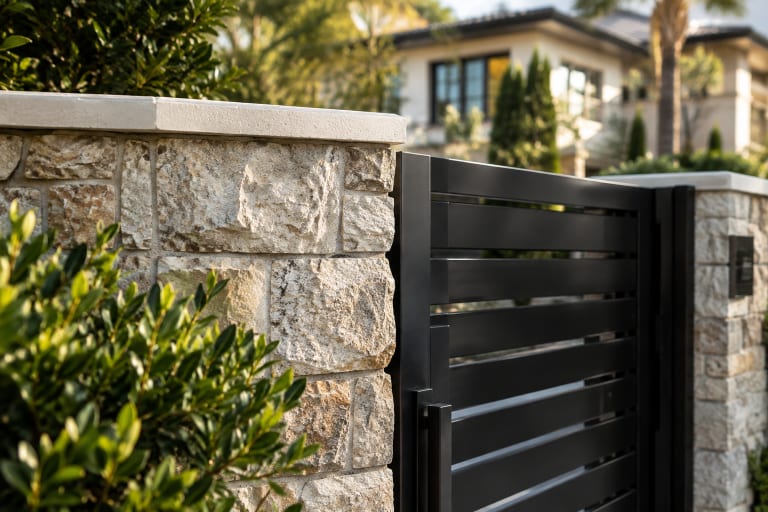
Privacy cannot be fully evaluated from listing photography. A property may appear secluded online yet have direct sightlines from a neighboring second story, a busy street nearby, or an exposed pool terrace. Visit at different times, stand in the principal outdoor areas, and look outward from major windows rather than only inward at the rooms.
- Check the distance and elevation relationship between neighboring homes.
- Look for visibility from streets, sidewalks, adjacent driveways, and hillsides.
- Assess gates, vehicle turnaround space, exterior lighting, and controlled points of entry.
- Notice mature landscaping, fencing, walls, and areas where screening is thin or difficult to maintain.
- Listen for traffic, construction activity, aircraft, schools, events, and mechanical equipment.
- Ask whether nearby parcels could change in ways that affect views or privacy.
Security should be approached as a complete system rather than a single feature. Cameras, alarms, lighting, gates, and secure package delivery areas work best when they fit the home’s layout and do not complicate everyday use. Buyers should also confirm which systems are owned, leased, maintained, or integrated with smart-home controls.
Comparing Location Beyond the Address
A celebrated Beverly Hills address may carry immediate appeal, but the right location should also support the buyer’s actual schedule. Consider morning and evening travel patterns, preferred schools, access to medical care, shopping, dining, cultural destinations, and routes to business districts or airports. A short route on a map can feel very different at peak traffic hours.
Future conditions matter as well. Before assigning a premium to a view, a quiet block, or a development opportunity, review applicable zoning and active planning activity. The City of Beverly Hills provides planning and zoning information that can help buyers frame questions about permitted uses, development rules, and nearby projects.
Location also has an emotional component. Some buyers want walkable proximity to Beverly Hills amenities. Others prioritize a hillside setting, a larger estate environment, or separation from commercial activity. Neither choice is inherently better. The practical question is whether the setting supports the owner’s preferred rhythm of life.
Matching a Home to Daily Lifestyle
A spectacular home can still be a poor fit when its layout or maintenance requirements conflict with the way the owner lives. Buyers who entertain frequently may value a functional kitchen, guest parking, powder rooms, and a smooth transition between indoor and outdoor areas more than an oversized formal room. Frequent travelers may place more importance on security, reliable management, and a lock-and-leave design.
Score each property according to the needs that will be used most often:
- Entertaining areas, guest circulation, and parking capacity.
- Quiet, enclosed workspaces with strong connectivity.
- Fitness, recovery, meditation, or hobby space.
- Pet accommodations and durable outdoor surfaces.
- Room for staff, overnight guests, or extended family.
- Landscape, pool, and mechanical maintenance demands.
Planning for Flexible Living
Buyers should look beyond the current household. An adult child may return home temporarily. A parent may need a private suite. A business partner, caregiver, or long-term guest may require separate access. Features such as detached guesthouses, secondary bedroom suites, private entrances, elevators, or rooms with nearby baths can provide options without forcing an immediate renovation.
Flexibility is useful, but it should not be assumed to create value automatically. Verify permits for guest structures and additions, consider accessibility needs, and calculate the real costs of construction, insurance, utilities, and ongoing care before treating any space as a simple future solution.
Luxury Home Due Diligence Checklist
- Visit repeatedly. Tour during weekday traffic, in the evenings, and on weekends.
- Study the surroundings. Review sightlines, street activity, neighboring lots, noise, and construction.
- Confirm the physical facts. Verify the square footage, number of bedrooms, lot dimensions, garages, pools, and guest areas.
- Inspect major systems. Evaluate roofing, drainage, retaining walls, pool equipment, HVAC, generators, and security infrastructure.
- Review ownership costs. Include insurance, property taxes, landscaping, utilities, pool care, repairs, and staffing where relevant.
- Check property records. The city’s property information portal allows users to search for available permit and planning application records by address or parcel information.
- Compare recent alternatives. Focus on land, condition, privacy, setting, and usable features, not price per square foot alone.
Why Local Knowledge Matters
Luxury markets are highly specific. One street may offer a different terrain, traffic pattern, architectural character, or sense of privacy than another only minutes away. Local insight can help buyers interpret whether terms such as “turnkey,” “estate-sized,” “secluded,” or “view property” reflect the home’s real-world experience.
The best evaluation combines professional guidance with the buyer’s own observations. Take notes after every visit, photograph sightlines when permitted, compare what each property makes easy or difficult, and return to the priorities that will matter after the excitement of a first showing has passed.
Common Questions from Luxury Homebuyers
Is privacy more valuable than square footage?
There is no universal answer. In settings where land, views, and separation from neighboring properties are difficult to replicate, privacy may be more important to a buyer than additional interior space.
Should buyers choose a newer home or a better location?
Compare renovation scope, construction risk, location scarcity, and daily livability. A newer house can reduce immediate work, while a rare setting may offer benefits that cannot be recreated through remodeling.
How can buyers tell if a home is truly quiet?
Visit at multiple times and ask direct questions about road activity, nearby construction, events, schools, access to services, and flight noise. Quiet should be tested, not assumed.
What helps a luxury home remain appealing over time?
Durable appeal often comes from a strong setting, practical privacy, quality construction, useful outdoor areas, flexible spaces, and a layout that supports everyday life as well as special occasions.
The right Beverly Hills home is not necessarily the largest or newest option. It is the property that brings together setting, privacy, access, flexibility, and a lifestyle that will remain rewarding long after closing day.