
How do I convince my mother to part with forty-seven empty margarine tubs, three broken sewing machines, and an entire hutch of Bavarian crystal without triggering an ambulance ride or an estrangement? If that is the question keeping you awake at three in the morning, you are not alone. When you are tasked with helping an aging parent downsize, you quickly realize you are not merely sorting household goods. You are disassembling a museum dedicated to their identity, their youth, and their hard-won security. Here is the operational playbook that turns that agonizing tug-of-war into a manageable, dignified transition for everyone involved.
The core friction rarely stems from logistics. It comes from grief disguised as stubbornness. When Dad defends a rusted drill press he has not plugged in since 1993, he is not fighting for the tool. He is fighting for the version of himself who could fix anything with his bare hands. Once you understand that every cardboard box feels like an eviction notice served on their past, the dynamic shifts. You stop acting like a ruthless landlord and start acting like a trusted curator.
When Every Empty Margarine Tub Feels Like Family History
My friend Ellen spent an entire Tuesday afternoon watching her seventy-eight-year-old mother wash, dry, and carefully nest twelve plastic ricotta containers. Ellen was five minutes from weeping on the linoleum. When Ellen suggested the recycling bin, her mother clutched the containers as if they contained the Gutenberg Bible. “Those are perfectly good,” her mother hissed. “You never know when you will need to freeze soup.” Ellen’s mother had not frozen soup since the Carter administration.
This is the scarcity trigger. For older adults who grew up with thrifty parents or experienced financial precarity, discarding functional plastic is an existential sin. Reasoning with logic will get you nowhere. You need concrete operational moves that respect the emotion while removing the dead weight.
Here are the moves to defuse the scarcity struggle:
Externalize the enemy.
Never make the disposal personal. You are not the person saying the tubs must go; the square footage of the new apartment is the villain. Measure the new kitchen cabinets together and say: “The new shelf holds six containers. Which six are your finest champions?” The math becomes the bad guy, not you.
Run a graceful hostage exchange.
Older adults surrender items far more readily when they believe the object has a worthy destination. Take those clean containers to a local soup kitchen, community greenhouse, or preschool art room. When your parent believes their hoard serves a community purpose, resistance evaporates.
Build the Memory Archive box.
For items whose only true value is sentimental, create a rigid physical boundary. Buy one handsome, archival linen storage box with a lid. Give them full permission to fill it with anything they cherish: handwritten recipe cards, concert stubs, dried corsages. The iron rule is simple: everything inside the box stays, but once the lid cannot rest flat, nothing else enters without something leaving.
Photograph before releasing.
Take a high-resolution photograph of Dad standing next to the workbench or Mom holding her favorite chipped porcelain tureen. Upload the pictures to a digital photo frame for their new side table. Often, they do not crave the three-dimensional dust-catcher; they simply crave reassurance that the memory will survive.
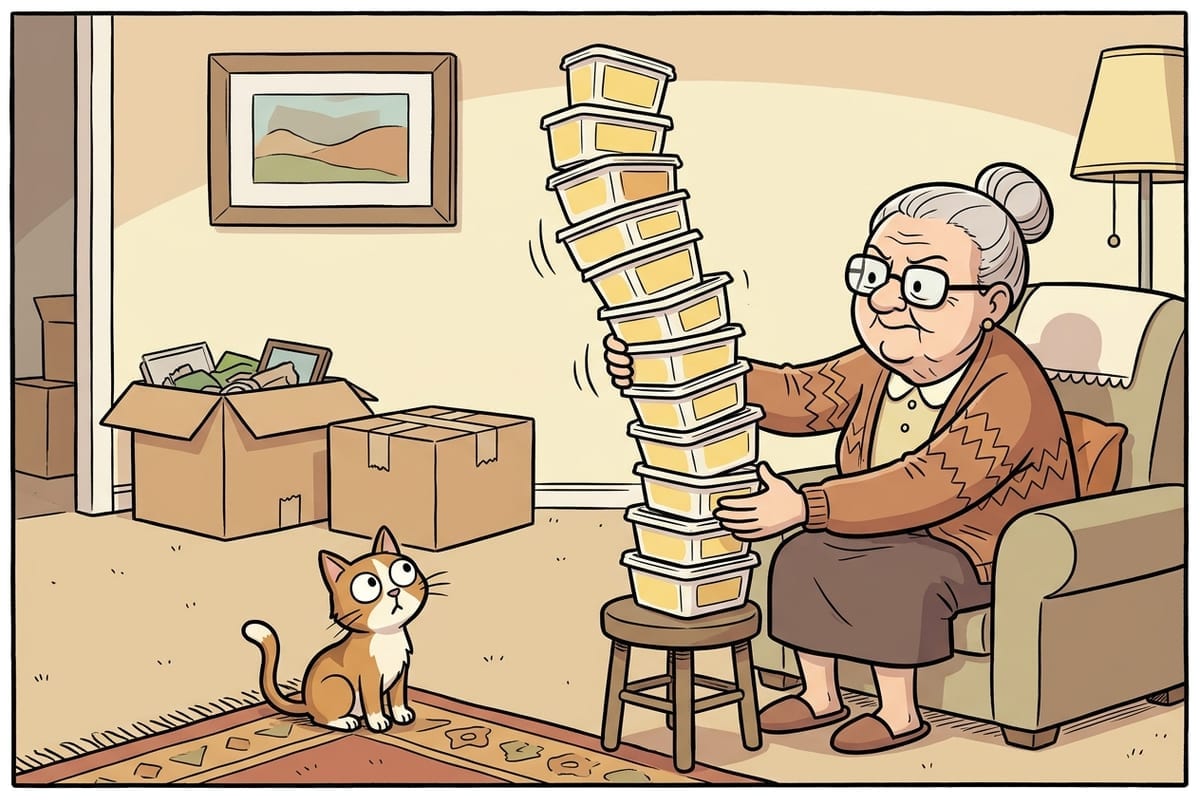
The goal here is never total victory. If Mom insists on keeping ten margarine tubs after you negotiated her down from forty-seven, give her the ten. Celebrate the thirty-seven that vanished into the blue recycling bin. Downsizing is a campaign of inches, and petty victories on minor plasticware preserve the capital you will need when you reach the dining room set.
When You Have Three Months and Normal Siblings
If you have three months before moving day and your family dynamic is reasonably functional, you have been handed a rare luxury. Do not squander it by trying to pack an entire four-bedroom split-level over a single weekend. That path leads directly to panic attacks, pulled lower backs, and pizza boxes stacked on the hood of a rental truck.
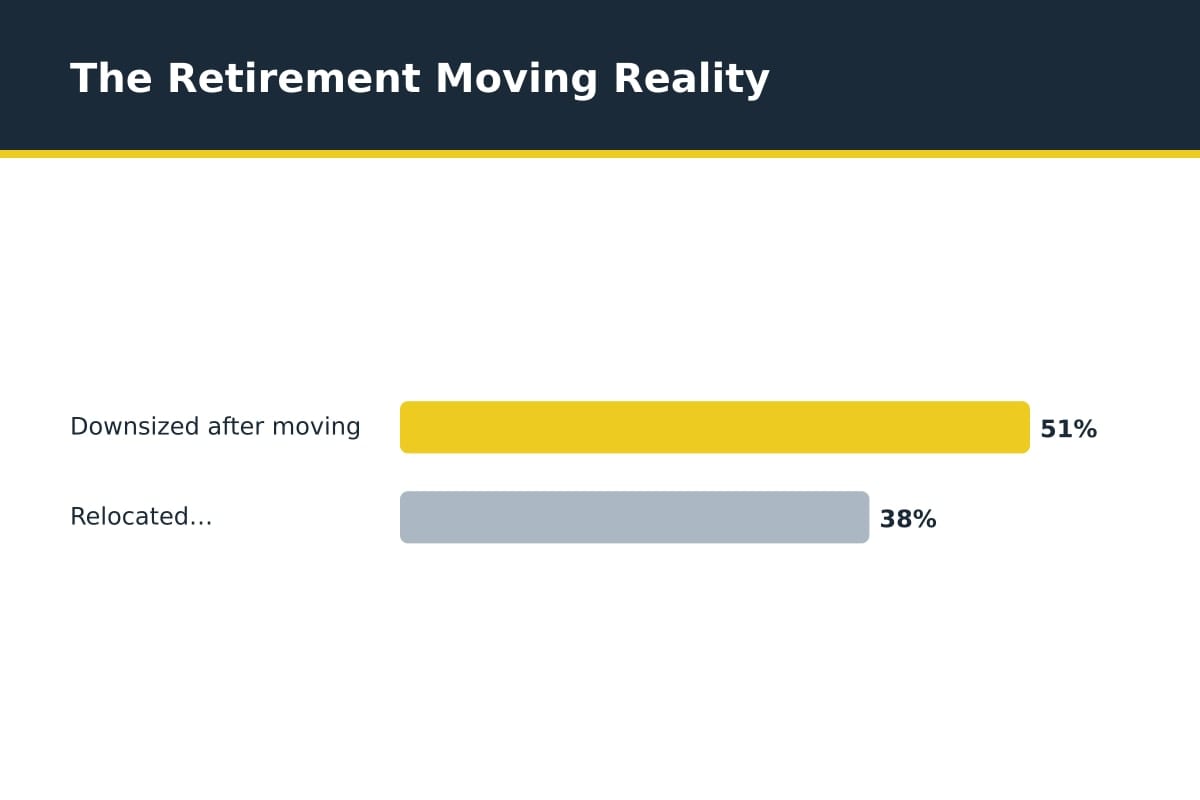
A study by Merrill Lynch and Age Wave found that 51 percent of retirees who move choose to downsize. Meanwhile, research from the Transamerica Center for Retirement Research showed that 38 percent of retirees relocate altogether. Those transitions take months to process emotionally, even under ideal conditions.
Adult children often face this challenge right when their own professional and domestic responsibilities peak. Many in their forties and fifties are concurrently scrambling to secure their own financial footing; you can review How Gen X Can Catch Up on Retirement in Their 40s and 50s to see how common these overlapping pressures are. Balancing parental care with your own household demands requires strict time boundaries.
To keep the project sane over a ninety-day timeline, execute these structured moves:
- Enforce the ninety-minute sorting cap. Cognitive fatigue hits elderly adults fast. After an hour and a half of evaluating possessions, decision paralysis sets in. They become irritable, defensive, and tearful. Schedule two ninety-minute sessions per week, preferably late morning when energy is highest. When the timer dings, step away and eat lunch.
- Create the physical mock-up. Take blue painter’s tape to the living room carpet of their current house. Tape out the exact room dimensions of their future living room. Place their favorite armchair and television inside the blue tape. Seeing that their beloved recliner physically fits calms their nervous system. Seeing that their six-foot oak china cabinet will block the hallway teaches reality without a single argument.
- Consult objective downsizing guides early. When parents dig their heels in, pointing to neutral third-party resources can cool the room. Referencing established frameworks like AARP’s practical decluttering guidance gives your parent a voice outside the family circle to validate the process.
- Tackle rooms in order of emotional difficulty. Never start in the attic, the master bedroom, or the den where photo albums sleep. Start in the laundry room or the hall linen closet. Nobody has an emotional breakdown over bleach bottles, mismatched hand towels, or fitted sheets with slack elastic. Building momentum in low-stakes rooms builds the “decision muscle” they need for the harder spaces later.
Seeing it helps. Here’s a clear walkthrough from Homes and Living In Pittsburgh:
Keep the cadence predictable. If Tuesday morning and Thursday morning are sorting times, stick to them. Treat those sessions like medical appointments. Predictability lowers anxiety because your parents know that sorting has a defined beginning and, crucially, a guaranteed end.
When Siblings Start Fighting Over Teacups and Old Grudges
Nothing summons buried childhood rivalries quite like a box of monogrammed silver spoons. The sister who lives two miles away and manages every doctor visit will naturally feel she has earned the right to select first. The brother who lives across the country and visits once a year will suddenly develop an intense, spiritual attachment to a brass umbrella stand he has ignored for thirty-five years.
Old family roles reassert themselves instantly. The eldest acts bossy, the middle child feels overlooked, and the youngest plays helpless. If left unmanaged, the cleanout turns into an arena where long-standing resentments play out over chipped crockery.
Here is how to run the sibling war room without bloodshed:
Institute the colored dot draft pick.
Buy four packs of round garage-sale stickers in distinct colors: blue for Child A, red for Child B, green for Child C, yellow for Child D. Give each sibling twenty stickers. Everyone walks the house and places stickers on items they personally want. If only one sticker appears on an item, it goes to that person. No debate.
Resolve sticker overlaps with a snake draft.
When two or more stickers end up on the same mid-century lamp, flip a coin for first pick. Sibling 1 picks the lamp, Sibling 2 gets first pick on the next contested item, and the order reverses each round. It turns emotional squabbling into a clean, game-theory exercise.
Establish the escrow rule for hostility.
If an argument over a possession turns venomous, that item goes into the “Escrow Box” in the garage. The escrow rule states that any contested item that causes a shouting match will be donated or sold to an antique dealer, with the proceeds going directly toward professional movers. Amazingly, siblings discover a sudden willingness to compromise when the alternative is seeing the object sold to a stranger.
Keep grandchildren entertained and out of the line of fire.
Packing weekends drag on, and young kids absorb tension quickly. Set them up in a quiet corner with snacks and entertainment; a stack of classics or humorous favorites like the
12 Best David Walliams Books, Ranked
will keep younger family members calm and occupied while the adults handle the heavy lifting.

Acknowledge early that the local caregiver sibling deserves special grace. If one child has spent the last three years coordinating physical therapy and refilling prescriptions, the out-of-town siblings must yield on minor heirlooms. Generosity among adult children during a parent’s move pays dividends for family relationships that last decades longer than any piece of mahogany furniture.
If You Only Have Forty-Eight Hours Before Rehab Discharge
Sometimes the timeline is not ninety days. Sometimes Mom slips on a bathroom throw rug on a rainy Thursday, fractures her hip, and enters physical rehab. Three weeks later, the medical social worker calls to say Mom cannot safely return to her multi-story home. She is being discharged to an assisted living studio on Monday morning at ten o’clock. You have forty-eight hours to pack her world.
Panic is normal here, but panic is inefficient. In a sudden medical transition, you are not downsizing a home; you are assembling a survival pod. The house can sit locked and untouched for three weeks while you handle the immediate human being.
Studies from the National Institute on Aging on safe aging environments emphasize that rapid transitions require physical safety and familiar visual anchors over complete domestic transfers. If you try to sort the attic this weekend, you will fail her in the bedroom.
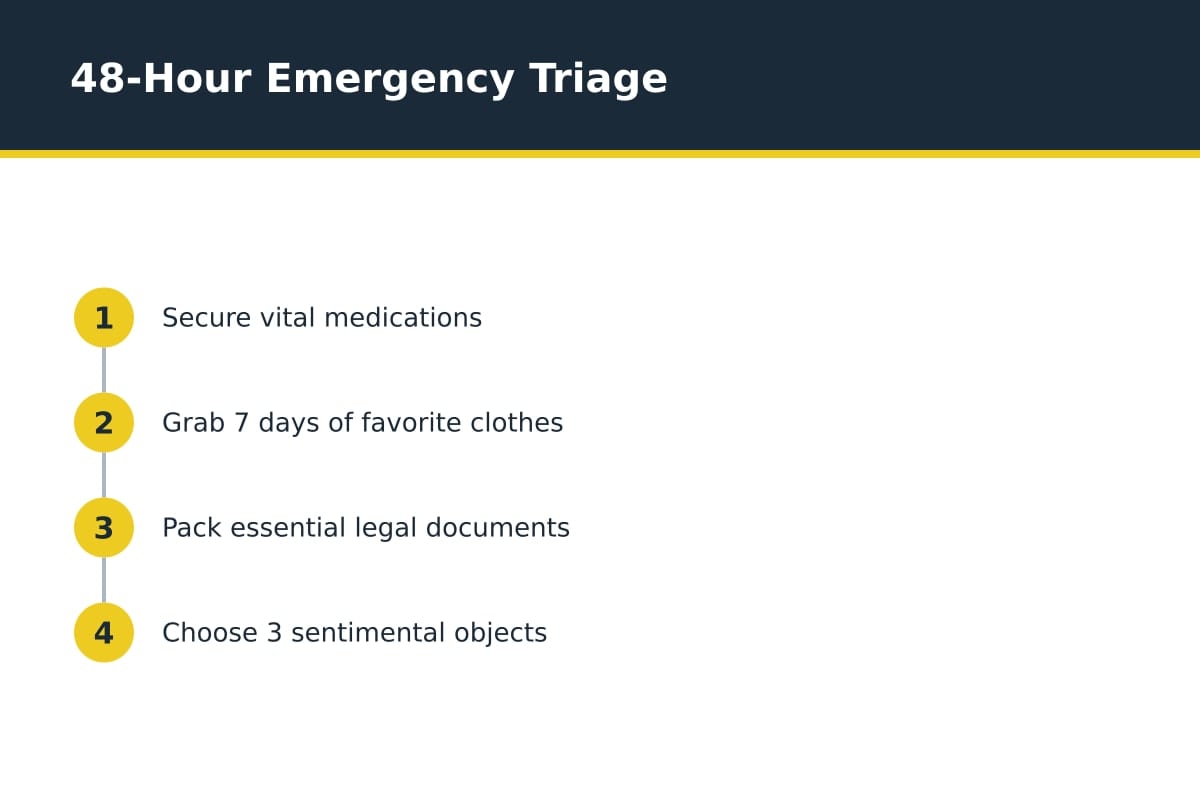
If you have zero time, follow this strict emergency cleanout protocol:
Pack 7 full changes of comfortable clothing with elastic waists and slip-on shoes
Secure 30 days of active prescription medications and doctor contact sheets
Gather essential legal paperwork (power of attorney, health care proxy, Medicare cards)
Bring exactly 3 cherished tactile anchors (a favorite quilt, a bedside clock, a framed family portrait)
Assemble personal toiletries and daily grooming items in an easy-carry caddy
Lock down hearing aids, eyeglasses, chargers, and mobility devices
Leave the basement, attic, and garage untouched until after move-in day
If the physical labor is beyond your family’s capacity on short notice, bring in reinforcements. The National Association of Senior & Specialty Move Managers maintains a directory of certified professionals who specialize in rapid elder relocations. These teams unpack, assemble beds, arrange closets, and hang wall art in a single afternoon. When an aging parent walks into a fully realized room rather than a sea of cardboard, their blood pressure plummets.
When the Cleanout Budget Is Zero and the Basement Is Full
Not every family can write a five-thousand-dollar check to a turnkey estate cleanout company. If you are operating on a shoestring budget and staring into a garage packed to the rafters with old encyclopedias, holiday ornaments, and rusted lawn mowers, you need high-efficiency, zero-cost disposal strategies.
The hardest pill for aging parents to swallow is economic depreciation. They paid three thousand dollars in 1982 for a formal dining set made of dark stained oak. They assume it is an heirloom that will fund a grandkid’s semester of college. Today, thrift stores regularly reject heavy brown furniture because younger generations rent small apartments and move frequently. Breaking that news gently requires data, not cruelty.
| Item Category | Resale Reality | Fastest Practical Exit |
|---|---|---|
| Brown wood furniture (hutches, armoires) | Near-zero market demand; very slow to sell | List free on Buy Nothing group; donor picks up |
| Fine china and crystal stemware | Flooded market; minimal antique interest | Consignment shop lot, or box for charity shop |
| Power tools and shop equipment | Strong local demand; quick cash sales | Saturday morning driveway flash sale |
| Linens, blankets, and towels | Thrift stores discard most opened linens | Drop off at local animal rescue shelter |
| Late-model appliances and electronics | Moderate demand if fully functional | Habitat for Humanity ReStore pickup |
To clear the house without spending a dime, use these field-tested methods:
- Harness local Buy Nothing groups. Join the neighborhood Facebook Buy Nothing community where the parent’s house is located. Post photographs of bulky items: “Free vintage armoire, must haul from first floor, pickup Saturday.” People show up with pickup trucks, ratchet straps, and strong backs. You get zero dollars, but you also pay zero dollars in junk removal fees.
- Run an estate liquidator walkthrough on commission only. Contact two local estate sale companies. If the house has enough collective volume, liquidators will organize, tag, stage, and sell the contents in exchange for a percentage of the gross revenue (typically 30 to 40 percent). You pay nothing upfront, and the house gets emptied to the bare walls by Sunday night.
- Target municipal bulk pickup dates. Check the parent’s town sanitation calendar. Most municipalities allow two bulk trash pickups per year where residents can place up to five oversized items on the curb for free. Stage the damaged, unsellable items for that exact calendar window.
- Donate sheets and towels to veterinary clinics. Do not throw stained quilts or frayed bath sheets into landfills. Call local emergency vet clinics and animal shelters. They constantly need soft bedding for recovery kennels and will happily accept bags of clean, used textiles at their front door.
Let your parent see the donation receipts and pickup thank-you notes. Seeing that their old floral sheets are keeping shelter puppies warm brings genuine comfort to an elderly heart that hates waste.
Helping an Aging Parent Downsize When Memory Fades and Suspicion Rises
The operational manual changes completely when cognitive impairment enters the room. When an elderly parent suffers from vascular dementia, Alzheimer’s, or severe age-related paranoia, their attachment to random objects is not about memories. It is about orientation. In an unmoored mind, familiar physical objects act as navigational buoys. Stripping those buoys away induces genuine terror.
A parent in this state may accuse adult children of stealing their belongings. They might hide old checkbooks under mattresses or dig through the trash cans at midnight to retrieve junk mail. Confrontation here is not only useless; it is cruel.
When you are helping an aging parent downsize under these conditions, shift from negotiation to compassionate redirection:
Execute the shadow sort.
Do not make decisions in front of them. Arrange for a sibling or trusted family friend to take your parent out for a calm afternoon: lunch at their favorite diner, a drive through the old neighborhood, or a walk in a garden center. While they are happily occupied, pack the duplicates, the broken appliances, and the hazards. Seal the boxes and move them straight to your car trunk before they return. If it is out of sight, it is often out of mind.
Maintain visual landmarks down to the inch.
Identify the three things your parent looks at every single day: the bedside lamp, the small clock, the framed photograph of their wedding, the floral armchair. When they transition to their new room, place those objects in the exact same spatial relationship. If the lamp sat on the left side of their bed at home, it must sit on the left side in the new room. Familiar geometry soothes cognitive agitation.
Never use logic against delusion.
If Mom insists that she cannot throw away a stack of yellowed utility bills from 1994 because “the government needs to inspect them tomorrow,” do not say, “Mom, you haven’t paid electric bills to that company in thirty years.” Say: “You are right, let’s put these in this secure blue folder so they are completely safe for the inspector.” Put the folder in a drawer. The anxiety subsides because her reality was acknowledged rather than mocked.
Preserve comforting tactile items.
People with fading memories rely heavily on touch. Keep the worn woolen blanket they have pulled over their knees for two decades. Keep the wooden rosary or the heavy silver pocket watch with the smooth back. The intellectual value of these things is zero; their sensory value for regulating emotional distress is immeasurable.
Give yourself permission to feel heartbroken during this process. Watching a parent’s world shrink while their cognition wavers is heavy emotional work. Treat yourself with the same gentleness you extend to them.
Moving Day: Building the New Sanctuary on Night One
Moving day is where all your advance work pays off, provided you execute the sequence properly. The single most common mistake adult children make is bringing the parent to the new apartment while the movers are still carrying boxes. Watching burly men carry their furniture through strange doors while cardboard stacks up to the ceiling is disorienting for anyone, let alone an eighty-two-year-old.
Keep your parent far away from the active move. Have them spend the day at a family member’s house, a quiet hotel lobby, or a comfortable park bench. While the movers work, your mission is to turn the new space from a clinical white box into a warm sanctuary before your parent crosses the threshold.
Execute this move-in sequence in exact order:
- Make the bed first. Before you unpack a single fork or hang a towel, assemble the bed. Put on their familiar, unwashed-that-week sheets so the bed smells like their old bedroom. Smooth out the familiar quilt. Place their pillows exactly where they expect them. If an exhaustion meltdown occurs at five in the afternoon, the sanctuary is already prepared.
- Set up the bathroom essentials. Hang familiar towels on the rack. Put their toothbrush, daily medications, soap, and hand lotion on the counter in full view. Make sure the nightlight is plugged in and functional. A strange bathroom in the dark is the number one cause of first-night falls in senior housing.
- Hang the pictures before opening miscellaneous boxes. Bare white drywall feels institutional and cold. Spend thirty minutes putting nails in the wall and hanging their favorite landscape painting and family portraits. The moment art appears on the walls, an apartment transforms into a home.
- Cue the familiar sensory cues. Plug in their radio to their regular classical or talk station. Brew a small pot of their favorite coffee or steep their standard tea so the aroma fills the kitchen. Turn on warm, soft lamps rather than harsh overhead fluorescent bulbs.
When you bring your parent through the front door for their first evening, do not lead them into a construction zone. Lead them into a finished room that smells like their life, looks like their home, and holds the objects they love best. Walk them over to their favorite armchair, hand them a warm mug, and let them sit down.
If you are standing at the base of this mountain today, feeling paralyzed by the sheer volume of stuff and the emotional minefield ahead, do not look at the whole house. Do not think about forty years of accumulated life. Take one specific step right now: walk over to a single drawer in your parent’s home, open it, pick up one solitary object, and ask them gently, “Can you tell me the story of this?” Listen to the story, honor it, and let that single conversation begin the work.