
Key Takeaways
- Kim Jong Un took power on December 17, 2011, after the death of his father.
- Official records show conflicting birth years between 1982 and 1984.
- In December 2023, he ended the long-standing goal of peaceful reunification with South Korea.
- North Korea signed a mutual defense pact with Russia in June 2024.
- By late 2024, the country sent about 11,000 troops to help Russian armed forces.
- South Korean intelligence named Kim Ju Ae as his chosen successor in February 2026.
- His domestic plan targets new factories in 20 regional counties each year. This program runs over a 10-year timeframe.
You wake up and check your morning news feed on your phone. You see wild rumors claiming that a foreign leader has died. In fact, chat rooms buzz with speculation and false claims. But a few days later, official photos show the leader walking through a factory. That sudden shift shows how hard it is to track the ruler of North Korea.
Kim Jong Un has ruled North Korea since late 2011. During his rule, he changed the country’s military power, its economy, and its global alliances. This beginner guide explains how he rose to power. It tracks his youth abroad, his big defense decisions, his ties with global leaders, and who might succeed him next.
People also read: 25 Stupid WTF Facts About North Korea | Kim Jong
Who Is Kim Jong Un? Early Life and Enigmatic Background
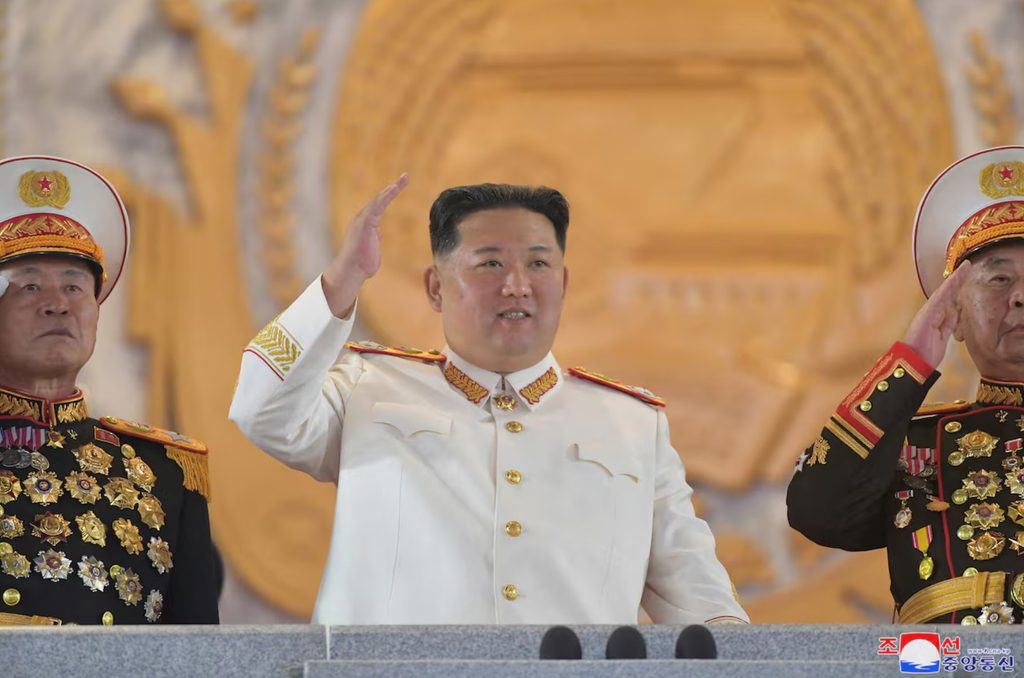
Kim Jong Un is the supreme leader of North Korea and leads the ruling Workers’ Party of Korea. He grew up inside a very private ruling family before taking command of the country.
Conflicting Birth Records: 1982 to 1984
Finding basic facts about his early life can feel tricky for beginners. For example, official records do not even agree on the year he was born. North Korean state media states that his birth date is January 8, 1982. But intelligence officers in South Korea view that date with skepticism. In fact, South Korean intelligence says he was born in 1983. Official United States government files list his birth year as 1984.
Why do these dates differ so much? In North Korea, leaders often match their birth years with major national milestones. These shifting records show the secrecy that surrounds the ruling dynasty. Outside analysts must figure out his age from rare records and eyewitness reports.
Did You Know?
Intelligence agencies in South Korea and the United States do not match North Korean state media on Kim Jong Un’s birth year. They list different years between 1982 and 1984.
School Days in Switzerland Under Assumed Names

As a boy, Kim Jong Un did not spend all his time in Pyongyang. Instead, he traveled to Europe for his education. He lived and studied in Switzerland from the 1990s until the autumn of 2000. Because his family wanted to guard his identity, he did not use his real name. He used aliases such as “Pak-un” and “Chol-pak” while attending school.
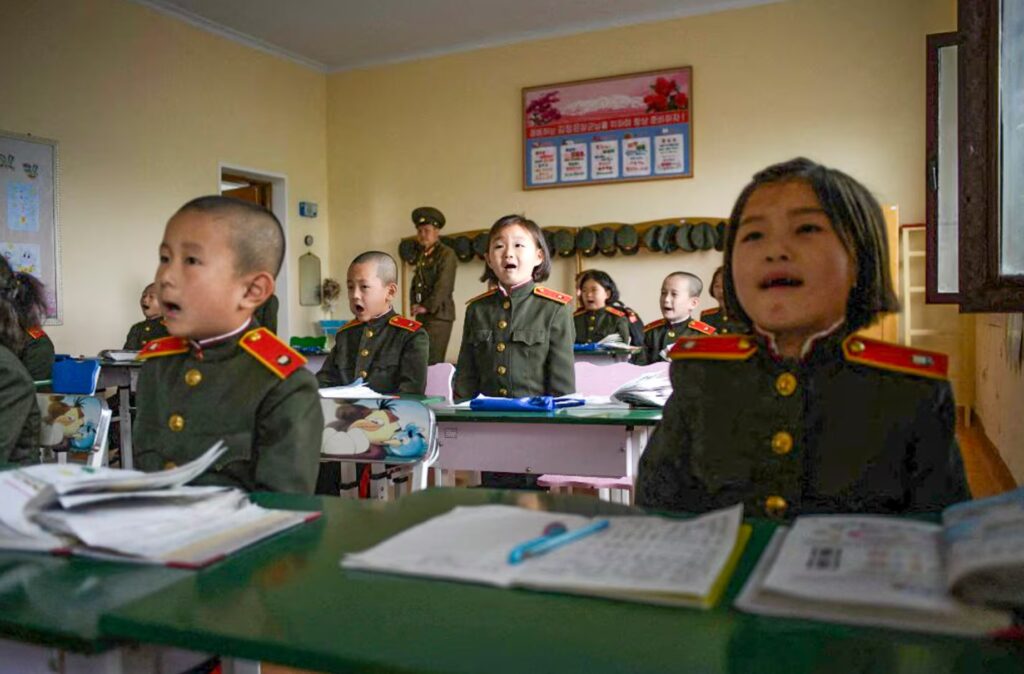
During those years, he learned how people live in Western societies. He made friends and took regular classes. However, he returned home in the autumn of 2000 to prepare for state leadership. Many outside observers wondered if his time in Europe would soften his views. Yet he chose to keep the strict political system built by his ancestors. In a speech to party officials, he confirmed his core focus: “Imbuing the whole society with Kimilsungism–Kimjongilism is the highest programme of our Party” — Kim Jong Un, Supreme Leader of North Korea (Workers’ Party of Korea Address) That commitment showed that his foreign school years did not change his devotion to party control.
How Did Kim Jong Un Rise to Power and Consolidate Rule?
Kim Jong Un took power quickly in late 2011 and removed any officials who stood in his way.
December 2011 Succession
Kim Jong Un moved quickly to take command of the armed forces. He soon led the Workers’ Party of Korea (WPK) and chaired the State Affairs Commission (SAC). Outside observers thought older military generals might cast the young leader aside. But he took power after his father, Kim Jong Il, died on December 17, 2011.
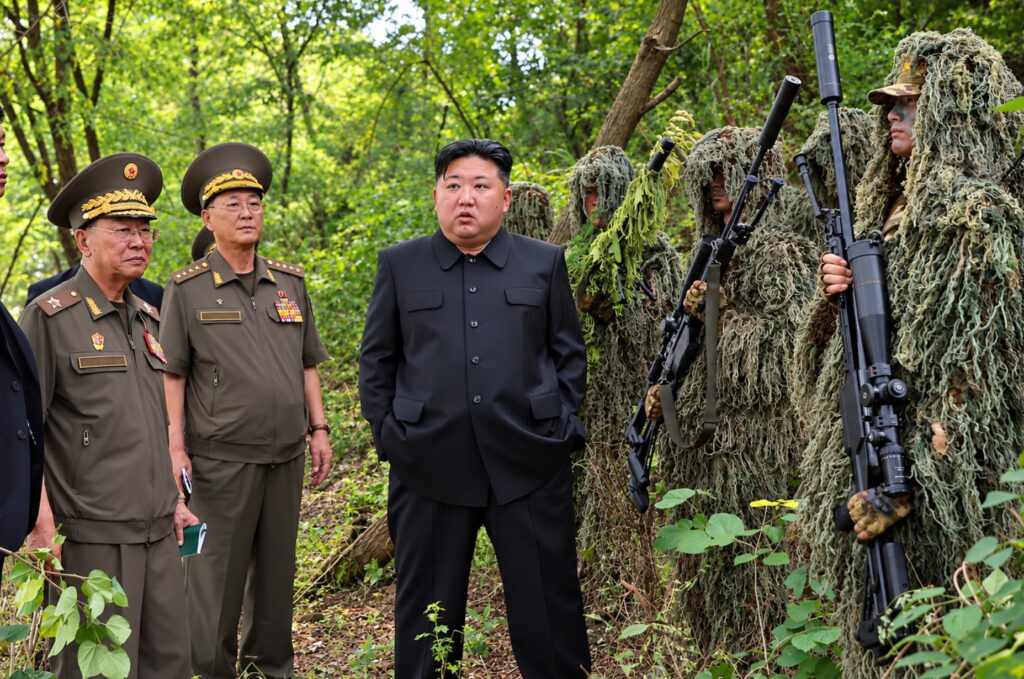
In those early days, he worked hard to present himself as a confident leader. He visited army bases, farms, and neighborhood shops. Kenji Fujimoto, who worked as the personal chef to Kim Jong Il, visited Pyongyang and noticed changes: “Stores in Pyongyang were brimming with products and people in the streets looked cheerful. North Korea has changed a lot since Kim Jong Un assumed power. All of this is because of leader Kim Jong Un.” — Kenji Fujimoto, Former personal chef to Kim Jong Il (Interview Record) Even so, life outside the showcase capital remained harsh for ordinary citizens.
High-Level Purges and Internal Security
He also proved that he would act harshly to protect his seat. In December 2013, Kim Jong Un ordered the arrest and execution of his uncle, Jang Song Thaek. The state accused Jang Song Thaek of treachery against the government. This move proved that close family ties could not shield top officials from punishment.
A few years later, another shocking event grabbed global attention. On February 13, 2017, his half-brother, Kim Jong Nam, was assassinated in Malaysia. Attackers killed him at Kuala Lumpur International Airport with the chemical nerve agent VX. That bold strike showed the world that the regime would hunt down potential threats anywhere.
Warning: Brutal Political Purges
Power struggles inside closed states can turn deadly very fast. The execution of Jang Song Thaek in December 2013 sent a clear warning to party leaders that disloyalty brings death.
Human Rights Findings and Kwanliso Camps
International groups soon spoke out against this harsh rule. In 2014, a United Nations inquiry team released a detailed report on the country. Investigators found that the government committed crimes against humanity on hundreds of thousands of people. These abuses took place inside political prison camps, known locally as kwanliso.
The report described forced labor, starvation, and extreme abuse inside the camps. World leaders asked global courts to hold the regime responsible for these acts. The government rejected the report, so it kept running the prison camps. Human rights remain a major issue whenever other nations talk about Pyongyang.
Key Milestones in Kim Jong Un’s Early Rule
| Date | Event | Resulting Outcome |
|---|---|---|
| December 17, 2011 | Death of Kim Jong Il | Kim Jong Un becomes the supreme leader of North Korea. |
| December 2013 | Execution of Jang Song Thaek | Eliminates top political rivals inside the ruling party. |
| 2014 | United Nations human rights report | Exposes abuses against hundreds of thousands in camps. |
| February 13, 2017 | Assassination of Kim Jong Nam | Removes an estranged relative at an airport in Malaysia. |
What Is North Korea’s Military and Nuclear Backdrop?
North Korea sits behind a heavily armed border. It relies on nuclear tests to deter foreign powers.
The Korean Demilitarized Zone (DMZ)
To understand North Korea, you must look at its southern border. The Korean Demilitarized Zone, or DMZ, was created in 1953. It runs roughly 250 kilometers (160 miles) across the peninsula. It is also about 4 kilometers (2.5 miles) wide.
The zone features barbed wire fences, minefields, and guard posts. Soldiers from both sides watch each other day and night. Because the war paused with an armistice rather than a peace treaty, tensions stay high along this strip of land.
Glossary: Key North Korean Terms
Byungjin: This policy means growing the economy and building more nuclear weapons at the same time.
Korean Demilitarized Zone (DMZ): The 250-kilometer border buffer zone set up in 1953.
Korean Central News Agency (KCNA): This state news group shares official government statements and photos.
NPT Withdrawal and First Underground Test
Nuclear weapons have shaped North Korea’s strategy for decades. On January 10, 2003, the government announced its withdrawal from the Treaty on the Non-Proliferation of Nuclear Weapons. Leaving the treaty allowed the state to build nuclear warheads without foreign inspections.
A few years later, the military took a huge technical step. On October 9, 2006, North Korea carried out its first underground nuclear explosive test under Kim Jong Il. That test triggered worldwide sanctions. When Kim Jong Un took power in late 2011, he accelerated weapons testing. He used the Byungjin policy to grow his military arsenal while trying to boost local factories.
How Did Relations Shift From Trump Summits to the Russian Alliance?
North Korea moved from high-profile peace talks with the United States in 2018 to a direct military alliance with Russia in 2024.
The 2018 Singapore Bilateral Summit
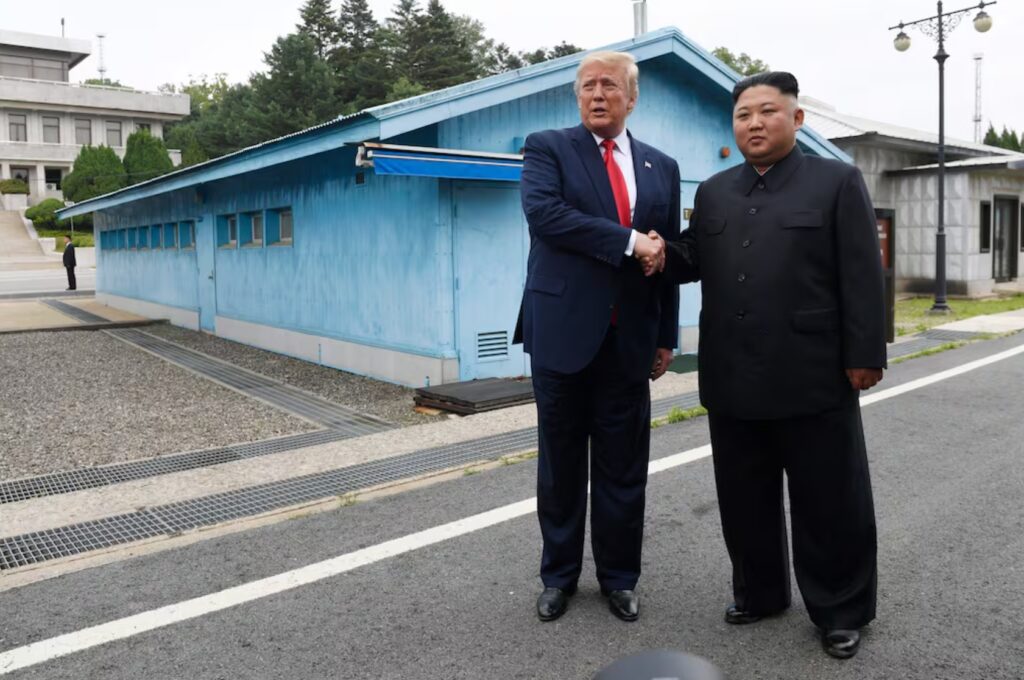
In 2018, diplomacy between Washington and Pyongyang took a surprising turn. Kim Jong Un met with US President Donald Trump in Singapore on June 12, 2018. This historic event was the first-ever bilateral summit between a North Korean supreme leader and a sitting US president. People all over the world watched as the two leaders shook hands in front of national flags.
They discussed nuclear disarmament, peace declarations, and future trade relations. Donald Trump spoke warmly about Kim Jong Un right after the meeting: “I learned he was a talented man. I also learned he loves his country very much.” — Donald Trump, US President (Press Conference) But practical talks soon stalled. Both sides could not agree on the timing of sanctions relief and the dismantling of nuclear sites.
The Comprehensive Strategic Partnership with Russia
Because talks with the West broke down, Kim Jong Un sought new friends. He turned toward Moscow to build a strong partnership. In June 2024, Kim Jong Un and Russian President Vladimir Putin met in Pyongyang. Together, they signed the Treaty on Comprehensive Strategic Partnership.
This landmark treaty created a mutual defense pact between both nations. Under the pact, each country pledged to assist the other if attacked by an outside force. This mutual defense pact changed the balance of power across Northeast Asia. It showed that Pyongyang would no longer seek favor with Western leaders.
Troop and Munitions Deployments in Late 2024
The new alliance with Russia was not just words on paper. By late 2024, North Korea sent about 11,000 military personnel to assist Russian armed forces in the Russo-Ukrainian war. Along with these troops, North Korea supplied millions of artillery rounds to Russian forces.
This support helped Russia keep up its battlefield supplies. In return, Pyongyang gained valuable political backing and military cooperation. That change alarmed leaders in Washington, Seoul, and across Europe. It meant that Kim Jong Un now had a strong world partner on his side.
Comparing Foreign Policy: 2018 Summit vs 2024 Treaty
| Detail | 2018 Singapore Summit | 2024 Russia Treaty |
|---|---|---|
| Key Partner | United States (Donald Trump) | Russia (Vladimir Putin) |
| Date Signed | June 12, 2018 | June 2024 |
| Main Goal | Nuclear talks and peace dialogue | Mutual defense pact and security help |
| Military Support | None | 11,000 troops sent; millions of artillery rounds transferred |
Why Did North Korea Formally Abandon Reunification?
In December 2023, Kim Jong Un ended North Korea’s historic goal of peaceful reunification. He named South Korea as the country’s chief enemy.
Redefining the Inter-Korean Relationship
For decades, North Korea said it wanted to unite the divided peninsula in peace. But Kim Jong Un tossed that long-standing policy aside in December 2023. He declared South Korea to be the regime’s principal hostile enemy state.
This choice was a huge change in how North Korea viewed its neighbor. The government closed talk agencies and cut off cross-border phone lines. State media stopped treating South Koreans as separated brothers and called them hostile foreigners. That change marked a lasting turn toward conflict.
Ending Decades of Peaceful Reunification Policy
The regime changed its official rules, not just its public words. In December 2023, Kim Jong Un formally dropped the goal of peaceful reunification. He ordered state institutions to stop talking about shared culture and national unity.
Former intelligence experts noticed how sharp this break was. Soo Kim, an experienced analyst who studies the region, described the new path: “North Korea no longer has an appetite for reunification. They want to go it alone—on nuclear talks, on all relations with Washington.” — Soo Kim, Former CIA analyst and North Korea specialist (Analysis Report) By choosing to stand alone, Kim Jong Un signaled that he would rely on raw military power rather than peace treaties.
What Is the ‘Regional Development 20×10 Policy’?
The Regional Development 20×10 Policy is a domestic economic plan. It aims to modernize local factories in 20 regional counties each year.
Industrial Modernization Across 20 Counties Annually
Leaders in Pyongyang have always faced a big gap between the capital and the countryside. While Pyongyang gets modern buildings, remote towns often lack basic goods. To fix this gap, Kim Jong Un started the “Regional Development 20×10 Policy” in 2024. The plan promises to build modern factories in 20 regional counties every year over a 10-year timeframe.
The government sends soldiers and supplies to build these small manufacturing sites. Kim Jong Un spoke about the project during a public event: “This is a clear demonstration of the validity and vitality of the Party’s policy aimed at eliminating the differences between the central and local areas and between urban and rural areas and achieving simultaneous and balanced development of the whole country” — Kim Jong Un, Supreme Leader of North Korea (KCNA Report) The regime hopes these new sites will supply shoes, clothes, and everyday tools to rural towns.
Balancing Living Standards Across 26 Million Citizens
United Nations data estimates that North Korea has a population of about 26 million people. Supplying goods to 26 million people is hard because global trade sanctions limit imports. Officials hope to make more goods at home. They build factories across 20 regional counties each year to do this.
Building local factories helps the regime maintain social stability across the country. People complain less when towns get steady supplies of soap, clothes, and boxed food. That home focus lets Kim Jong Un keep tight control over the people while handling foreign policy.
What Do We Know About Kim Jong Un’s Health, Rumors, and Succession?
Intelligence agencies watch Kim Jong Un’s health very closely. They also track his daughter as the next leader of North Korea.
Intelligence Reports on Health and Cardiovascular Risk
Because one man holds supreme power, foreign spies track his health with great care. On September 30, 2026, South Korea’s National Intelligence Service (NIS) briefed lawmakers on his physical condition. The NIS reported that Kim Jong Un weighs over 140 kilograms, which is about 309 pounds.
This heavy weight places him in the group of severe obesity. The NIS warned that his weight brings a higher risk of heart problems. Heart issues run in his family. Intelligence officials watch his walking and breathing whenever he speaks in public.
Scenario: How Internet Rumors Catch Fire
Every few months, wild rumors spread online claiming Kim Jong Un had surgery at Peking Union Medical College Hospital in China. Some posts even claim he died. But North Korea uses state media to push back. The
Korean Central News Agency (KCNA)
will publish new photos showing him inspecting farms or military units. Just like that, the death rumors vanish.
The Emergence of Kim Ju Ae as Designated Successor
Questions about who will take over next have started to produce clear answers. In February 2026, South Korea’s National Intelligence Service assessed that his daughter, Kim Ju Ae, reached a big milestone. The NIS stated that she transitioned from basic training to the designated successor stage.
Her rise shows that the Kim bloodline intends to hold power for another generation. She now walks beside her father at missile tests and formal banquets. Senior generals even bow their heads when speaking to her. His sister, Kim Yo Jong, stays active in party affairs, sending sharp messages to South Korea and the United States.
Debunking Viral Death Rumors Through Public Inspection
Whenever Kim Jong Un takes a break from public life, the media starts to guess about his health. But he often silences rumors with public visits. For example, on October 20, 2026, North Korean state media published new photos of him. He was inspecting the 2026 National Garment and Footwear Exhibition in Pyongyang.
He walked through the halls accompanied by his wife and daughter. That family visit disproved viral online death rumors that spread earlier that month. These photos proved to the world that he remained in command of the state.
Frequently Asked Questions
When did Kim Jong Un assume power in North Korea?
Kim Jong Un took power on December 17, 2011, right after his father, Kim Jong Il, died. He moved fast to take control of the military and the ruling Workers’ Party of Korea. That quick action helped him avoid leadership fights and secure his position as supreme leader.
When was Kim Jong Un born according to intelligence records?
Official records do not give a single birth date. North Korean state media claims he was born on January 8, 1982. But South Korean intelligence lists his birth year as 1983. In contrast, United States government files state that he was born in 1984.
Did Kim Jong Un meet with a sitting US president?
Yes, he met with US President Donald Trump in Singapore on June 12, 2018. That historic event was the first summit between a North Korean supreme leader and a sitting US president. The two leaders talked about nuclear weapons and regional security in front of world cameras.
Why did North Korea abandon its goal of reunifying with South Korea?
In December 2023, Kim Jong Un stopped North Korea’s old goal of peaceful reunion. He declared South Korea to be his regime’s main enemy state. That choice ended past peace plans and created open hostility between separate enemy nations.
Who is Kim Ju Ae and what is her official status?
Kim Ju Ae is the young daughter of Kim Jong Un. In February 2026, South Korea’s National Intelligence Service assessed that she entered the designated successor stage. She often joins her father at major state inspections, missile launches, and formal banquets as she prepares for future leadership.
How does North Korean state media handle rumors regarding Kim Jong Un’s health?
The regime releases fresh photos and videos to prove the leader is alive and well. For example, on October 20, 2026, state media published photos of him touring a consumer goods expo in Pyongyang with his family. That visit countered viral death rumors.
Conclusion: The Strategic Trajectory of Kim Jong Un’s Rule
Since taking charge in December 2011, Kim Jong Un has reshaped his nation and shocked the world. He stepped away from talks with the West and signed a defense pact with Russia in June 2024. In addition, the rise of Kim Ju Ae in February 2026 suggests the Kim family will lead the state well into the future.
Read official government reports and public spy updates to learn about East Asian security. These papers show how shifting alliances affect world peace.
References
- Kim Jong Un
- The way of Kim Jong Un
- NIS: Kim Ju-ae Enters Designated Successor Stage
- Kim Jong-un weighs over 140 kg, South Korean intelligence reveals details about the North Korean leader’s health
- N. Korea’s Kim tours light industry expo, touts regional policy achievements
- Demilitarized Zone (DMZ)
- Fact Sheet on DPRK Nuclear Safeguards
- CTBTO 2006 DPRK Nuclear Test
- Report of the detailed findings of the commission of inquiry on human rights in the Democratic People’s Republic of Korea
- UN Population Division: World Population Prospects
- Kim Jong Un’s Regional Development 20×10 Policy in full swing