
Key Takeaways
- Salt, moisture, sun, wind, and rain can combine to speed up roof wear near the coast.
- Metal components and roof connection points often need attention before the main roof covering appears seriously worn.
- Safe ground-level and attic checks can reveal many early warning signs.
- Cleaning drainage paths before stormy periods helps water move away from the roof as intended.
- Repair or replacement decisions should account for the roof’s condition, age, material, and extent of damage.
Table of Contents
- Why Ocean City Weather Is Hard on Roofs
- How Salt Air Affects Roofing Materials
- Where Wind and Rain Cause Trouble
- Early Warning Signs to Watch For
- A Coastal Roof Maintenance Plan
- Choosing Materials for Coastal Conditions
- When to Repair and When to Replace
- Common Questions About Coastal Roof Care
- Conclusion
In Ocean City, Maryland, a roof works through more than ordinary rain. It faces salt carried inland from the Atlantic, humid summer air, strong sunlight, wind-driven rain, and storms that can change conditions quickly. Homeowners researching roofing contractors in Ocean City, MD can benefit from understanding these local pressures before a leak or visible failure forces an urgent decision.
Good coastal roof care is usually not about reacting to one dramatic event. It is about noticing small changes at roof edges, flashing, fasteners, gutters, and vents before water reaches the attic or living spaces. A regular routine can help Ocean City property owners protect homes, rental properties, and seasonal residences through changing weather.
Why Ocean City Weather Is Hard on Roofs
Ocean City roofs are exposed to conditions that inland properties may experience less often. Humidity can leave surfaces damp longer, ultraviolet light can age exposed sealants, and coastal winds can put stress on shingle edges, ridge caps, flashing, and roof-mounted accessories. Wind can also push rain into openings that might not leak during a calm shower.
Drainage deserves close attention in a barrier-island community. The Town of Ocean City explains that heavy rains at high tide can contribute to flooding along Coastal Highway, which is a useful reminder that water management matters both in and around a property. A clogged gutter or backed-up downspout can add avoidable water exposure at the roofline and foundation.
A roof can look fine from a driveway while a smaller problem develops out of view. For example, corrosion around a vent, a loosened flashing section near a wall, or deteriorated sealant around a pipe collar may allow moisture beneath the visible roofing surface.
How Salt Air Affects Roofing Materials
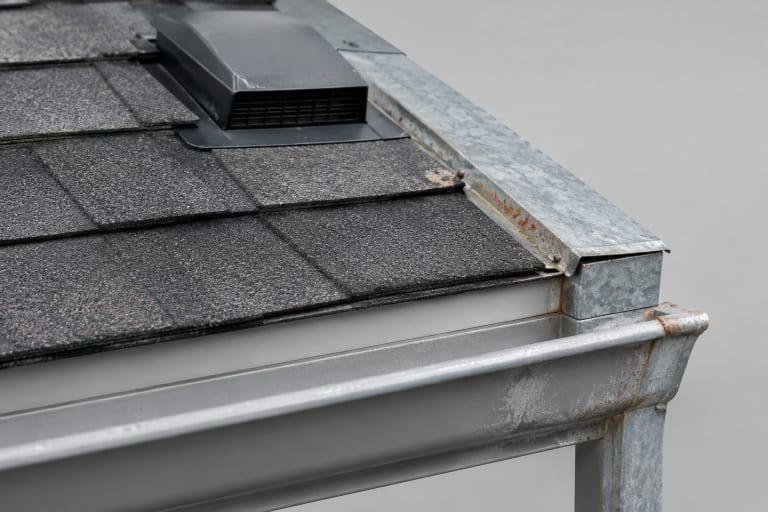
Salt air deserves special attention near open water. Salt particles can settle on roof components, especially exposed metal flashing, fasteners, gutters, vents, brackets, and drip edges. When residue combines with moisture, metal parts may corrode over time. The roof covering may still appear intact while the smaller components that direct water away from openings begin to weaken.
Areas That Need Extra Attention
- Flashing around chimneys, walls, skylights, and roof penetrations
- Exposed fasteners, brackets, and vent hardware
- Gutters, downspouts, and gutter hangers
- Pipe boots and sealant around plumbing vents
- Metal roof coatings and seams, when applicable
Where Wind and Rain Cause Trouble
Wind and rain often create a two-part problem. Wind can lift a shingle edge, loosen a ridge cap, or move flashing slightly out of place. Rain can then enter through that small opening and travel beneath the roof covering before becoming visible indoors.
Pay particular attention to ridges, roof edges, valleys, roof-to-wall transitions, skylights, chimneys, vents, low-slope areas, and drainage points. After a significant storm, homeowners can begin with a safe inspection from the ground, then check ceilings, upper walls, and accessible attic spaces. The National Weather Service maintains an Ocean City weather and coastal conditions display that can help residents monitor changing local conditions before and during hazardous weather.
Early Warning Signs to Watch For
Signs Visible Outside
- Rust on flashing, vents, gutters, or exposed fasteners
- Lifted, cracked, curled, or missing shingles
- Loose ridge caps or uneven roof edges
- Granules are collecting in gutters
- Standing water on low-slope sections
- Cracked sealant around roof openings
- Clogged, sagging, or overflowing gutters
Signs Visible Inside
- Brown ceiling spots or peeling paint near the upper walls
- Musty odors in the attic
- Damp insulation or dark marks on the roof framing
- Daylight visible through the roof deck
- New drips during or shortly after rainfall
Do not walk on a roof unless you have proper training and safety equipment. A ground-level review, binoculars, and an interior check can identify concerns without creating a fall risk.
A Simple Coastal Roof Maintenance Plan
Before Storm Season
- Clear leaves, sand, and debris from gutters and downspouts.
- Look from the ground for damaged shingles, loose materials, or corroded metal.
- Trim branches that could scrape or strike the roof.
- Check the attic for moisture, staining, and ventilation concerns.
- Review past repair records, warranties, and photographs of existing damage.
After a Major Storm
- Check ceilings, upper walls, and attic spaces for new moisture.
- Look for fallen debris, missing materials, and damaged gutters.
- Take clear photographs from safe locations.
- Use temporary protection only when it can be installed safely.
- Arrange a professional assessment for active leaks or visible damage.
Choosing Materials for Coastal Conditions
No single roofing material is right for every Ocean City property. Roof slope, building design, exposure, maintenance expectations, local code requirements, budget, and installation quality all matter. Asphalt shingles, metal roofing, tile, slate, and low-slope membrane systems can each perform well when paired with appropriate underlayment, flashing, fasteners, drainage details, and installation practices.
Before choosing a material, ask how it handles salt exposure, whether its fasteners and flashing are compatible, how it performs in wind, what maintenance the manufacturer recommends, and whether warranty terms address coastal conditions.
When to Repair and When to Replace
A focused repair may make sense when damage is isolated, the main roof covering remains sound, and the roof has meaningful service life remaining. Replacement may be worth considering when leaks return repeatedly, damage affects multiple areas, the covering shows widespread deterioration, or moisture has compromised the roof deck.
Request a written assessment that identifies the observed problem, recommended scope of work, proposed materials, expected timeline, and warranty terms. Comparing clear scopes of work is usually more useful than comparing price alone.
Common Questions About Coastal Roof Care
How often should a coastal roof be inspected?
An annual professional inspection is a practical baseline for many coastal properties, along with additional checks after major storms. Older roofs and roofs with previous leaks may warrant closer monitoring.
Can salt air damage a roof that looks fine?
Yes. Corrosion can begin on fasteners, flashing, vents, and roof edges before the main roof covering shows obvious damage.
Should a homeowner pressure-wash a roof?
Aggressive cleaning can damage certain roofing materials, remove protective granules, harm coatings, or force water beneath the roof surface. Check the manufacturer’s guidance before cleaning.
Conclusion
Coastal roof maintenance in Ocean City works best as a steady routine. By watching drainage, checking vulnerable metal components, inspecting safely after storms, and addressing minor issues promptly, property owners can reduce the chance that a small weakness becomes a larger water problem.