
Suburban Assets with Structural Demand
Commercial real estate in Portugal is entering 2026 on a relatively stable footing. While the broader European environment remains uneven, Portugal has preserved moderate growth, a predictable regulatory framework, and consistent domestic demand. Employment levels remain resilient, and private consumption has normalized after the post-pandemic surge.
In Greater Lisbon, this stability is reshaping investment logic. Prime retail in central Lisbon remains tightly held and expensive. Yields are compressed, and entry prices limit flexibility. As a result, capital is increasingly flowing toward suburban municipalities where residential growth and everyday services create a different kind of income profile — less dependent on tourism, more anchored in local demand.
This shift is not about chasing yield. It is about securing income that is easier to underwrite.
Why Suburban Lisbon Is Gaining Ground
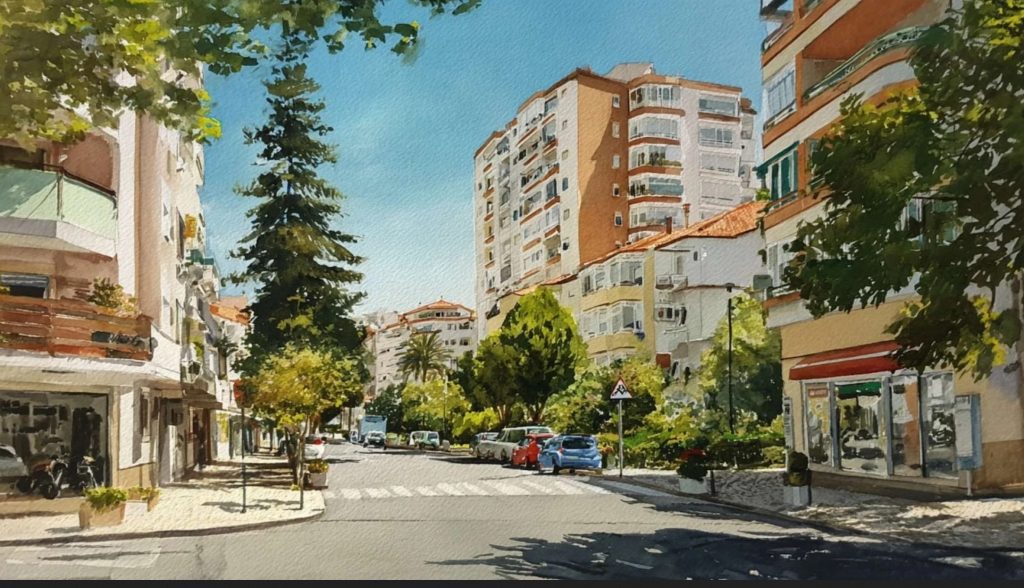
Across Cascais, Oeiras, Amadora, and Sintra, residential density has been rising steadily. New mixed-use developments bring permanent residents, not short-term visitors. Small and medium-sized businesses follow. Pharmacies, supermarkets, clinics, cafés, and service operators occupy ground floors integrated into housing blocks.
These assets rarely make headlines. They do something more important — they trade on predictability.
Compared to prime CBD retail, suburban commercial units typically offer:
- More accessible entry prices
- Less volatility in tenant demand
- Exposure to daily-use consumption
- Integration into established neighborhoods
For investors evaluating commercial real estate in Portugal, the core question increasingly revolves around micro-location rather than prestige. Where do people live? Where do they shop every week? Where do businesses rely on local footfall rather than seasonal flows?
The answers often point west of central Lisbon.
Dual Commercial Units in Polima, Cascais
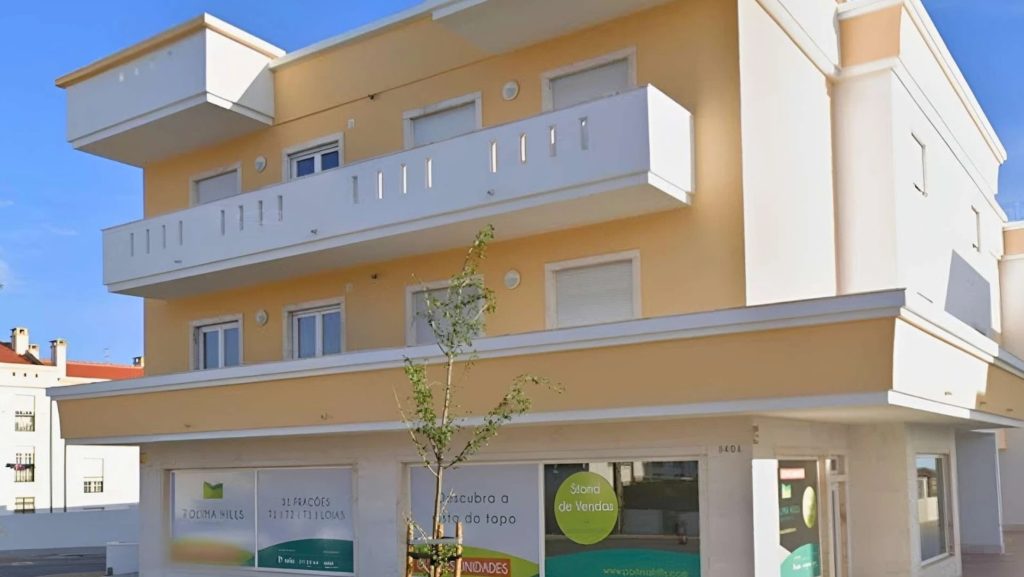
Polima, São Domingos de Rana, two independent ground-floor commercial units are positioned within a consolidated residential environment. The structure is straightforward: street-level access, integration into a housing block, and layouts suitable for retail or service operators.
The estimated yield sits in the 6–7% range, depending on lease structure and final acquisition terms. In the context of commercial real estate in Portugal, this places the asset above prime Lisbon CBD retail yields, reflecting a suburban risk-return balance.
What makes this format compelling is its flexibility. Two separate units reduce single-tenant exposure and allow staggered leasing strategies. Vacancy risk is distributed. Tenant mix can evolve.
This is not a speculative asset. It is designed for income from day one.
Large Retail Unit in Oeiras
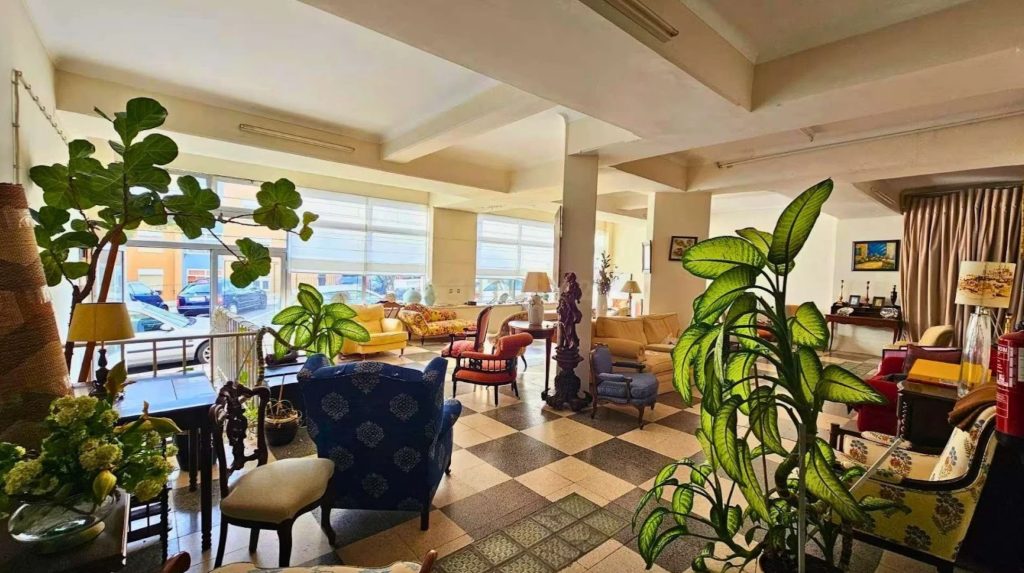
Further along Lisbon’s western corridor, a two-storey retail unit of approximately 328 m² in the Figueirinha area of Oeiras illustrates a different profile. Larger footprint. Higher capital allocation. Broader tenant possibilities.
The size allows for operators such as food retailers, larger service providers, or even mini-market formats. Street visibility and proximity to residential blocks support foot traffic. At the same time, Oeiras benefits from nearby employment hubs such as Quinta da Fonte and Lagoas Park, adding daytime demand to residential consumption.
With scale comes concentration risk — typically a single larger tenant — but also the potential for stronger covenants and longer lease duration. Within commercial real estate in Portugal, assets of this type appeal to investors prioritizing tenant quality and long-term stability over diversification across multiple small units.
It is a different strategy, not necessarily a higher-risk one. The underwriting simply shifts.
Street-Level Shop in Alfragide, Amadora
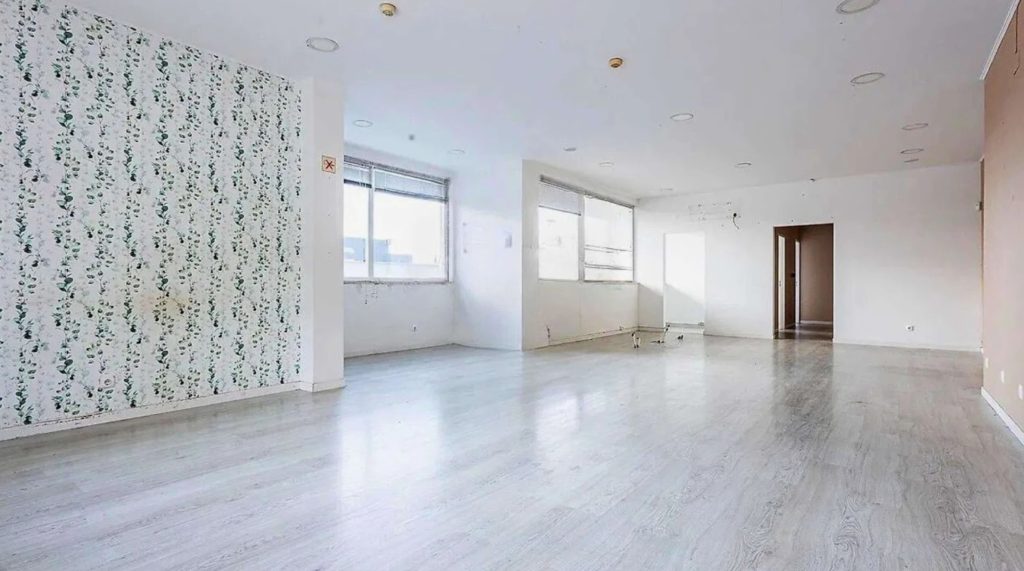
In Alfragide, a 135 m² street-level commercial unit offered at approximately €320,000 represents a more compact entry point into the Lisbon suburban property market.
The size makes it accessible to a wide range of tenants — neighborhood supermarkets, healthcare practices, cafés, and professional offices. Its location on a visible thoroughfare supports pedestrian and local vehicle traffic. Surrounding residential density reinforces daily-use demand.
Smaller units often experience higher tenant rotation. Yet liquidity can be stronger at this price level, and leasing flexibility remains broad. For investors active in commercial real estate in Portugal, this segment can provide balanced risk exposure with moderate capital commitment.
It is functional. And functionality often sustains income.
A Comparative Perspective
Each of these assets occupies a distinct position within Greater Lisbon:
- Polima (Cascais): diversified exposure across two units, moderate suburban yield, distributed vacancy risk.
- Oeiras (Figueirinha): larger format, potential anchor tenant, stability driven by stronger covenants and employment-linked demand.
- Alfragide (Amadora): moderate ticket size, high-density neighborhood support, flexible tenant mix.
All three reflect the same underlying dynamic: income stability tied to residential presence rather than CBD prestige.
In today’s market, headline yield is only part of the equation. Lease structure, indexation terms, tenant resilience, and micro-location fundamentals carry equal weight. Investors allocating capital into commercial real estate in Portugal increasingly recognize that durability often sits outside the historic center.
Strategic Considerations for 2026

Greater Lisbon continues to expand westward, suburban commercial assets are becoming structurally embedded in the urban fabric. They are not secondary in quality; they are different in purpose.
When assessing opportunities, investors should look closely at:
- Residential density within walking distance
- Visibility and accessibility
- Parking and transport links
- Lease duration and inflation indexation
- Tenant business models tied to daily consumption
Market timing matters. Asset discipline matters more.
In commercial real estate in Portugal, especially within the Lisbon region, performance is increasingly shaped by local ecosystems — residents, services, and employment nodes interacting at the neighborhood scale. Assets aligned with these fundamentals are likely to remain resilient, even as broader cycles evolve.
Suburban does not mean peripheral. In many cases, it means structural.