
Key Services Provided by a Heavy Equipment Dealership
For anyone relying on heavy equipment, from agricultural machinery to commercial lawn mowers, operational uptime is critical. We understand that a breakdown isn’t just an inconvenience; it can mean lost productivity and significant delays, especially during peak seasons in October 2026. Ensuring your machinery runs reliably is paramount for any operation, big or small.
We’ll explore the vital role heavy equipment and tractor dealerships play in maintaining the power and efficiency of your valuable assets. This includes everything from smaller groundskeeping tools to large agricultural machinery.
We will delve into the comprehensive services they offer, from routine seasonal maintenance to complex repairs. We’ll also discuss how they help prevent unexpected issues. Understanding these aspects is key to keeping your equipment in top condition and safeguarding your investment. For those seeking expert guidance on maintaining and repairing various types of equipment, a dealership selling and servicing tractors offers comprehensive solutions.
Heavy equipment and tractor dealerships are more than just sales outlets; they are crucial partners in ensuring the longevity and optimal performance of your machinery. Their service departments offer a comprehensive suite of mechanical services designed to address every aspect of equipment care, from routine checks to intricate overhauls.
Preventive maintenance forms the backbone of their service offerings. This proactive approach aims to identify and rectify minor issues before they escalate into costly failures. Services typically include complete tune-ups, which involve a thorough inspection and adjustment of critical components. For instance, a detailed tune-up often covers cleaning and inspecting air and fuel filters, checking the spark arrestor screen, adjusting engine speed for optimal performance, flushing the fuel system, inspecting spark plugs, performing oil changes, and conducting comprehensive operational and safety checks. These steps are vital for maintaining engine health and fuel efficiency.
Beyond general maintenance, dealerships specialize in more complex systems. Hydraulic servicing ensures that the power steering, lifting mechanisms, and other hydraulic components operate smoothly and efficiently, preventing leaks and pressure issues. Electrical diagnostics are also paramount, as modern equipment relies heavily on sophisticated wiring and sensors. Technicians use advanced diagnostic tools to pinpoint electrical faults, from battery issues to sensor malfunctions, ensuring all electronic systems function correctly.
Furthermore, reputable dealerships often provide warranty protection for their services and the parts they install. This gives you peace of mind, knowing that the work performed is backed by a guarantee. Whether it’s a routine check-up for a commercial zero-turn mower or a major repair on a tractor, these services are designed to keep your equipment running reliably throughout its operational life.
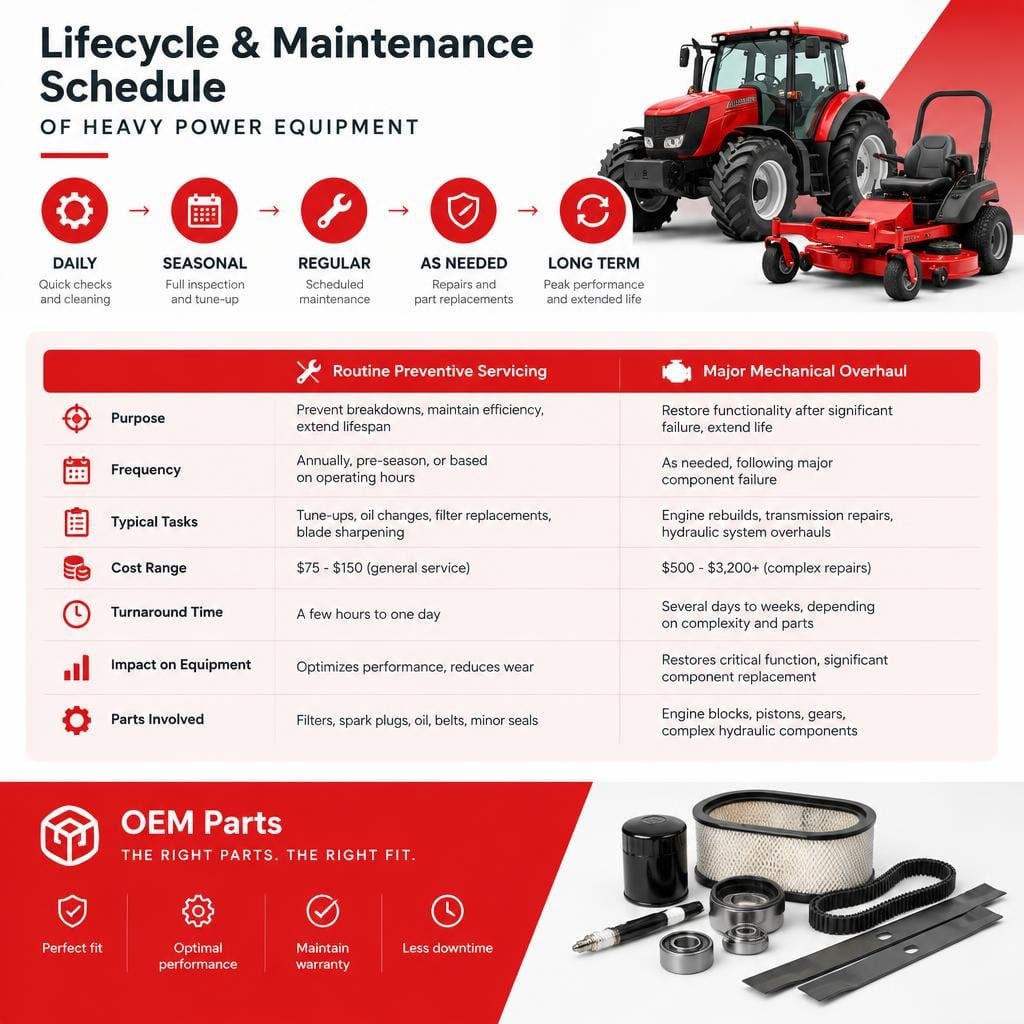
Here’s a comparison of routine preventive servicing versus major mechanical overhauls:
Service Aspect Routine Preventive Servicing Major Mechanical Overhaul Purpose Prevent breakdowns, maintain efficiency, extend lifespan Restore functionality after significant failure, extend life Frequency Annually, pre-season, or based on operating hours As needed, following major component failure Typical Tasks Tune-ups, oil changes, filter replacements, blade sharpening Engine rebuilds, transmission repairs, hydraulic system overhauls Cost Range $75 – $150 (general service) $500 – $3,200+ (complex repairs like crankshaft/head gasket) Turnaround Time A few hours to one day Several days to weeks, depending on complexity and parts Impact on Equipment Optimizes performance, reduces wear Restores critical function, significant component replacement Parts Involved Filters, spark plugs, oil, belts, minor seals Engine blocks, pistons, gears, complex hydraulic components
Sourcing OEM Parts from a Heavy Equipment Dealership
One of the significant advantages of utilizing a heavy equipment dealership for your maintenance and repair needs is their direct access to Original Equipment Manufacturer (OEM) parts. Unlike aftermarket alternatives, OEM parts are designed and built by the same company that manufactured your equipment. This ensures perfect fit, optimal performance, and adherence to the manufacturer’s original specifications.
When you need replacement components like engine filters, drive belts, cutting blades for your Hustler zero-turn mower, or intricate carburetor components, sourcing them directly from a dealership guarantees authenticity. This is crucial for maintaining the integrity and warranty of your machinery. Using genuine factory parts helps prevent premature wear, enhances operational efficiency, and contributes to the overall longevity of your investment. Dealerships often maintain a robust inventory of common parts, allowing for quicker repairs and minimizing downtime. For less common items, they have established supply chains to procure parts efficiently, ensuring your equipment gets exactly what it needs to perform at its best.
Mobile and On-Site Mechanical Support
Recognizing that hauling heavy equipment to a service center can be a significant logistical challenge, many modern heavy equipment dealerships offer mobile and on-site mechanical support. This service brings skilled technicians directly to your location, whether it’s a farm, a construction site, or a large property.
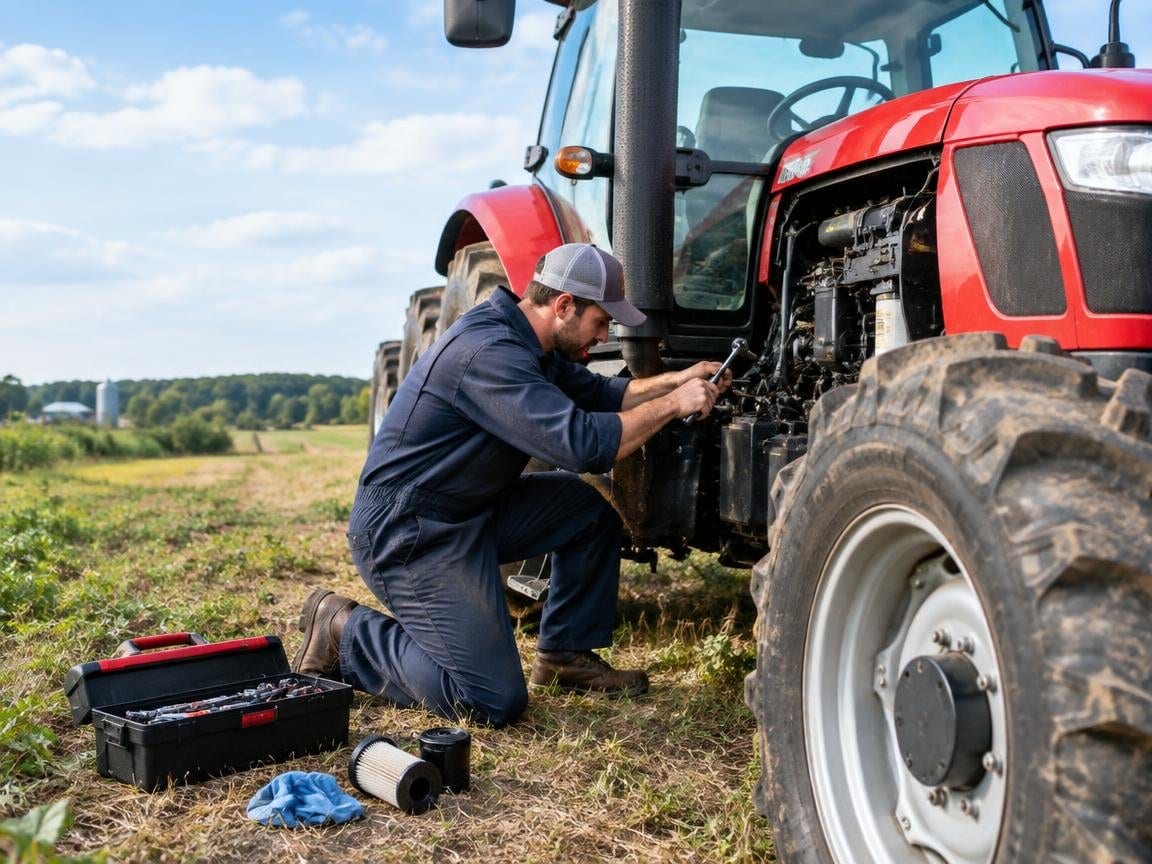
Mobile service units are equipped with specialized tools and common replacement parts, enabling technicians to perform a wide range of field repairs. This can include anything from routine maintenance and diagnostics to addressing emergency breakdowns. The convenience of on-site service dramatically reduces downtime and eliminates the need for costly transportation arrangements. For instance, if your commercial mower experiences an issue in the middle of a job, a mobile dispatch team can quickly arrive to diagnose and often resolve the problem on the spot.
Beyond immediate field repairs, some dealerships also offer convenient pickup and delivery services for equipment requiring more extensive work back at their main service bay. This comprehensive approach to service ensures that your heavy equipment remains operational with minimal disruption, providing flexibility and support tailored to your operational needs. This type of on-demand service can also sometimes be more cost-effective for certain repairs compared to traditional franchise dealers, especially when considering the time and effort saved in transportation.
Common Diagnostic Indicators and Mechanical Issues
Understanding the common signs that your heavy equipment or commercial lawn mower needs attention is crucial for preventing minor issues from escalating into major, expensive repairs. Being observant of your machinery’s performance can save you significant time and money.
One of the most frequent complaints is the engine stalling or failing to start. This could stem from various issues, such as a clogged fuel vent, an over-choked carburetor, or defective ignition wiring. If your equipment struggles to turn over or simply clicks, it’s a clear signal for a professional diagnosis.
Excess smoke emanating from the engine is another critical indicator. The color of the smoke provides clues: black smoke often suggests an over-rich fuel mixture or a faulty spark plug, while blue smoke typically points to oil burning, which could indicate worn piston rings or valve seals. Neither is a good sign and warrants immediate investigation.
Overheating is a common problem, especially in mowing equipment. This is frequently caused by cooling obstructions, such as accumulated grass clippings, leaves, or debris blocking the engine’s cooling fins. When these fins are blocked, heat cannot dissipate effectively, leading to engine damage. Regular cleaning of these areas is a simple preventive measure.
More severe mechanical issues can include a bent crankshaft, which often results from hitting a solid object with the mower blade. This can cause severe vibrations and engine damage. Another serious problem is a blown head gasket, which can lead to coolant leaks, engine overheating, and a significant loss of compression. These issues require expert repair due to their complexity and potential for extensive damage if ignored.
Evaluating Routine Wear Versus Severe Engine Faults
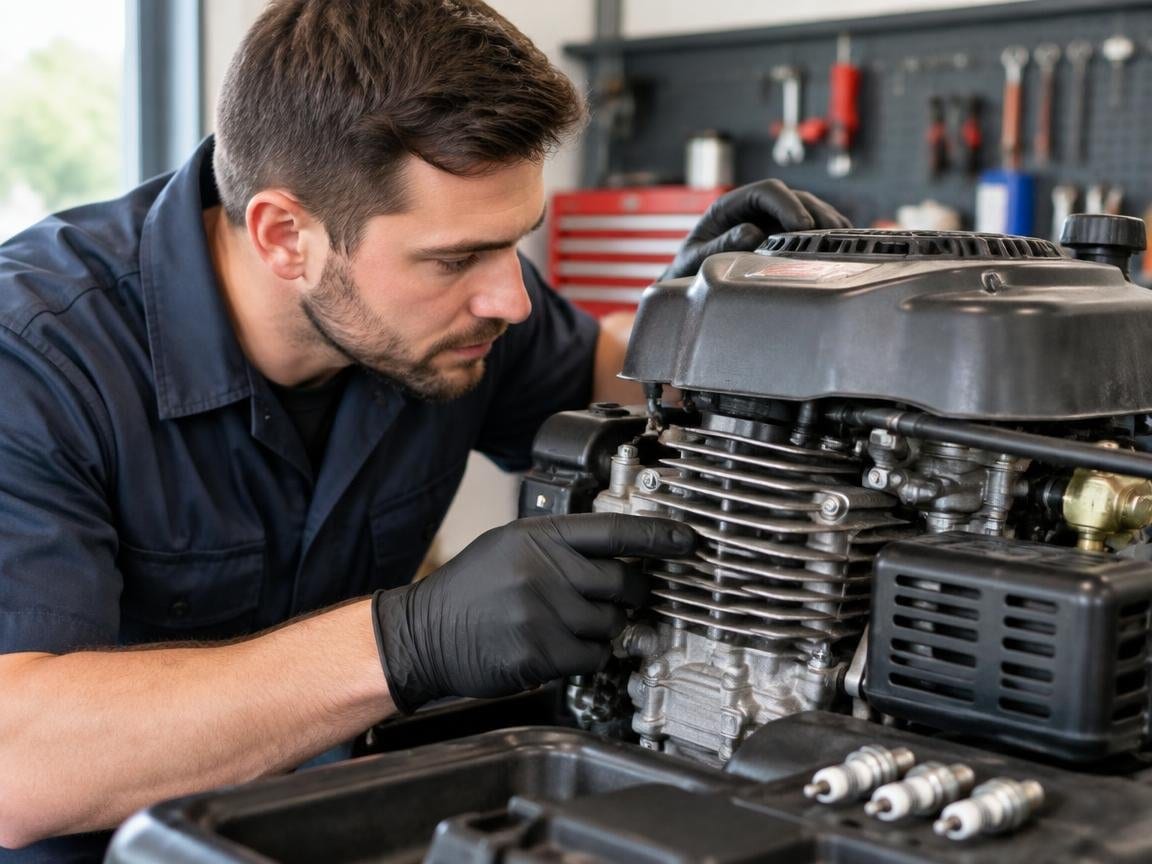
Distinguishing between routine wear and tear and severe engine faults is key to effective equipment management. Many common operational issues can be addressed with regular maintenance, while others signal a need for immediate professional intervention.
Routine wear often manifests as minor performance degradation. For example, a slight decrease in power or an occasional sputter might indicate issues like fuel contamination, where old or dirty fuel is affecting combustion. Cleaning the fuel system and replacing the fuel filter can often resolve this. Similarly, minor oil burning might be due to an overfilled crankcase or a small leak, rather than a catastrophic engine failure. Deck adjustments are also a common part of routine maintenance; uneven cutting often points to dull blades or an improperly leveled deck, not an engine fault.
However, certain warning signs demand immediate mechanical repair to prevent irreversible damage. These include:
- Persistent, heavy smoke: Especially blue or thick white smoke, indicating significant oil burning or coolant entering the combustion chamber.
- Loud knocking or grinding noises: These sounds often signal internal engine damage, such as worn bearings or connecting rod issues.
- Severe vibrations: Beyond what’s normal, this could indicate a bent crankshaft, damaged flywheel, or other critical component failures.
- Significant oil or fuel leaks: Large puddles under your equipment are a clear sign of a serious breach in the system that needs immediate attention.
- Complete loss of power or refusal to start: If basic troubleshooting (checking fuel, spark plug) doesn’t resolve it, a deeper internal problem is likely.
- Rapid overheating: Even after clearing cooling fins, persistent overheating can point to issues like a failing water pump (in liquid-cooled engines) or a blown head gasket.
Addressing these severe faults promptly is critical. For instance, repairing a bent crankshaft can start at around $500, while head gasket repairs can range significantly from $800 to $3,200, depending on the equipment and extent of damage. Ignoring these signs can lead to complete engine failure, necessitating far more expensive replacements.
Estimating Service Costs and Turnaround Times
Understanding the potential costs and expected turnaround times for heavy equipment and lawn mower repairs is essential for budgeting and operational planning. These factors can vary widely based on the complexity of the repair, the type of equipment, and the service provider.
Generally, lawn mower repair costs can range from approximately $45 to $120, with a median cost often around $67 for simpler fixes. General servicing, which includes tune-ups and routine maintenance, typically falls between $75 and $150. These figures usually cover labor and basic parts like oil and spark plugs.
However, more complex repairs can significantly increase these costs. For instance, fixing a bent crankshaft, a common issue if a mower blade strikes a hard object, can start at $500 due to the labor-intensive nature of the repair and potential component replacement. Head gasket repairs, which are often more involved, can range from $800 to $3,200, depending on the engine size and accessibility.
Hourly labor rates for lawn mower and small engine repairs generally range between $35 to $100. Some shops might offer flat-rate services for common tasks. For example, a non-working mower service, which includes diagnosis and repair, might be offered at a flat rate like $99.99 for labor plus parts, as seen with some service centers.
Turnaround times also vary. Simple repairs, such as blade sharpening, oil changes, or minor adjustments, can often be completed within a few hours or the same day. For more complex issues like engine overhauls, transmission work, or extensive diagnostics, repairs might take a day or longer, potentially extending to several days or even weeks if specialized parts need to be ordered. It’s always advisable to get an estimate for both cost and time upfront to manage expectations and plan for any potential equipment downtime.
How to Choose the Right Heavy Equipment Dealership for Maintenance
Selecting the right heavy equipment dealership for your maintenance and repair needs is a critical decision that impacts the longevity and performance of your machinery. Several factors should guide your choice to ensure you receive reliable, high-quality service.
Firstly, look for dealerships that employ certified technicians. These professionals have undergone rigorous training specific to various equipment brands and models, ensuring they possess the expertise to diagnose and repair complex systems accurately. Factory-trained mechanics, for example, are often up-to-date with the latest technologies and repair protocols from manufacturers.
The facility’s reputation is another key indicator. Seek out dealerships with a long-standing presence and positive customer feedback. A company with over two decades of power equipment experience, for instance, often signifies deep industry knowledge and a commitment to quality service. Checking independent reviews or affiliations with organizations like the Better Business Bureau (BBB) can provide insights into their reliability and customer satisfaction.
Maintenance scheduling flexibility is also important. A good dealership will offer convenient ways to book service, whether it’s through online forms, phone calls, or walk-in appointments. Some even provide pickup and delivery services, which can be invaluable for large or non-operational equipment.
Finally, always inquire about repair warranties. Reputable service centers typically stand behind their work, offering guarantees on parts and labor. Many shops provide a 30-day warranty on repairs, which gives you peace of mind that any immediate issues post-service will be addressed without additional cost. Choosing a dealership that offers comprehensive service agreements and clear warranty policies demonstrates their confidence in their workmanship.
Frequently Asked Questions About Heavy Equipment Maintenance
We often encounter common questions regarding the upkeep of heavy equipment and commercial lawn mowers. Here, we address some of the most frequent inquiries to help you better manage your machinery.
How often should tractors and heavy mowing equipment be serviced?
For optimal performance and longevity, it is highly recommended to service your heavy equipment and mowing machinery at least once a year. This annual tune-up is ideally performed before the peak operating season begins, typically in the late winter or early spring. This pre-season service ensures that all components are in top condition and ready for demanding work.
However, the frequency of service can also depend on the intensity of use. If your equipment is used heavily, for extended hours, or in particularly dusty or harsh conditions, more frequent preventative checks and maintenance might be necessary. Always refer to your equipment’s owner’s manual for specific service intervals based on operating hours or calendar time, as manufacturers provide tailored recommendations for their models. Regular preventative checks, such as inspecting fluid levels, air filters, and blade sharpness, should be conducted more frequently than full annual services.
What are the standard labor rates for heavy equipment and tractor repairs?
Standard labor rates for heavy equipment and tractor repairs can vary based on location, the complexity of the task, and the specific expertise required. Generally, hourly labor rates for lawn mower and small engine repairs range between $35 to $100. For larger, more complex heavy equipment, these rates might be at the higher end or even exceed this range, reflecting the specialized skills and tools involved.
Beyond hourly rates, many service centers offer diagnostic estimates, which are an initial fee to thoroughly inspect the equipment and pinpoint the problem before any repair work begins. Routine maintenance services, like general lawn mower servicing, often have a flat fee, typically ranging from $75 to $150, which usually includes labor for standard tasks and basic parts. Major repairs, due to their extensive labor and parts requirements, will naturally incur higher overall costs. It’s always best to request a detailed quote that outlines both labor and parts costs before authorizing any significant repair work.
Do equipment dealerships offer repair warranties?
Yes, most reputable equipment dealerships and service centers do offer warranties on their repair work. These warranties typically cover both the parts installed and the labor performed for a specific period. The duration of these warranties can vary, but it’s common for many shops to provide a 30-day warranty on repairs.
For new parts installed during a repair, the warranty might be longer, often backed by the part manufacturer. It’s crucial to clarify the specifics of any repair guarantee before service begins. Ask about the duration of the warranty, what exactly it covers (parts, labor, or both), and the conditions under which it applies. A clear understanding of the service agreement and warranty protection provides valuable assurance that the work performed is reliable and that any immediate issues post-repair will be addressed appropriately.
Conclusion
Maintaining the operational reliability of your heavy equipment and commercial lawn mowers is paramount for productivity and investment protection. As we’ve explored, professional maintenance from a reputable dealership offers a comprehensive solution, encompassing everything from essential preventative care to complex mechanical overhauls.
By understanding common diagnostic indicators, recognizing the value of OEM parts, and leveraging mobile service options, you can significantly extend the lifespan of your machinery and minimize unexpected downtime. Choosing a dealership with certified technicians, a strong reputation, and clear warranty policies ensures that your equipment receives the expert attention it deserves. Investing in professional maintenance is not just about fixing problems; it’s about ensuring consistent performance, maximizing efficiency, and safeguarding your valuable assets for years to come.