
A technical breakdown of fiber chemistry, ISO 9706 permanence standards, and the environmental thresholds that define true print longevity.
Collectors paying premium prices for limited-edition fine art prints expect the physical sheet to outlive its frame. Yet the ubiquitous “archival” label printed on paper packaging hides a fundamental fork in manufacturing: the choice between virgin cotton seeds and chemically bleached tree pulp.
Cotton rag paper is made from naturally pure cotton linters, whereas alpha-cellulose is made from purified wood pulp. Both meet strict museum permanence standards when buffered with calcium carbonate. Cotton, however, retains superior mechanical flexibility and folding strength over centuries because of its longer molecular chains.
What is the core chemical difference between cotton rag and alpha-cellulose paper?
The core difference lies in the botanical origin of the plant fibers and the chemical processing required to extract pure cellulose. Plant cellulose forms the structural backbone of all fine art papers, but its purity and molecular length vary fundamentally depending on whether it originates from cotton seeds or tree timber.
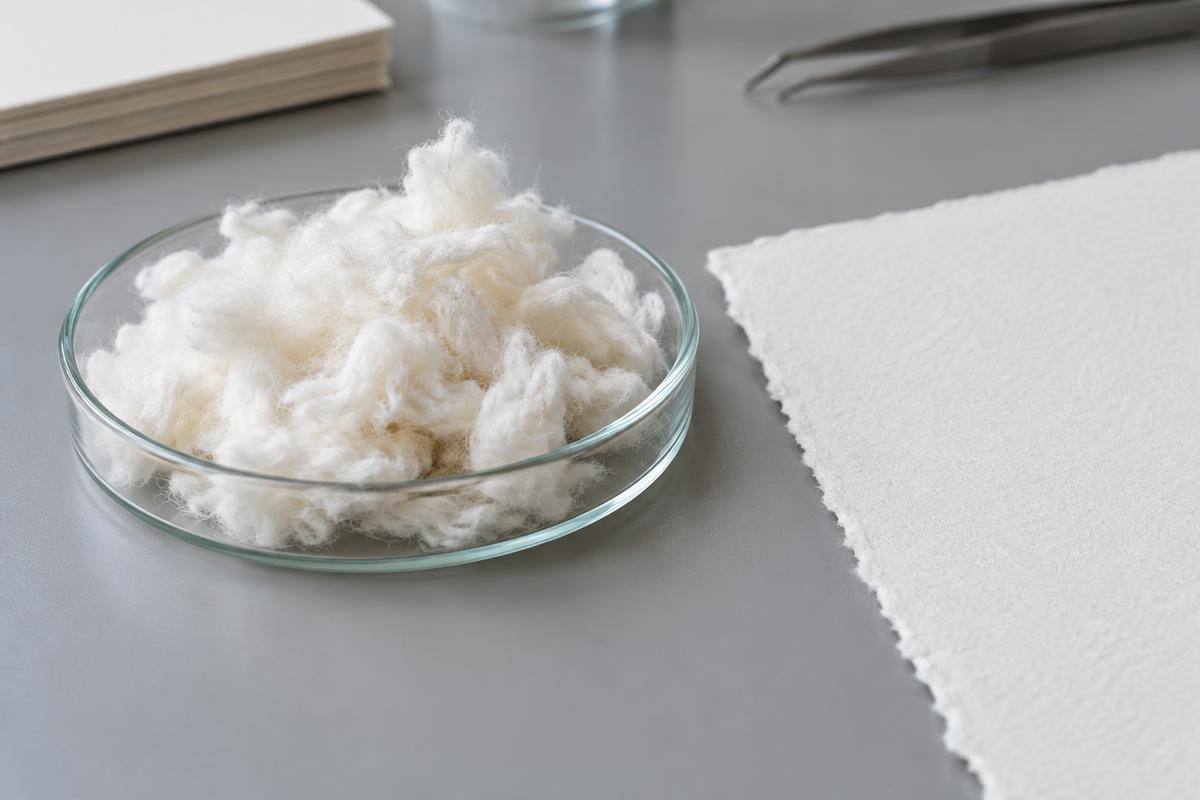
Cotton paper is manufactured from cotton linters, which are the fine, silky fibers that remain adhered to cotton seeds after ginning. As documented by the Museum of Fine Arts Boston (CAMEO), cotton linters are composed of 98% to 99% pure alpha-cellulose naturally free of lignin. Because nature produces cotton linters in an almost purely cellulosic state, the raw fiber requires minimal mechanical beating and gentle washing to prepare it for the papermaking vat.
In contrast, alpha-cellulose paper is derived from wood pulp, which in its raw state contains heavy concentrations of hemicellulose and lignin. Lignin is the rigid organic polymer that binds tree wood cells together, but it is chemically unstable and oxidizes rapidly when exposed to air and light. To extract alpha-cellulose from wood, paper mills subject the raw pulp to intense chemical cooking and multi-stage bleaching processes. These industrial treatments dissolve the lignin and extract the highest-grade wood cellulose fraction.
This chemical refinement leaves a distinct physical signature at the molecular level. Native cotton fibers exhibit an exceptionally high degree of polymerization, meaning their individual cellulose molecules form long, uninterrupted molecular chains. The harsh chemical cooking required to purge lignin from wood pulp shears those chains into significantly shorter segments. While both resulting sheets feel sturdy off the press, cotton rag possesses an internal fiber matrix that can bend, flex, and endure handling without fracturing its microscopic bonds.
What chemical benchmarks does ISO 9706 require to certify paper as permanent?
To qualify for ISO 9706 certification, paper must meet four laboratory thresholds covering aqueous pH, tearing resistance, oxidation resistance, and alkaline buffering capacity. This international standard establishes objective chemical criteria, preventing paper manufacturers from slapping generic archival labels on substandard stock.
The first chemical criterion governs internal acidity. According to published technical specifications on cool.culturalheritage.org, ISO 9706:1994 specifies that permanent paper must maintain an aqueous cold-water extract pH between 7.5 and 10.0 across all paper layers. Neutral or mildly alkaline conditions ensure that the cellulose polymer does not undergo self-destructive acid hydrolysis while stored in gallery archives.
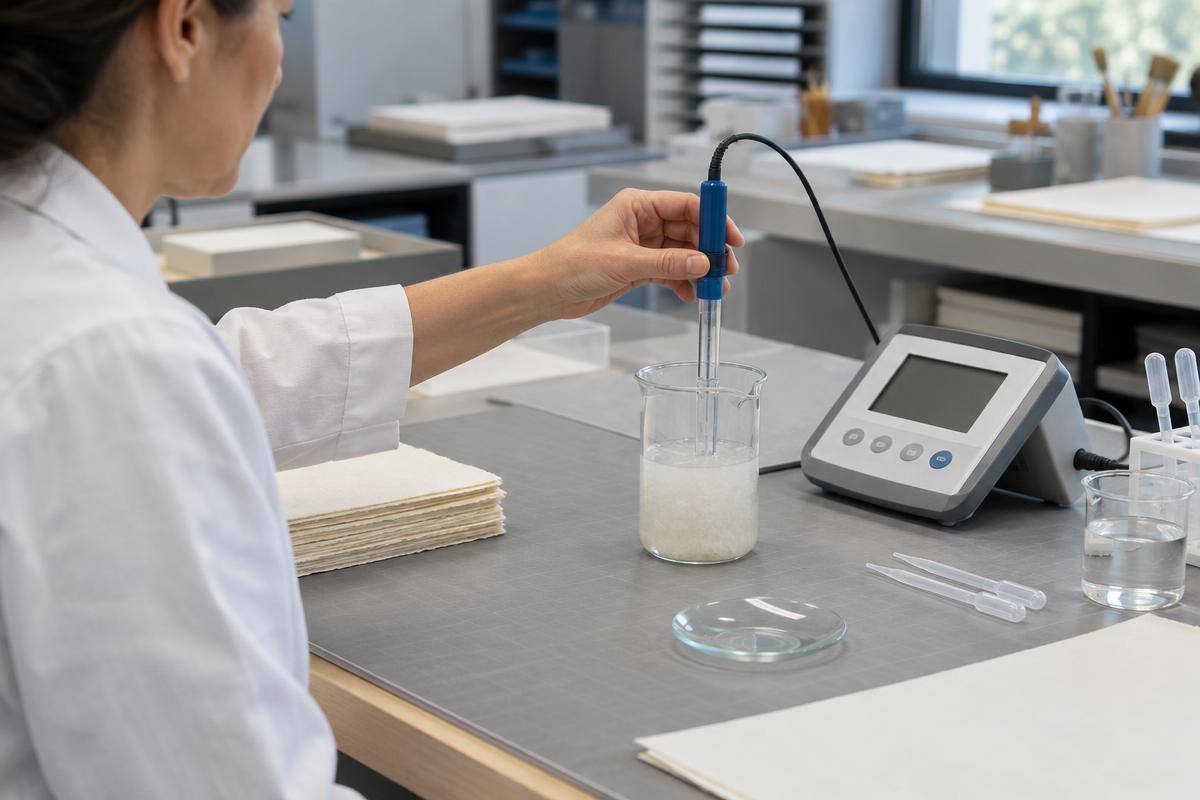
The second benchmark limits oxidation. As detailed by European research institute RISE, ISO 9706 establishes an oxidation resistance threshold by requiring a Kappa number under 5.0. This laboratory metric measures the amount of potassium permanganate solution consumed by the pulp, directly capping the volume of easily oxidizable compounds such as residual lignin. Keeping the Kappa number below this line prevents the paper from yellowing and turning brittle upon atmospheric exposure.
Physical strength forms the third requirement. For papers with a basis weight of 70 g/m² or higher, ISO 9706 mandates a minimum tearing resistance of 350 mN in both the machine and cross directions. This physical test ensures that sheets maintain tensile integrity under handling, avoiding edge tears when mounted into portfolios or framing mats.
The final requirement mandates an active alkaline reserve, typically achieved by introducing calcium carbonate into the paper slurry during manufacturing. An acid-free label guarantees only that the paper was neutral when manufactured, not that it will stay that way. As the Library and Archives Canada Blog observes, standard unbuffered everyday photocopy paper often tests neutral or alkaline when marked with an archivist’s pH indicator pen. Yet that standard office sheet fails permanence criteria because it lacks an alkaline reserve to neutralize acid absorption from polluted air, alongside failing tearing strength and oxidation thresholds.1
| Test Property | ISO 9706 Requirement | Archival Preservation Function |
|---|---|---|
| Aqueous Cold-Water Extract pH | 7.5 to 10.0 | Prevents acid hydrolysis of cellulose chains |
| Oxidation Resistance (Kappa Number) | Under 5.0 | Restricts residual lignin and easily oxidizable compounds |
| Tearing Resistance (≥ 70 g/m²) | Minimum 350 mN | Ensures physical sheet integrity across both paper directions |
| Alkaline Reserve | Active buffer required | Neutralizes atmospheric pollutants and migrant environmental acids |
Source: cool.culturalheritage.org
- Alpha-cellulose
- The highest molecular weight fraction of plant cellulose, remaining insoluble in a 17.5 percent sodium hydroxide solution.
- Kappa number
- A standard laboratory measurement defining the quantity of oxidizable material, primarily residual lignin, remaining in processed pulp.
- Alkaline reserve
- An active chemical buffer, such as calcium carbonate, added during papermaking to neutralize incoming acidic contaminants over time.
- Foxing
- Small, irregular reddish-brown spots that develop on paper caused by fungal colonies and metal contaminants in moist environments.
Why does ISO 11108 require cotton fibers while ISO 9706 allows purified wood pulp?
ISO 11108 governs archival paper intended for centuries of active physical handling and high mechanical stress, which purified wood fibers cannot survive without fracturing. While the broader public uses archival and permanent interchangeably, conservation science draws a sharp legal line between them.
Under ISO 11108, eligible substrates are restricted entirely to non-wood fiber sources such as cotton, cotton linters, hemp, or flax. These raw materials possess naturally long fiber lengths and dense hydrogen bonding networks that give the finished sheet superior folding endurance. A museum-grade cotton sheet can be thumbed through in archival print drawers, rolled into transport tubes, and flattened repeatedly across decades without snapping its structural core.
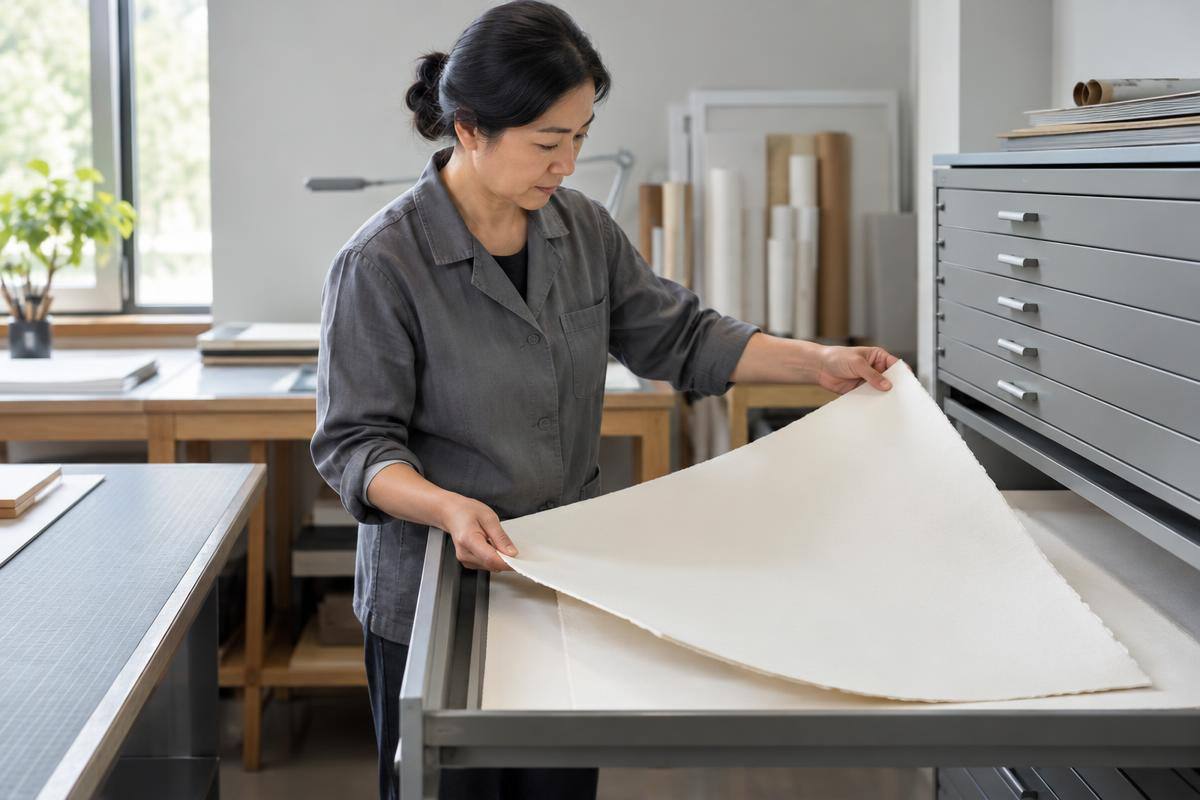
ISO 9706, by comparison, certifies permanent paper suitable for long-term document and artwork storage where the physical sheet remains essentially undisturbed. Highly refined alpha-cellulose papers satisfy every chemical stability threshold of ISO 9706. For example, Hahnemühle German Etching (310 gsm) is made from 100% alpha-cellulose rather than cotton, as documented by print supplier Resolve Photo. This mold-made stock meets all acid-free and lignin-free age resistance criteria. When framed flat behind UV-filtering glass in an art gallery, high-grade alpha-cellulose matches cotton rag in visible permanence because the paper never undergoes repetitive bending.
Do optical brightening agents permanently damage fine art prints over time?
Optical brightening agents do not physically dissolve paper fibers, but they chemically break down under ultraviolet radiation, causing severe yellow staining and disrupting print color balance.
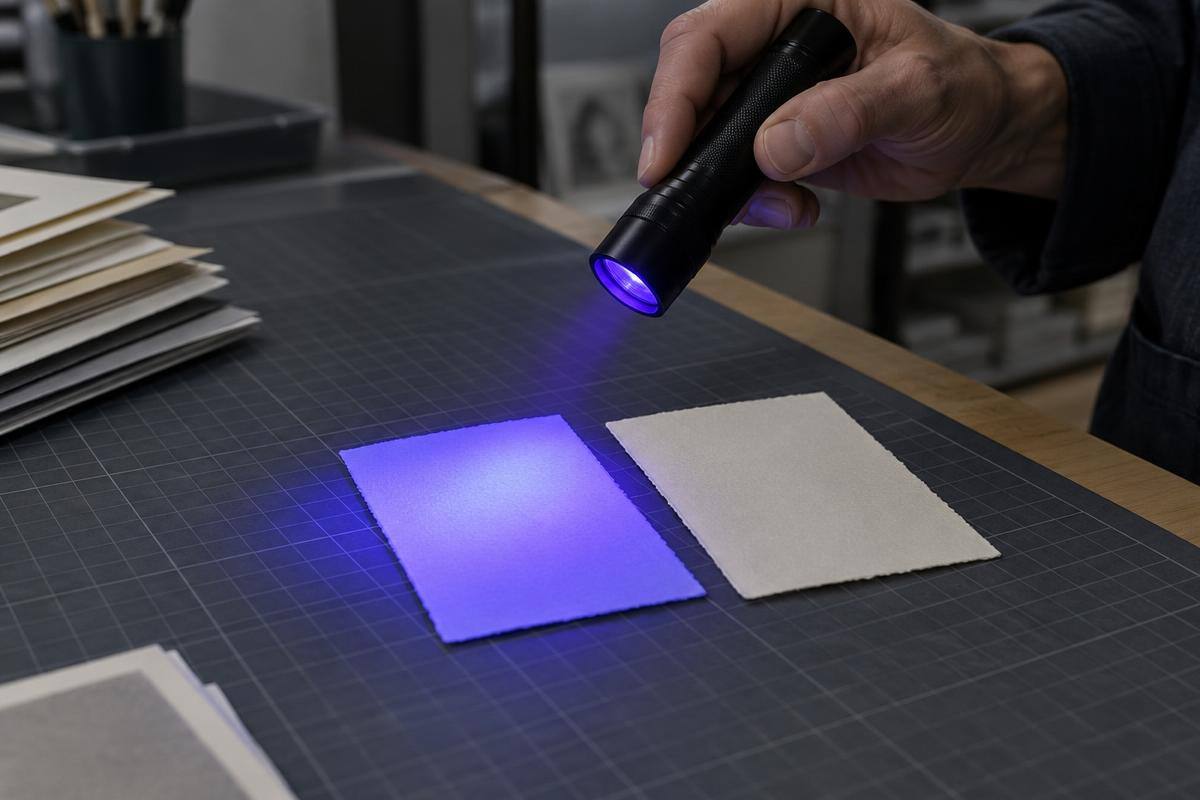
Paper mills frequently incorporate synthetic fluorescent whitening compounds, widely known as optical brightening agents (OBAs), to boost the visual brightness of their sheets. These complex organic molecules absorb invisible ultraviolet radiation and re-emit light in the blue spectrum. This blue fluorescence fools the human eye by masking the natural ivory cast of raw plant fibers, making the substrate look bluer, crisper, and unnaturally luminous.
The chemical problem is that optical brighteners have poor light stability. Over decades of display exposure, ambient ultraviolet radiation gradually destroys the molecular structure of the brighteners. As their fluorescent capacity exhausts, the paper reverts to its underlying yellowish or cream base tint. Research published by Wilhelm Imaging Research showed this goes beyond lost brightness: decaying optical brighteners actively oxidize into yellowish chemical stains across highlights and margins.
For commercial photographers and printmakers producing work for the fine art market, optical brighteners present severe metamerism and stability hazards. When brighteners degrade unevenly across an exhibition print, the highlight tonality drifts, altering delicate skin tones and architectural neutrals. Prints intended for genuine long-term collection should rely on natural white substrates devoid of artificial chemical brighteners.
Why do resin-coated photo papers suffer from crazing and microcracking?
Resin-coated photographic papers suffer from surface microcracking because ambient light triggers a photo-oxidative reaction between embedded white pigments and the surrounding polyethylene plastic layers.
A resin-coated (RC) substrate does not function like a traditional porous fine art paper. Instead, manufacturers construct RC paper by sandwiching a cellulose paper base between two extruded water-impermeable layers of polyethylene. To provide the bright, opaque white reflective base required for photographic emulsions, the upper polyethylene layer is heavily pigmented with titanium dioxide.
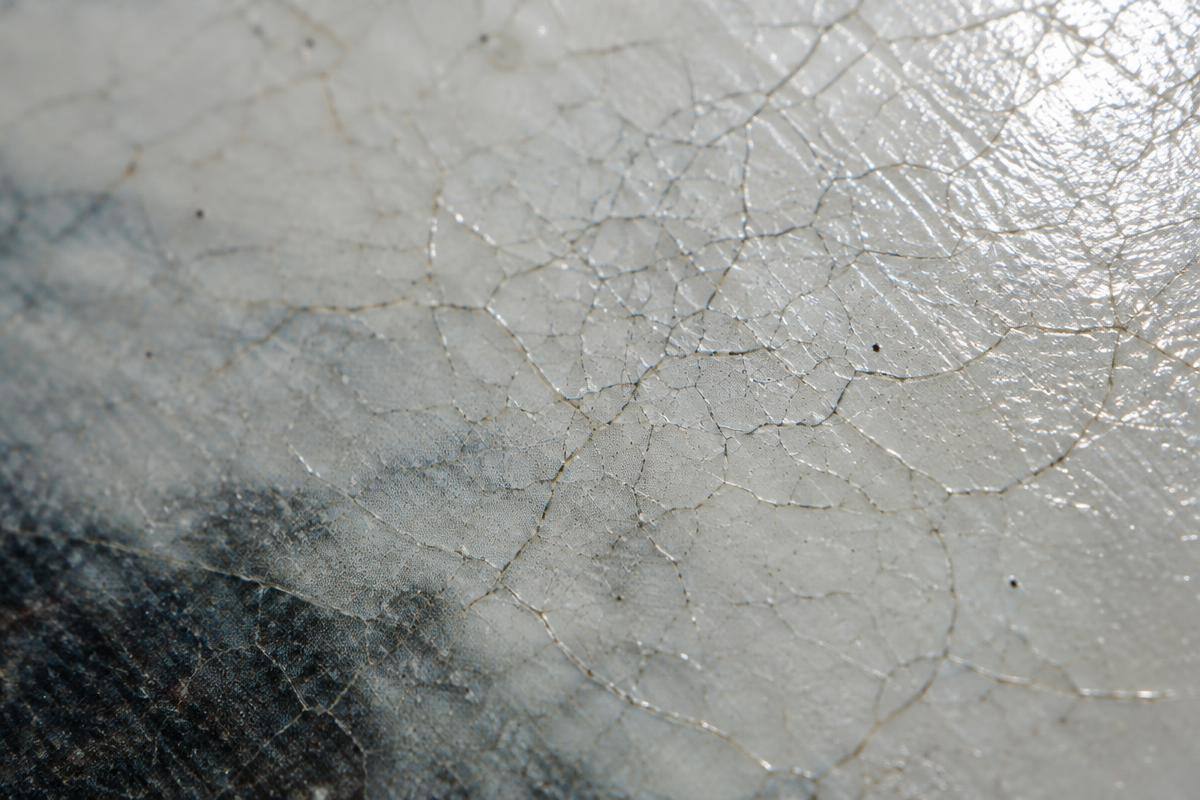
Under prolonged light exposure, titanium dioxide functions as an energetic photocatalyst. The pigment particles absorb photon energy and generate highly reactive oxygen radicals within the polymer matrix. These aggressive radicals attack the polyethylene chains, causing widespread molecular scission. As the plastic loses its flexibility, the surface develops a microscopic web of fractures known as crazing, giving the print surface an uneven, hazy, and cracked texture.
The impermeable nature of polyethylene creates a secondary hazard when prints are framed under glass. Because the plastic layers seal the paper core, ink solvents, ozone reaction byproducts, and volatile organic compounds cannot vent naturally through the paper fibers. Trapped against the image layer, these volatile chemicals degrade pigment dyes and binder resins, shortening display lifespans compared to breathing cotton rag papers.
How does tropical humidity accelerate paper degradation and foxing?
Tropical humidity accelerates paper deterioration by supplying ambient water molecules that drive acid hydrolysis while fostering biological fungal blooms known as foxing.
Cellulose is a hygroscopic material that readily exchanges moisture with surrounding ambient air until an equilibrium is reached. As noted by testing specialists at Unitest Instruments, chemical paper degradation through acid hydrolysis roughly doubles with each 10°C rise in temperature and accelerates sharply when ambient relative humidity exceeds 65%. High moisture levels lubricate chemical reactions, allowing trace atmospheric pollutants to split long cellulose chains into acidic fragments that yellow and weaken the sheet.
When ambient relative humidity remains above 65%, dormant microscopic fungal spores activate. Fungi consume sizing agents and trace mineral contaminants within the paper structure, excreting organic acids and iron complexes that manifest as disfiguring reddish-brown spots termed foxing. Once established, fungal damage permanently alters paper fibers and cannot be reversed without delicate conservation bleaching.
A print portfolio stored in uncontrolled tropical air will degrade twice as fast for every 10°C rise in temperature. In tropical regions like Singapore, where outdoor air regularly maintains elevated humidity and warm temperatures year-round, unconditioned storage leads to rapid print ruin. Professional institutions combat these forces through continuous mechanical air treatment. As conservators at the National Gallery Singapore explain, the national Heritage Conservation Centre houses over 250,000 national artifacts under rigid environmental specifications: 22°C (±2°C) and 55% (±5%) relative humidity. For studio managers, cutting off HVAC systems overnight causes devastating humidity spikes that condense against framed glazing.
How should a print studio balance substrate costs against archival guarantees?
A print studio should balance substrate costs by segmenting inventory into clear commercial, exhibition, and museum-grade tiers that align material costs with client display lifespans.
Inventory overhead can quickly burden a commercial studio. Stocking rolls of heavy 100% cotton rag paper ties up operational cash, and using premium rag for short-lived commercial advertising or temporary promotional runs needlessly compresses studio profit margins. Conversely, utilizing uncertified paper for limited-edition gallery releases compromises professional reputation and invites costly client remakes when prints prematurely discolor.
A disciplined production model relies on three transparent substrate tiers:
- Commercial proofing tier: Utilize resin-coated photo papers for high-volume commercial headshots, temporary venue signage, and quick studio client proofs. These substrates offer high handling durability and fast drying times at a fraction of the cost of fine art media.
- Commercial edition tier: Deploy heavyweight 100% alpha-cellulose papers (such as 310 gsm textured stock) for commercial gallery editions, hotel art installations, and interior photography runs. Alpha-cellulose complies fully with ISO 9706 standards. Printmakers can confidently guarantee over a century of color permanence behind UV glass while protecting profit margins.
- Museum archival tier: Reserve 100% cotton rag papers that are completely free of optical brighteners and buffered with calcium carbonate for signed, numbered limited editions and institutional acquisitions. Cotton rag provides the physical folding endurance demanded by archival print collectors who store work in solander boxes and portfolios.
The most practical step a studio manager can take today is to inspect current paper stocks using a standard 365 nm ultraviolet handheld torch. In a dark room, shine the beam across your sample swatches: any paper that lights up with an electric violet-blue glow contains optical brighteners and should be retired from your permanent fine art runs immediately.
Notes
- Standard chlorophenol red pH pens only check surface alkalinity and cannot confirm whether an active calcium carbonate reserve exists inside the sheet core.
Sources
- Museum of Fine Arts Boston — Cellulose – CAMEO
- cool.culturalheritage.org — ISO 9706
- RISE — Paper testing
- Library and Archives Canada Blog — All papers are not created equal (2015)
- Resolve Photo / Hahnemühle — German Etching (2020)
- Wilhelm Imaging Research — Abstract of a paper to be presented by Henry Wilhelm on March 29, 2021: Application of High-Resolution Multispectral Imaging
- Unitest Instruments / ISO 11799 Conservation Analysis — Museum Archive Climate Control Humidity Measurement Singapore (2026)
- National Gallery Singapore / Heritage Conservation Centre — Ask a Conservator: FAQs with Mar Cusso (2020)
Some photos provided by Pexels