
Say you find yourself under the harsh sodium glare of London Euston at eight-thirty on a Thursday evening. Commuters churn toward the tube turnstiles with heads down and umbrellas dripping wet. A loudspeaker crackles with announcements of delayed suburban trains. Yet tucked away on platform fifteen sits a long rake of slate-blue carriages waiting in quiet dignity. This is the Highland Sleeper, and it offers one of the most rewarding rituals left in modern journeys: slow, deliberate night train travel. You step aboard in the asphalt center of England, fall asleep to the rhythm of moving steel, and wake up surrounded by the heather-clad peaks of the Scottish Highlands.
The transition feels like theatrical magic, though it runs on diesel, steel, and timetable precision. In an era when journeys have been compressed into frantic, strip-searched dashes through airport terminals, the overnight rail route to Fort William restores a sense of geographic scale. You do not skip over the country at thirty-five thousand feet while pinned inside a pressurized aluminum tube. You feel the ground shift beneath you. The city concrete softens into pastoral hills, the hills rise into granite crags, and the quiet wildness of northern Britain reveals itself right outside your bedroom window.
Boarding at Euston Under the Late London Sky
London Euston is rarely described with affection. It is a utilitarian hub of raw concrete, flickering LED departure boards, and hurried passengers staring upward with craning necks. But when the board finally illuminates with the words 21:15 Fort William, Inverness and Aberdeen, the atmosphere changes. Travelers detach themselves from the standing crowd. You see mountaineers with scuffed rucksacks, lone photographers carrying tripod bags, couples holding hands, and business travelers clutching tailored jackets. They all walk together toward the darkened tail of the terminal where the Caledonian Sleeper sits idling quietly.
At the platform gate, carriage hosts dressed in Highland wool waistcoats greet passengers by name. A handheld scanner bleeps, and with a warm word of welcome, you are ushered along the train. The contrast between the drafty terminal and the train interior is immediate. The hallway is narrow, lined with tactile walls and soft downlighting. Walking down the corridor requires a polite side-step whenever you meet someone coming the other direction. There is an unmistakable scent aboard: clean cotton sheets, fresh cedar paneling, and the faint, nostalgic trace of locomotive engine oil.
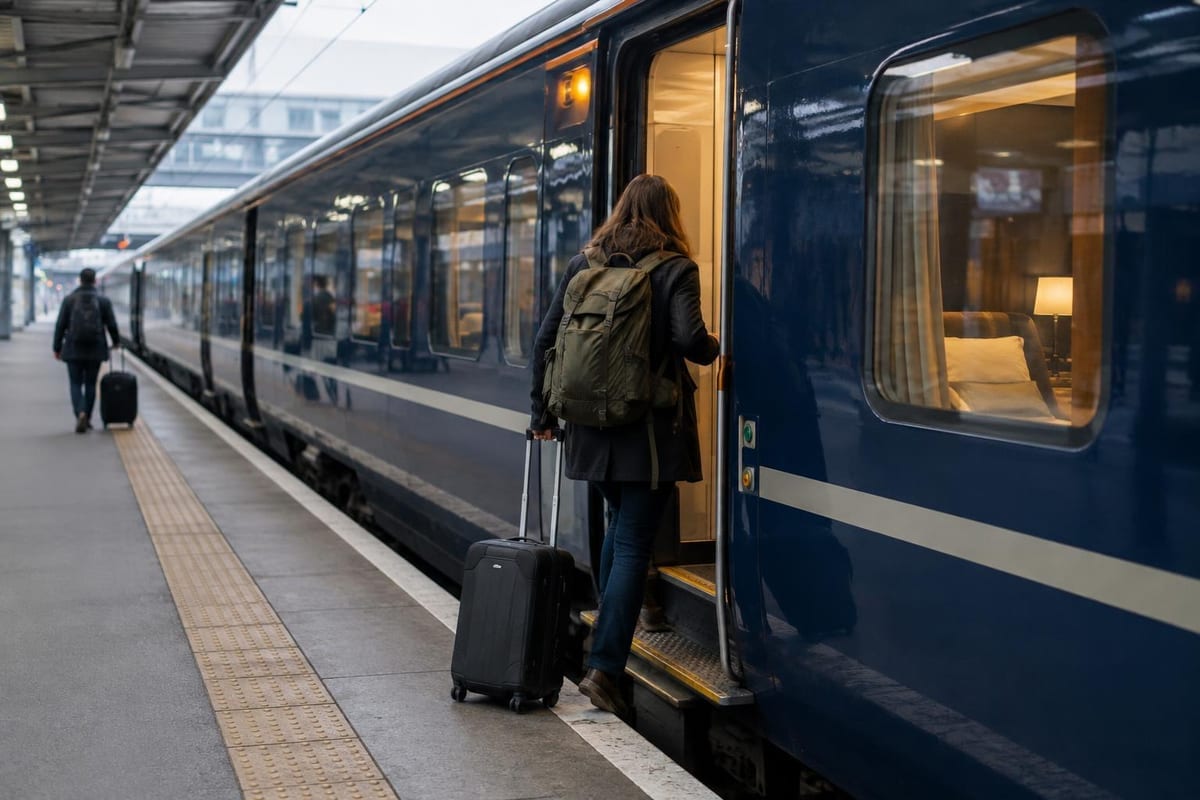
Traveling well on an overnight sleeper starts with how you pack. The most seasoned rail riders carry a compact soft bag containing only what they need for twelve hours: toiletries, a book, a phone charger, and a change of clothes. Heavy rolling suitcases belong under the lower berth or stowed on the floor bracket. If you try to open a hard-shell wardrobe trunk inside a train compartment, you will spend your evening playing gymnastics against the sink. Keep your essentials on top, hang your coat on the bronze peg beside the door, and let the smallness of the room simplify your thoughts.
There is a comforting ceremony to settling into your private space before the train moves. You examine the clever brass latches, test the fold-down washbasin, inspect the bespoke toiletries kit packed with Scottish heather soap, and adjust the bedside reading lamp. Through the double-glazed window, you watch late-night commuters on adjacent platforms glance into your room with open envy. They are heading twenty minutes down the line to Watford; you are heading to the edge of the Atlantic Ocean.
A gentle jolt runs through the frame. The platform lights slide backward. At exactly nine-fifteen, the train eases away from the buffers. London begins to glide away in slivers: brick row houses with warm kitchen windows, graffiti-painted viaduct arches, rows of suburban gardens, and illuminated street crossings. The noisy pulse of the metropolis fades into the dark.
The Art of Living in a Sleeper Berth
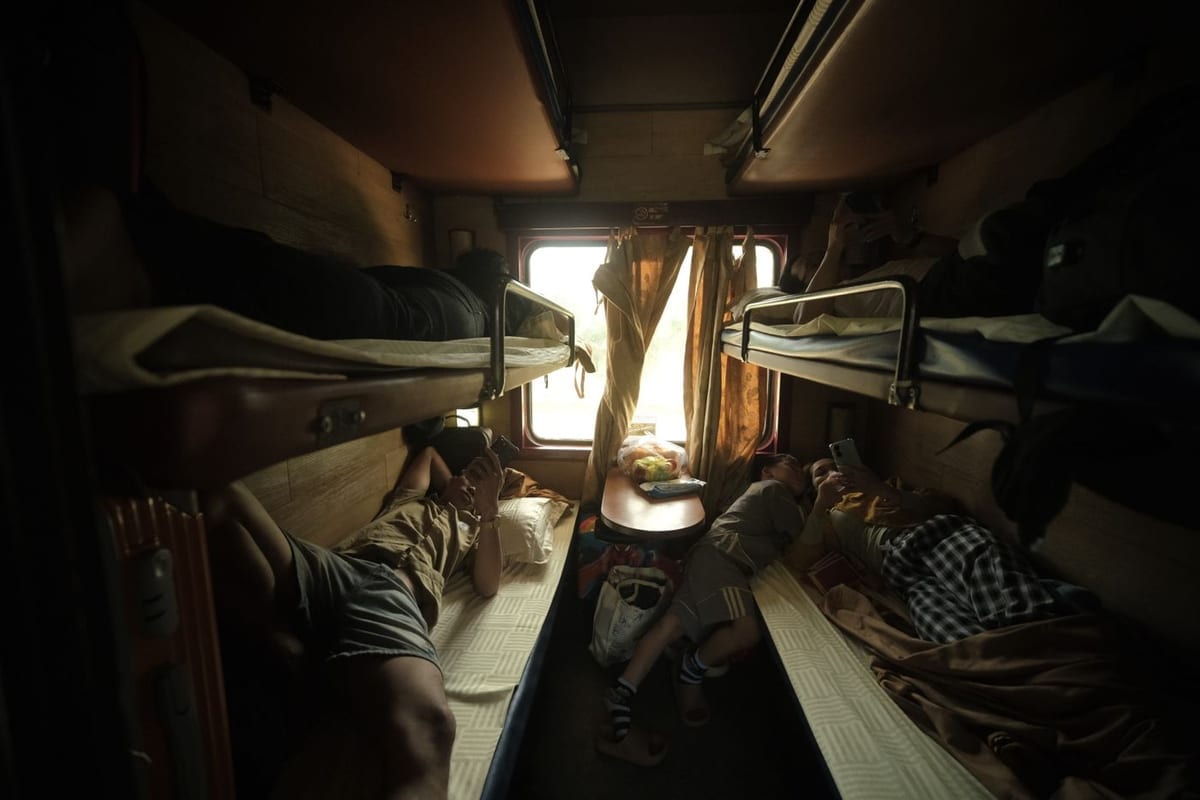
A sleeper cabin is a masterclass in spatial efficiency. The modern Mark 5 carriages, built by CAF and introduced across the route, have refined the historic ritual of night transit. Accommodations range from simple seated coaches to Classic bunk rooms, en-suite Club rooms, and Caledonian Double rooms featuring fixed full-sized beds. For most travelers seeking the true flavor of the rails, the Club room hits the sweet spot. It provides two sturdy bunks, a private enclosed shower and toilet module, and clever hidden storage nooks that fold into the wall like origami.
The beds are serious pieces of craftsmanship. Topped with handcrafted mattresses from Glencraft, a firm in Aberdeen that has supplied British royal residences for decades, they are firm, supportive, and dressed in heavy white cotton duvets. Lying down on one of these bunks is an experience worlds apart from reclined airline seats. You are genuinely horizontal. Your spine decompresses. Your feet have unrestricted room to stretch out.
Before turning in, almost every passenger makes the pilgrimage toward the center of the train: the Club Car. This shared lounge is the beating social heart of the Highland service. Here, fixed banquettes and swivel leather armchairs surround tables set with small brass lamps. The lights are kept pleasantly low so the darkened scenery outside remains visible. Waiters move steadily through the sway of the train, balancing trays loaded with regional food and drink.
The menu reads like a culinary map of Scotland. You can order warm Highland venison casserole, traditional haggis with spiced neeps and creamy mashed potatoes, or a bowl of hot Cullen skink soup redolent of smoked haddock and cream. The bar stocks single malts from every major distilling region: peaty Islay drams, floral Speysides, and rich Highland varieties. Conversations spark easily among travelers. You might sit across from a botanist heading toward Glen Affric, an architect sketching in a notebook, or a family returning to Lochaber after visiting relatives in Surrey.
Rail travel creates a natural community that air travel systematically destroys. In an airplane cabin, passengers retreat behind noise-canceling headphones and defensive body language. In the sleeper lounge, the shared movement through the dark turns strangers into companions. You swap hiking stories, discuss mountain weather forecasts, and compare notes on whisky finishes while the train races through the English Midlands at eighty miles per hour.
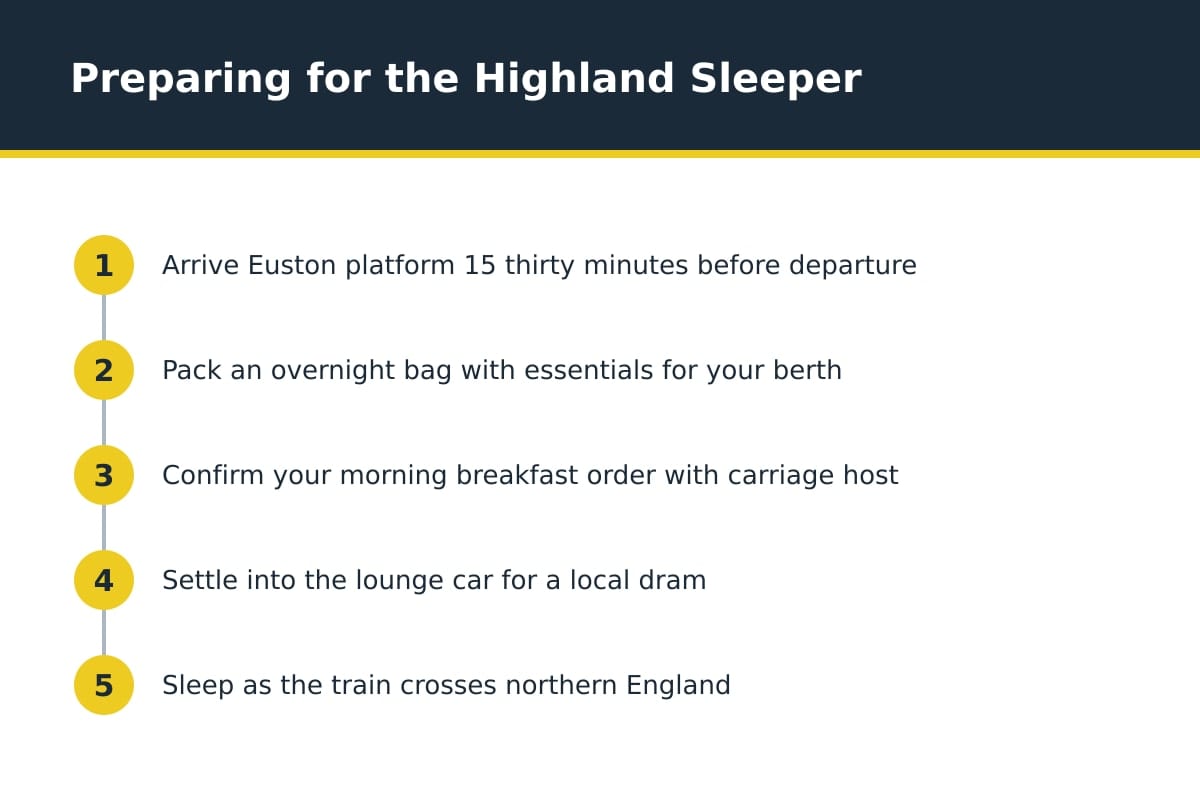
Retreating to your cabin after a final dram, you find the berth turned down. A small card rests on your pillow with a breakfast selection box. You tick off your morning preferences: hot porridge with Scottish heather honey, smoked salmon and scrambled eggs, or a warm roll with Ayrshire bacon, accompanied by fresh fruit and strong black coffee. You hang the tag on the outer door handle, lock the deadbolt, and climb between crisp sheets.
Slipping Past the Border in the Dark
Sleeping on a train is an active, physical experience. It is not the sensory deprivation of a hotel room. It is a slow, rhythmic cradle. The heavy steel chassis produces a resonant hum, interrupted occasionally by the hollow rattle of passing over track switches or the soft woosh of clearing a tunnel. The bogies click across rail joints with a metronomic cadence that works better than any manufactured sleep soundtrack.
You will probably wake up once or twice during the night. When you do, do not fight it. Slide up the dark roller blind and press your forehead against the cool glass. Around midnight, the train slows through the industrial rail junctions of Crewe. Outside, bright yard floodlights illuminate rows of silent freight wagons and damp ballast gravel. An hour later, the train rolls past Preston. Red signal lanterns glow like rubies against wet track switches.
Sometime near two-thirty in the morning, the train charges through the dramatic gradients of the West Coast Main Line toward Shap Summit in Cumbria. Outside, the night is pitch black. You cannot see the fells, but you can feel the diesel locomotives pulling hard against the incline. The engine note deepens, sending a low vibration through the berth frame. Then comes the smooth acceleration downhill toward Carlisle.
In the pre-dawn hours, long before passengers stir, the train crosses the Anglo-Scottish border and pulls into Carstairs junction and Edinburgh Waverley. Here, a delicate mechanical dance unfolds. The long sixteen-carriage train is broken apart. Shunting engines uncouple hydraulic brake lines and safety chains with loud metallic thuds and the sharp hiss of escaping air. The rear coaches will peel off toward Aberdeen and the coastal cliffs; the middle section heads north to Inverness; the front portion, bound for Fort William and the West Highland Line, is hitched to a dedicated diesel locomotive.
If you listen closely through the cabin floor, you can hear the train crew working in the damp night air. Shouts of rail workers, the clink of coupling hooks, and the soft chime of conductor radios filter through the hull. This railway infrastructure has operated without interruption for over a century, knitting together the southern capital with the remote northern edges of Britain.
Why Night Train Travel Outperforms the Flight
To understand the genuine superiority of night train travel over flying, you only need to run the math on a standard commercial flight to the Scottish Highlands. Consider the typical morning flight from London Heathrow or Luton up to Inverness or Glasgow. Your alarm sounds at four-thirty in the morning. You stumble into a cold taxi or drag luggage through dawn commuter trains to reach the airport two hours before departure.
Once at the terminal, you enter the modern transit gauntlet: endless queuing, automated luggage drop scanners, removing belts and shoes at security checkpoints, and waiting inside crowded departure lounges designed like shopping malls. Next comes the mad rush to board, the cramped seat with thirty inches of legroom, and the inevitable flight delays caused by congested airspace. If an airline disrupts your plans, you face the administrative headaches outlined in our guide on Airline Canceled Your Long-Haul Route? Here Are Your Rights. After landing at a peripheral regional airport, you still need to collect baggage, rent an expensive car or wait for an infrequent local bus, and spend another two hours driving into the mountains.
The flight produces zero productive time. It consumes your entire morning, leaves you drained by midday, and dumps you into an airport parking garage miles from the actual scenery you traveled to see.
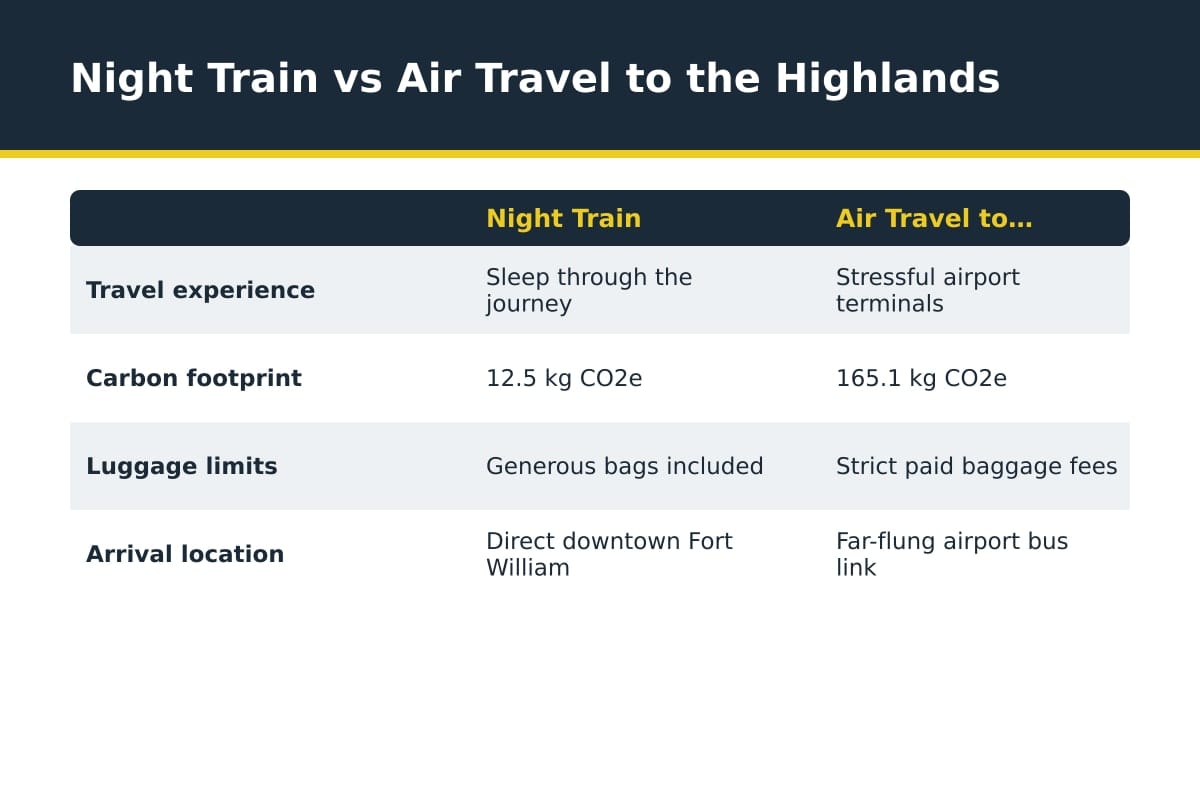
The overnight sleeper flips transit entirely on its head. It combines transport and accommodation into a single seamless overnight block. You do not lose daylight hours to transit. You spend the evening dining and relaxing, sleep in a proper bed, and wake up already delivered to your destination. The station at Fort William sits right in the town center, footsteps away from hiking outfitters, local bakeries, and rental points.
The environmental contrast is equally sharp. Rail transit represents one of the cleanest modes of long-distance passenger travel in existence, cutting atmospheric damage by an order of magnitude compared to commercial aviation. Consider these verified facts:
12.5 kilograms of CO2e: The emissions generated per passenger traveling between London and Scotland by electric rail, compared to 165.1 kilograms produced on an equivalent flight, according to the official Rail Delivery Group Green Travel Pledge data published in 2023.
1,340 feet: The elevation of Corrour station above sea level on the edge of Rannoch Moor, making it the highest mainline railway stop anywhere in the United Kingdom, verified by Network Rail infrastructure surveys.
20 miles: The length of the railway line floating over deep peat bog on a foundation of brushwood, tree roots, and compacted turf across Rannoch Moor without touching solid bedrock, according to historical ScotRail engineering archives.
12 hours and 45 minutes: The scheduled journey duration from London Euston to Fort William on the Highland Sleeper, transforming transit time into an undisturbed night of sleep, as recorded in the
official timetable.
When you weigh the environmental ledger, the comfort of a horizontal bed, and the elimination of airport stress, the traditional sleeper train reveals itself not as an outdated relic, but as the most sensible transit choice for the future of travel.
The Morning Crossing of Rannoch Moor
Morning does not arrive with a loud announcement. It arrives as light. Sometime around six-thirty, the cabin roller blind begins to glow with a cool, pearlescent gray. You push the blind up with your thumb, and your breath catches in your throat.
London is gone. England is gone. Outside your window, towering slopes of dark shale and emerald bracken plunge directly into the mirror-calm waters of Loch Lomond. Tendrils of low-hanging cloud cling to the summits of the Arrochar Alps. Wisps of white mist drift above ancient stands of Caledonian pine. The train is hugging the single-track rails of the West Highland Line, winding gracefully along water edges and over granite stone viaducts.
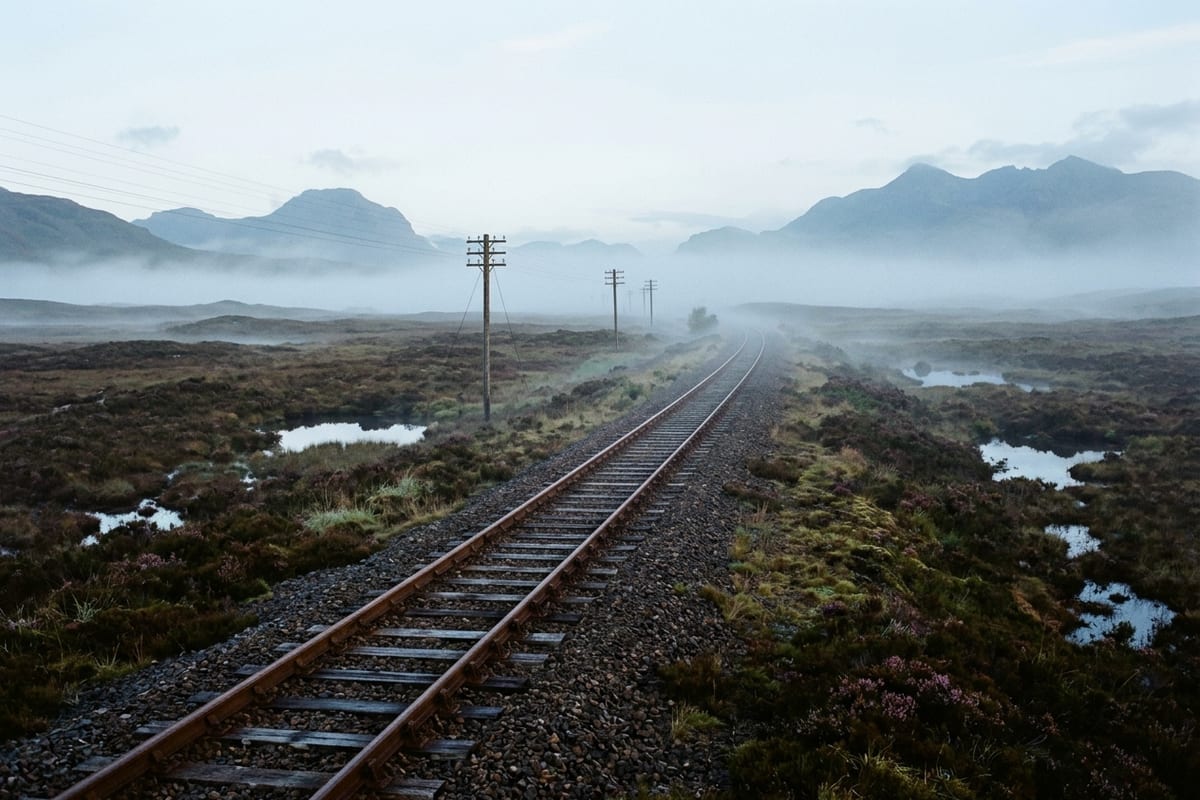
A soft knock sounds on your cabin door. It is your carriage host delivering breakfast. They balance a wooden tray containing a warm pot of cafetière coffee, fresh milk, warm sourdough toast, and steaming porridge topped with dark brown sugar. Sitting propped up against pillows in bed, sipping hot coffee while rolling through mountain valleys, is one of travel’s purest delights.
The train climbs steadily past Crianlarich, where the line splits toward the coastal port of Oban, and heads past Upper Tyndrum toward Bridge of Orchy. Here, the landscape strips away the last remnants of pastoral greenery. The trees vanish. The hills expand into massive, bare expanses of rock and brown sedge. You are entering Rannoch Moor, one of the great wildernesses of Western Europe.
Rannoch Moor covers roughly fifty square miles of sodden peat bog, granite boulders, and labyrinthine lochans. When Victorian engineers surveyed the route for the West Highland Railway in the late 1880s, standard engineering wisdom declared the moor impassable. The peat was so deep and liquid that conventional ballasted track simply sank into the muck. To solve the problem, railway contractor Robert McAlpine, affectionately known as “Concrete Bob,” devised an ingenious floating foundation.
Navvies cut and laid down a massive mattress of mountain brushwood, heather roots, tree branches, and thousands of tons of compacted earth and boiler ash. The steel rails were laid directly across this buoyant turf raft. More than 130 years later, that floating trackbed still carries trains safely across the bog. You can look out of your window and see nothing for miles but black peat cuttings, dark loch water reflecting steel-gray skies, and distant mountain ridges scarred by glacial valleys.
Herds of red deer graze near the tracks. As the heavy blue carriages glide past, stags with sweeping antlers raise their heads, sniff the damp morning air, and trot casually toward the open moor. There are no highways out here. No power lines. No parking lots. Just the twin ribbons of steel leading into the mist.
Seeing it helps. Here’s a clear walkthrough from Calm:
Corrour Station and the Edge of Solitude
At 8:58 in the morning, the train decelerates with a gentle hiss of brake air. Outside the window, a single wooden platform appears out of the heather, accompanied by a small whitewashed station building and a timber signal box. This is Corrour, the most remote and isolated mainline station in the United Kingdom.
Corrour sits 1,340 feet above sea level, completely disconnected from the national road network. The nearest paved public road ends more than ten miles away at Loch Rannoch. If you step off the train here, there is no bus waiting, no taxi rank, and no mobile phone reception. There is only the crisp, sharp Highland wind smelling of bog myrtle and rain, and miles of trackless wilderness stretching toward Ben Alder.
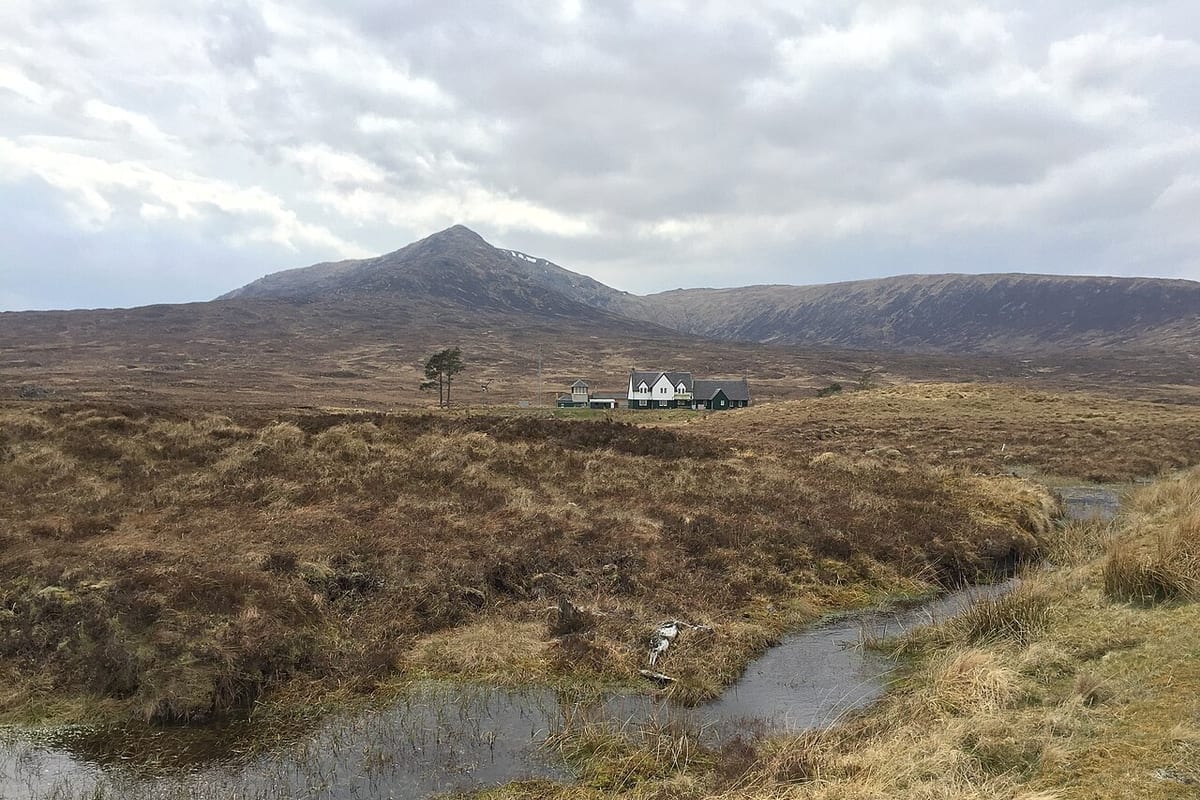
For outdoor enthusiasts and Munro-baggers, Corrour is legendary. The original Victorian station house now operates as a small independent restaurant and bar, serving hearty venison burgers, warm soups, and hot mugs of tea to wet hikers who walk in from the fells. A mile down a gravel estate track sits the Loch Ossian Youth Hostel, a celebrated eco-hostel powered by solar and wind energy right at the water’s edge.
Watching people disembark at Corrour provides a window into the romantic independence of Scottish travel. A couple wearing heavy GORE-TEX waterproofs, gaiters, and sturdy leather boots steps down onto the wet timber boards. The train conductor hands down their heavy expedition packs. They do not look hurried or anxious; they look thrilled. They hoist the packs onto their shoulders, cinch their waist buckles, and set off on foot along the rough dirt track toward the mountains. The quiet autonomy of exploring Scotland by rail echoes the deep freedom found when travelers choose off-grid journeys, a spirit explored in our guide to The Guide to Planning an Off-Grid Road Trip.
The guard raises his green flag. A shrill whistle sounds across the moor. The train pulls away from the solitary platform, leaving the hikers behind as small, colorful figures walking against the vast backdrop of empty granite ridges.
Arrival in Fort William and the Return to Earth
Leaving Corrour behind, the line descends through dramatic rocky ravines along the Spean valley. The train passes through Tulloch and Roy Bridge, running alongside the thundering white waters of the Monessie Gorge. Dense woodlands of birch, larch, and rowan reappear, their wet branches brushing close to the carriage sides. The smell of woodsmoke from cottage chimneys drifts through the ventilation vents.
As the train approaches Spean Bridge, the massive, snow-dusted bulk of the Nevis Range dominates the forward view. Ben Nevis, Britain’s highest peak at 4,413 feet, looms above the glen like a slumbering giant. Its summit crags are frequently shrouded in swirling squalls of cloud, giving the mountain an imposing, moody presence that commands silence from the lounge car.
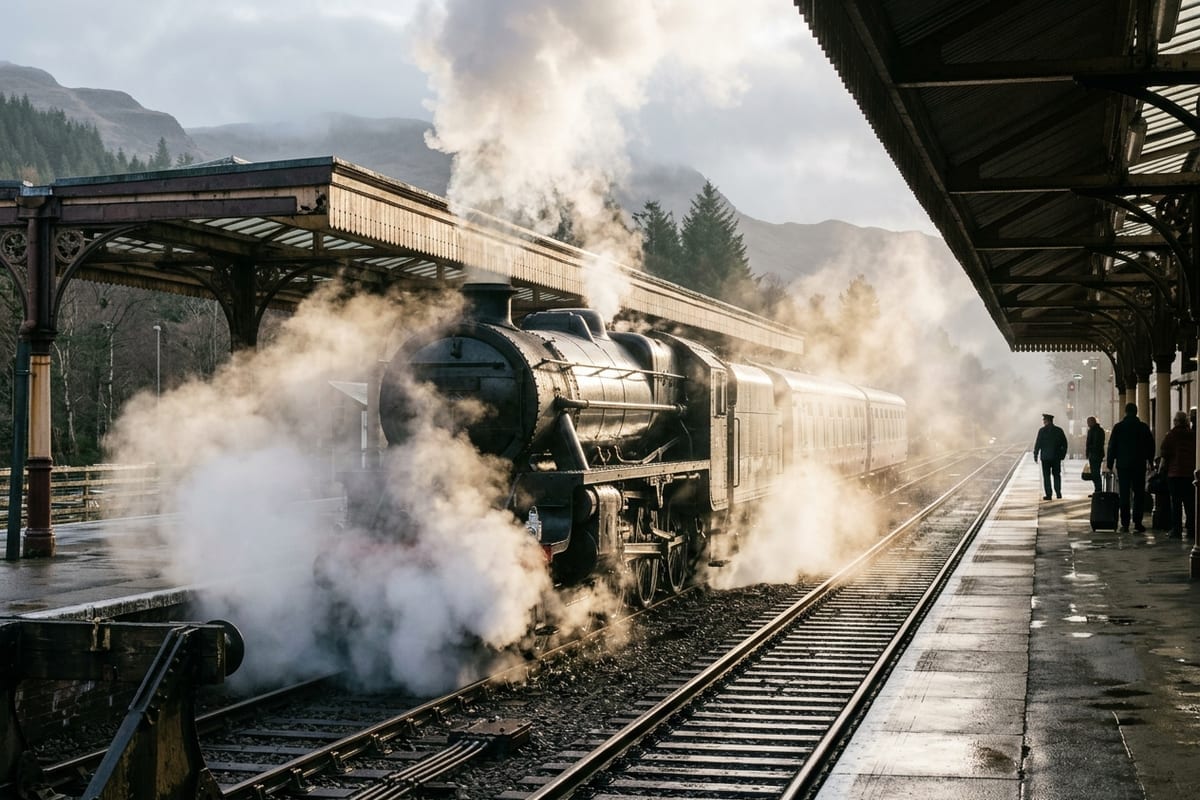
At precisely ten o’clock, the Highland Sleeper glides smoothly into the terminus at Fort William. The station sits directly along the shoreline of Loch Linnhe, where sea loch tides bring salty Atlantic air into the very heart of the town. The train comes to a final, permanent rest. The carriage doors pop open with a rush of cool, invigorating Highland air that smells of salt water, damp earth, and pine.
Stepping onto the platform, you feel remarkably refreshed. You have not spent your morning fighting through airport security lines or nursing an ache in your lower back from an upright seat. You are well-rested, fully dressed, nourished by a hot breakfast, and standing at the western edge of Scotland at the start of a brand-new day.
From here, the entire wild playground of the West Highlands opens before you. You can walk down the High Street to stock up on oatcakes and wool socks, connect with local buses running into dramatic Glen Coe, board the famous Jacobite steam train out across the concrete arches of Glenfinnan Viaduct toward Mallaig, or strap on your hiking boots to tackle the summit trail of Ben Nevis.
Choosing night train travel over flying is ultimately about reclaiming the human scale of a journey. It reminds us that distance is not an obstacle to be erased by speed, but an essential part of the travel experience to be savored in comfort. When travel becomes an immersive, unhurried progression through changing landscapes, the journey ceases to be a chore and becomes the highlight of the adventure itself.
When you look back on your journeys, which will you remember with genuine warmth: the hurried morning spent queuing inside fluorescent airport gates, or the quiet night you went to sleep under the lamps of London and woke to the wild, mist-covered moors of the Scottish Highlands?