
Key Benefits of Commercial Janitorial Services for Modern Facilities
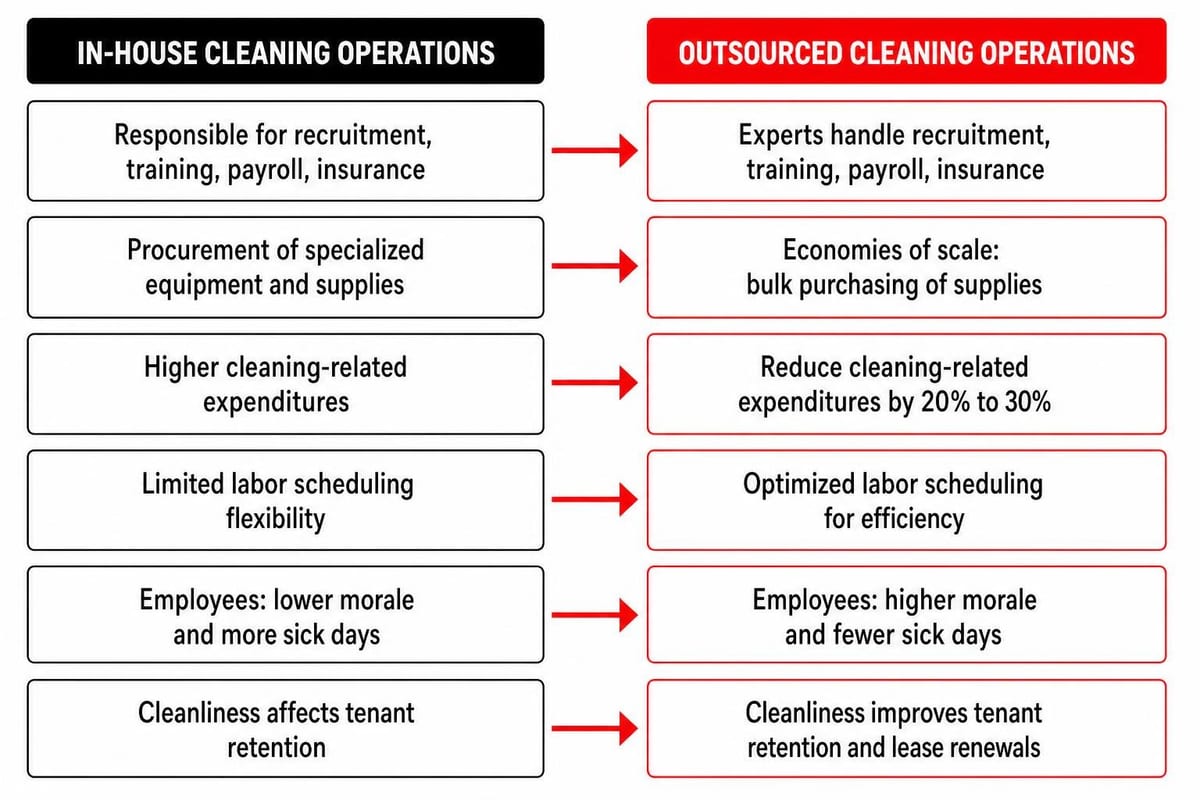
The decision to transition from in-house janitorial staff to a third-party service provider is often driven by the need for operational efficiency. When businesses manage their own cleaning, they are responsible for recruitment, training, payroll, insurance, and the procurement of specialized equipment. Outsourcing shifts these burdens to experts whose core competency is facility maintenance, allowing leadership teams to redirect internal resources and managerial focus entirely toward primary revenue-generating activities.
One of the most compelling arguments for outsourcing is the potential for significant cost savings. Statistics indicate that businesses can reduce their cleaning-related expenditures by 20% to 30% by moving to a professional service model. These savings arise from economies of scale—professional firms purchase supplies in bulk, negotiate vendor discounts on industrial machinery, and utilize optimized labor scheduling that an individual business simply cannot replicate. Furthermore, an outsourced model eliminates hidden overhead expenses such as workers’ compensation premiums, employee benefits, continuous onboarding, equipment depreciation, and recurring chemical inventory holding costs.
Furthermore, a clean workspace is a productive one. Studies consistently show that employees working in well-maintained environments demonstrate higher morale, improved cognitive performance, and fewer sick days. By reducing the accumulation of dust, airborne allergens, and surface pathogens, you are actively investing in the long-term health of your workforce. Additionally, property managers often cite cleanliness as the primary factor in tenant retention; in a competitive real estate market, a facility that looks and smells pristine is far more likely to secure lease renewals and protect the commercial property’s long-term asset valuation.
Health, Safety, and Regulatory Compliance
Maintaining a facility is not just about aesthetics; it is about mitigating risk. In sectors ranging from corporate offices to manufacturing, adherence to OSHA standards and local health regulations is mandatory. Professional providers are well-versed in these requirements, ensuring that chemical storage, waste disposal, Hazard Communication (HazCom) documentation, Safety Data Sheets (SDS), and floor safety protocols are followed to the letter.
When you invest in professional custodial services, you are not just buying labor; you are buying a commitment to safety. These providers utilize advanced disinfection techniques, such as electrostatic spraying and high-efficiency particulate air (HEPA) filtration, which are far more effective at controlling pathogens than standard manual cleaning methods. This level of rigor is essential for maintaining air quality and preventing the cross-contamination that often occurs in high-traffic shared spaces like cafeterias, conference rooms, and restrooms.
Sustainable and Green Cleaning Practices
As environmental consciousness becomes a standard expectation for modern businesses, green cleaning has moved from a niche preference to a market necessity. Today, over 30% of the commercial cleaning sector is dedicated to eco-friendly practices. This shift is driven by the desire to reduce the chemical footprint of a building, which in turn improves indoor air quality and lowers the risk of chemical sensitivities, headaches, and respiratory irritation among staff.
Modern janitorial firms prioritize the use of biodegradable, non-toxic cleaning agents certified by Green Seal or EcoLogo that meet rigorous sustainability standards. Beyond chemicals, this approach includes the use of microfiber technology—which traps dust, particulate matter, and bacteria more effectively than traditional cotton mops—and high-efficiency equipment that reduces water and energy consumption. Implementing these practices often helps facilities work toward LEED certification or other environmental performance goals, signaling to stakeholders, investors, and occupants that the business is committed to corporate social responsibility and sustainable stewardship.
Service Scope and Industry-Specific Solutions
The scope of a commercial janitorial contract should be as dynamic as your business. While basic maintenance includes daily tasks, a truly robust service agreement integrates specialized care tailored to your facility’s unique layout and usage patterns. Engaging a dedicated team for comprehensive commercial cleaning ensures that routine sanitization and advanced maintenance tasks are integrated into a cohesive, proactive operational plan.
Core Tasks Included in Commercial Janitorial Services
A standard service agreement typically covers the “must-haves” that keep a building functional on a day-to-day basis. These routine tasks are the foundation of a healthy workspace:
- Waste Management: Emptying trash receptacles, replacing liners across all departments, and managing dedicated recycling streams.
- Surface Sanitization: Wiping down desks, conference tables, and high-touch points like light switches, door handles, elevator buttons, and stair railings using hospital-grade disinfectants with appropriate dwell times.
- Restroom Hygiene: Deep cleaning and descaling of fixtures, replenishment of paper products and antimicrobial hand soap, mirror polishing, and floor disinfection.
- Floor Maintenance: Daily vacuuming of carpeted areas using multi-stage HEPA filtration, dust-mopping, and damp-mopping hard surface floors to remove dirt and eliminate slip hazards.
- Common Area Upkeep: Cleaning entryways, glass partitions, breakrooms, and kitchens to ensure a welcoming and sanitary environment for employees and visitors.
- Periodic Deep Services: Scheduled maintenance such as carpet hot-water extraction, tile and grout scrub cycles, high-dusting of vents and fixtures, and vinyl composite tile (VCT) stripping and waxing.
Specialized Protocols for Healthcare and Industrial Facilities
Not all environments require the same level of care. Medical clinics, ambulatory centers, and acute care facilities demand terminal cleaning—a rigorous multi-step process that eliminates bloodborne pathogens and multidrug-resistant organisms (MDROs) to prevent healthcare-associated infections (HAIs). In these settings, janitorial teams must follow strict color-coded microfiber systems to eliminate any possibility of cross-contamination between patient exam rooms, sterile storage areas, and general waiting areas.
Similarly, industrial spaces and manufacturing plants require specialized degreasing, machinery wiping, and hazardous containment protocols to manage heavy-duty lubricants, particulate runoff, and biohazards. Cleanrooms in biotechnology and electronics manufacturing require adherence to ISO 14644-1 particulate standards, demanding non-shedding consumables and vacuum systems rated for micro-contaminants. When selecting a partner, ensure they have the documented training, standard operating procedures, and specialized equipment to handle your specific industry’s nuances. Whether it is cleanroom standards or hazardous material disposal, the provider must demonstrate a clear understanding of the regulatory landscape governing your specific facility type.
Selecting and Managing the Right Provider
Choosing the right partner is a process of due diligence. You are not just hiring a vendor; you are bringing an external team into your facility during off-hours with access to sensitive infrastructure, equipment, and records. Therefore, vetting criteria must go beyond price alone. Look for providers that perform thorough criminal background checks and drug screenings on their staff, carry adequate general liability and workers’ compensation insurance, and offer transparent, multichannel communication systems.
A high-quality provider will offer a clear service level agreement (SLA) that outlines performance benchmarks, response times for emergency service calls, and key performance indicators (KPIs). This ensures that expectations are aligned from day one. Regular audits—conducted by a dedicated quality assurance supervisor utilizing digital checklist apps and ATP bioluminescence swab testing on high-touch surfaces—are essential to ensure that the quality of work remains consistently compliant with industry standards over time.
Cost Factors and Pricing for Commercial Janitorial Services
Pricing in the industry is generally structured around the square footage of the facility and the frequency of service. In the United States, commercial cleaning rates typically range from $0.10 to $0.25 per square foot per month for standard commercial office spaces, with specialized environments like cleanrooms and medical centers commanding higher rates due to chemical and labor demands. However, this figure is a baseline. Factors that influence the final quote include:
- Facility Layout and Density: Complex floor plans, high-density cubicle arrangements, or multi-story buildings require more transit time and detailed labor.
- Service Frequency and Timing: Daily, weekly, or round-the-clock shift-based service schedules impact labor costs, with night or weekend shifts often carrying shift differentials.
- Supply and Restocking Management: Whether the contractor supplies all consumables (paper towels, toilet paper, foaming soap, can liners) or manages client-owned stock.
- Specialized Equipment and Security Clearances: Facilities requiring high-security clearances, escort procedures, cleanroom gowning protocols, or ride-on floor scrubbers will see adjusted service rates.
Overcoming Common Outsourcing Challenges
The most cited challenge in the commercial cleaning industry is staff retention, with nearly 60% of companies reporting it as a primary operational hurdle. High turnover can lead to inconsistent service, missed tasks, and security concerns. To mitigate this, look for firms that invest in their workforce through competitive living wages, comprehensive safety certifications (such as bloodborne pathogen and slip-and-fall prevention training), structured supervisor-to-cleaner ratios, and clear career progression paths. A stable, well-compensated, and thoroughly trained team is the single best indicator of a reliable long-term service provider.
Frequently Asked Questions About Commercial Janitorial Services
How often should a commercial facility schedule professional cleaning? The frequency depends on your foot traffic and facility type. A high-traffic medical office may require daily or even multiple-times-a-day cleaning, while a low-occupancy warehouse might only require weekly service. We recommend conducting a facility audit to determine your specific needs.
What is the standard pricing model for commercial janitorial contracts? Most contracts are based on a monthly square-footage rate. However, some providers offer hourly billing for specialized, one-off projects like carpet extraction or window washing. Always ensure your contract specifies the scope of work to avoid unexpected “add-on” fees.
How do commercial cleaning providers maintain quality control? Top-tier providers use a combination of digital inspection software, regular supervisor walkthroughs, and client feedback loops. Look for a partner that provides transparent reporting so you can track performance against agreed-upon benchmarks.
Conclusion
The cleanliness of your facility is a direct reflection of your business values. By outsourcing to a professional janitorial service, you gain more than just a clean floor; you gain the peace of mind that comes with knowing your environment is safe, compliant, and optimized for productivity. As the industry continues to evolve with new technologies and green practices, the gap between “getting the job done” and “maintaining a facility to a professional standard” continues to widen. Investing in the right partnership today will ensure your workspace remains a healthy, welcoming asset for years to come.