
When you stand in a showroom deciding on an OLED vs QD-OLED TV, you are choosing between two fundamentally different optical designs. Both can produce absolute black levels by turning off individual pixels completely. Yet they behave radically differently once you take them out of the box, plug them in, and introduce normal room lighting. Make the wrong pick, and you will either overpay by hundreds of dollars for color volume your eyes cannot detect in standard broadcast programming, or watch your panel’s deep blacks turn into a washed-out, purplish haze every afternoon when the sun hits your living room windows.
The core difference comes down to how each screen produces color. Traditional OLED panels, manufactured primarily by LG Display and officially known as WOLED (White OLED), push light through color filters and rely on an auxiliary white subpixel to boost peak luminance. Quantum Dot OLED (QD-OLED), developed by Samsung Display, replaces those color filters with a layer of microscopic quantum dots excited by pure blue organic light. The result is a fierce fight between two engineering philosophies: traditional WOLED delivers lower prices, wider sizing, and immunity to ambient light reflections, while QD-OLED delivers unmatched color saturation at blistering brightness levels.
The core comparison: OLED vs QD-OLED TV specifications and panel architecture
To understand why these panels perform differently, you have to look at the subpixel structure beneath the glass. A standard WOLED panel uses a stack of yellow and blue organic materials to create a broad white light. That white emission passes through passive red, green, and blue color filters. Because color filters inherently absorb and waste light energy, LG Display added an uncolored clear subpixel (WRGB). When the television needs to produce a tiny, blindingly bright highlight, like the sun reflecting off chrome, the white subpixel opens wide to flood the viewer with luminance without overheating the color filters.
QD-OLED skips color filters entirely. Instead, the panel uses multiple layers of blue organic light-emitting diodes as its single illumination engine. That intense blue light fires forward into a printed layer of quantum dots. When blue light strikes a red quantum dot, it converts instantaneously into pure, narrow-band red light. When it hits a green quantum dot, it converts into pure green light. The blue subpixel simply lets the original blue light pass straight through. Because quantum dot conversion is extraordinarily efficient and maintains tight spectral peaks, QD-OLED avoids the optical loss caused by filtering white light.
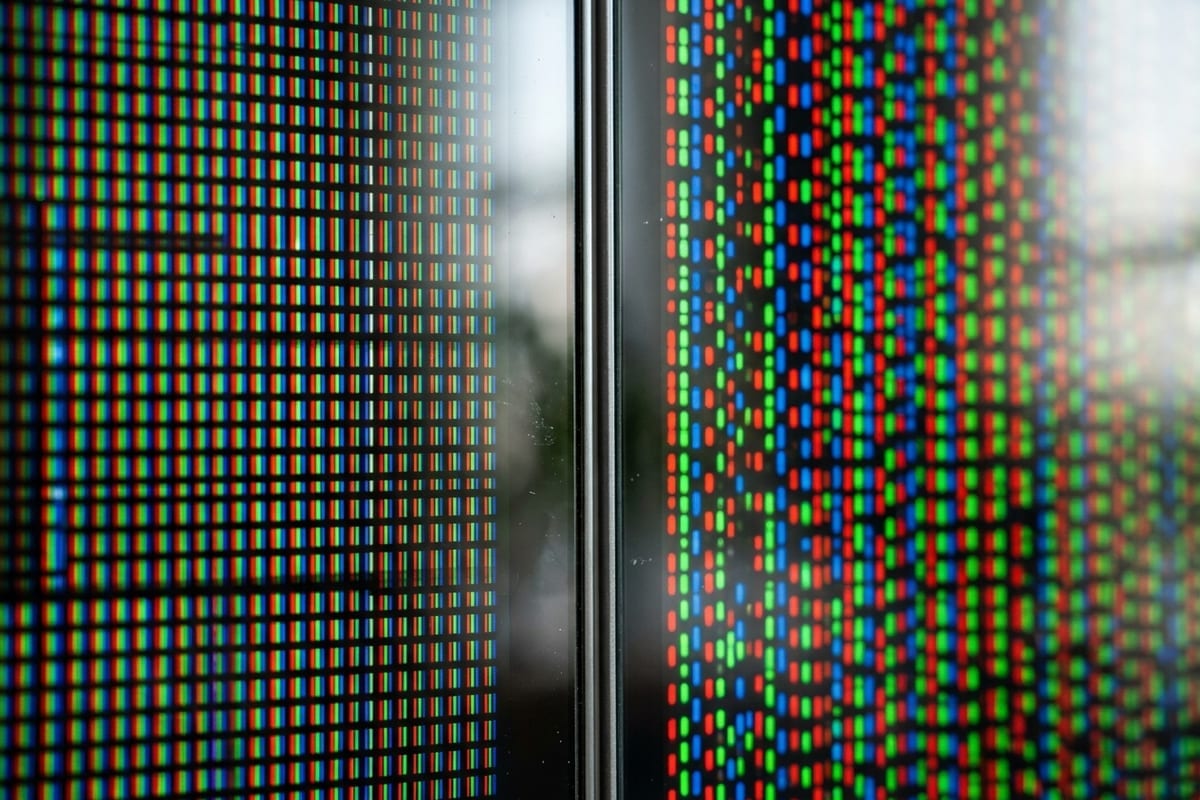
This architectural split creates measurable performance divergence in test benches and real living rooms alike. The table below outlines how these two panel types stack up across primary technical criteria.
| Performance Metric | Traditional WOLED | QD-OLED |
|---|---|---|
| Subpixel Structure | WRGB (Red, Green, Blue, White) | Pure RGB (Blue emitter + Quantum Dots) |
| Color Gamut (Rec. 2020 xy) | Approximately 72% to 76% | Approximately 89% to 91% |
| Highlight Color Saturation | Desaturates at high luminance | Maintains 100% saturation at peak output |
| Ambient Light Black Level | Remains absolute black (polarizer equipped) | Lifts to dark purplish-gray in bright light |
| Off-Axis Color Shift | Slight tinting at wide viewing angles | Virtually zero color or luminance shift |
| Screen Sizes Available | 42, 48, 55, 65, 77, 83, 97 inches | 55, 65, 77 inches (TV sizes) |
Spec sheets only tell half the story. The physical layer design inside each panel dictates how incoming room light interacts with your picture, which is where many buyers encounter unexpected disappointment.
Room lighting and the ambient black level trade-off
The biggest visual difference between these technologies has nothing to do with pitch-black home theaters. It happens at 2:00 PM on a Saturday in a room with open blinds. Traditional WOLED panels include an integrated circular polarizer. This thin optical layer acts like a one-way security gate for light. It absorbs ambient room light bouncing into the screen from overhead fixtures and sunny windows, preventing that light from reflecting off the internal electronics back toward your eyes. Because of this polarizer, a WOLED screen turned off or displaying pure black in a brightly lit room looks like an inky pool of obsidian.
QD-OLED panels do not have a traditional circular polarizer. Samsung Display intentionally removed that layer to maximize light extraction and preserve the efficiency of the quantum dots. Without a polarizer to block incoming room light, ambient photons penetrate the front anti-reflective surface and physically excite the quantum dot layer underneath. The internal structure also reflects ambient light back out into the room. In an illuminated room, the black floor on a QD-OLED TV rises measurably. What should be perfect zero-nit black transforms into a visible dark magenta or purplish charcoal.
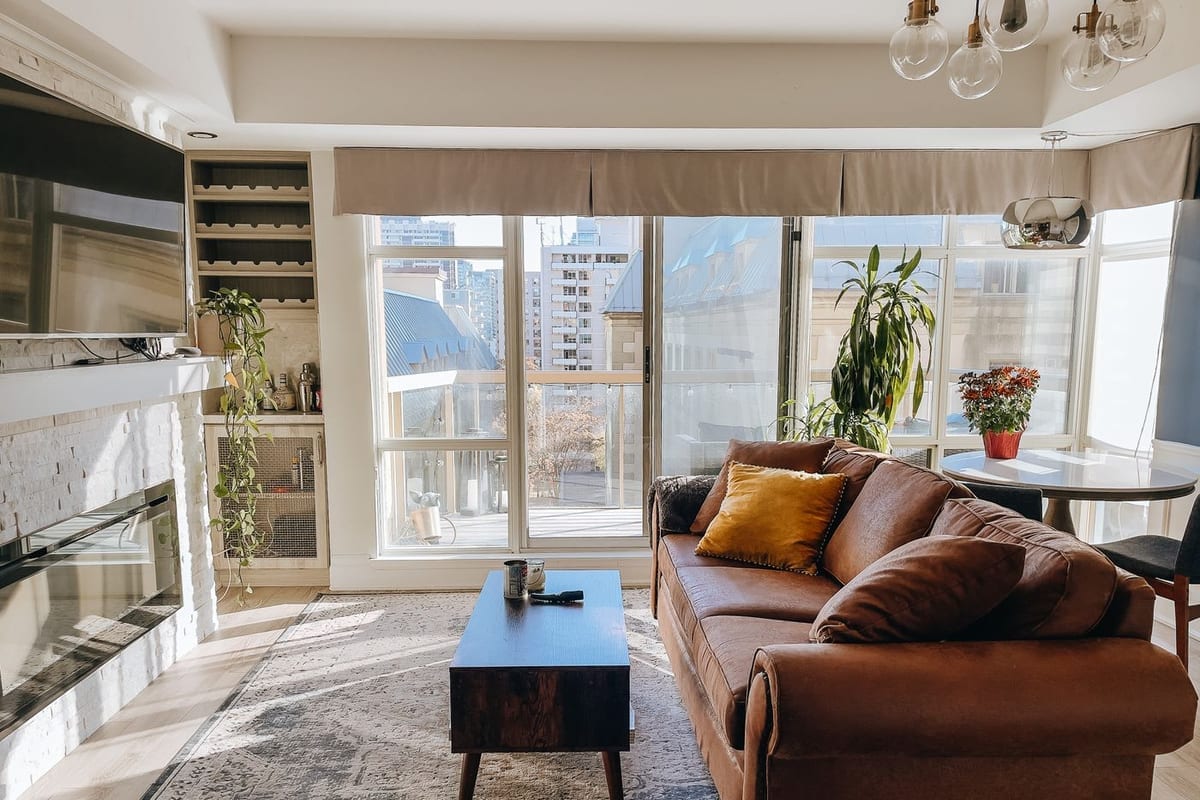
This raised black level breaks the optical illusion of infinite contrast. In a dark room, QD-OLED provides the identical zero-nit floor that television enthusiasts crave. But place a QD-OLED TV directly across from an uncovered south-facing window, and dark cinematic scenes in films like The Batman or Dune: Part Two lose their shadow depth. The letterbox bars above and below a widescreen film stop blending into the television frame and become glowing purple strips. By contrast, a standard WOLED screen in that same sunlit room keeps its letterbox bars jet black, preserving perceived contrast even as daylight fills the room.
Manufacturers have attempted to mitigate this ambient light behavior through specialized screen treatments. High-end displays employ anti-reflective coatings that break up incoming light beams. Samsung’s flagship S95 series, for instance, introduced a specialized matte anti-glare finish designed to disperse direct reflections across the screen face. While this coating successfully eliminates sharp mirror-like reflections of floor lamps and windows, it diffuses incoming daylight across a wider panel area, which can make daytime blacks look slightly milky if your room lacks light control. If your television must sit in a room flooded with natural daylight where you cannot draw the curtains, WOLED remains the more consistent performer.
Color volume and highlight saturation
Turn the lights out, however, and QD-OLED puts on a display clinic that no standard WOLED can match. The human visual system perceives brightness and color as an integrated experience called color volume. Many budget displays can generate a bright white highlight or a deeply saturated red square, but struggle to produce a bright, highly saturated red at the same time. This is where QD-OLED demonstrates decisive technical superiority.
Because WOLED relies on an uncolored white subpixel to hit high brightness numbers, its color saturation drops as scenes get brighter. Consider a scene with an explosion, a neon Tokyo storefront, or a molten metal forge. Up to roughly 400 to 500 nits, WOLED generates colors using its red, green, and blue filtered subpixels with solid saturation. But when an HDR master demands 1,000 or 1,500 nits for that fiery blast, the filtered subpixels hit their thermal and electrical limits. To deliver the requested light output, the television turns on its white subpixel. That white light blends with the color, washing out the richness. The fireball turns pale yellow and white around the edges, losing its deep amber and crimson core.
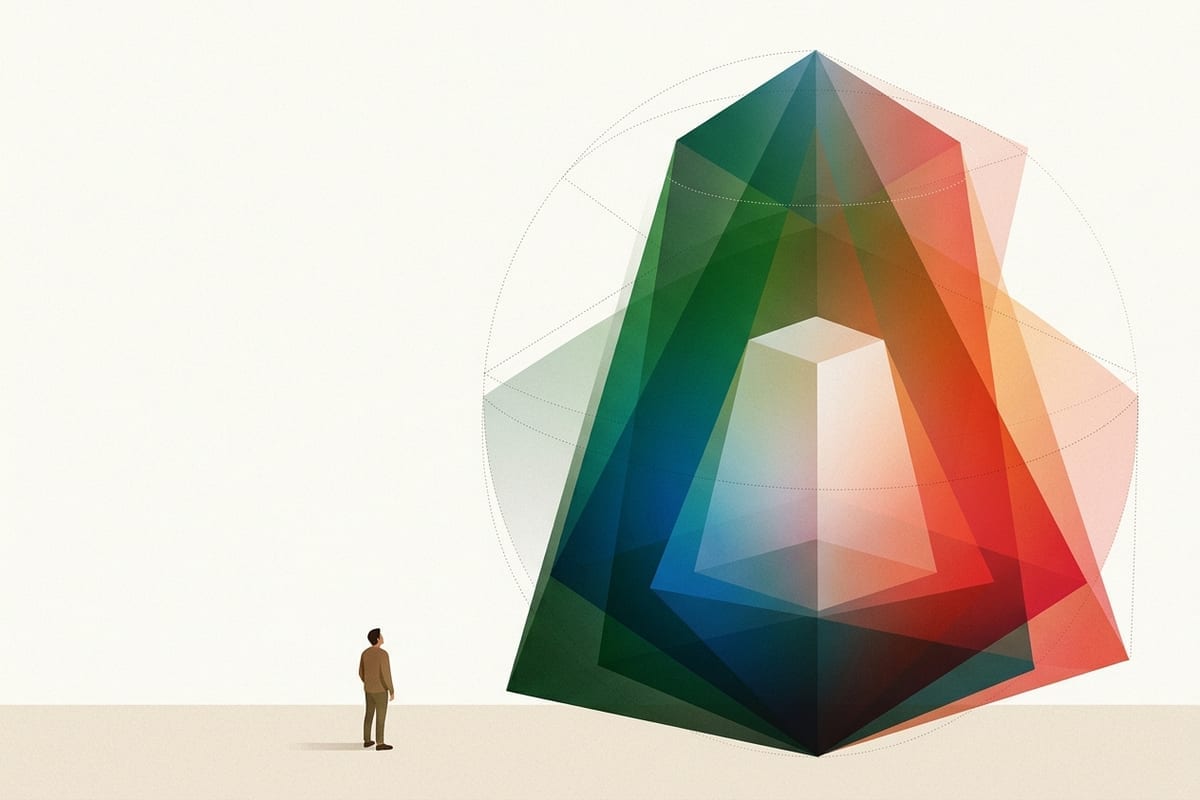
QD-OLED does not suffer from this luminance dilution. Because its pixels consist entirely of native RGB emitters driven by quantum dot down-conversion, it generates 100 percent of its peak luminance through pure color. When a director calls for a 1,200-nit blast of saturated yellow or emerald green, the QD-OLED panel delivers it without splashing white light onto the canvas. On a measurement meter, QD-OLED covers roughly 90 percent of the demanding International Telecommunication Union BT.2020 standard color space. Traditional WOLED tops out between 72 and 76 percent of that same color container.
Is this visible to an everyday viewer? In standard SDR cable broadcasts, sitcoms, and evening news, no. Those programs are mastered in the narrow Rec. 709 color gamut, which both screen technologies cover completely. But when you fire up 4K HDR Blu-rays or high-bitrate HDR streams mastered to the guidelines developed by the Society of Motion Picture and Television Engineers (SMPTE), the difference is striking. Animated movies like Spider-Man: Into the Spider-Verse show a vibrancy on QD-OLED that feels three-dimensional. Sunlight shining through stained glass windows holds onto rich ruby and cobalt hues instead of turning pasty white.
Peak brightness and heat dissipation: MLA WOLED vs 3rd-generation QD-OLED
For years, traditional OLED suffered from an undisputed flaw: it could not get bright enough to compete with high-end Mini-LED LCD panels in bright rooms. That performance deficit forced panel makers into an aggressive brightness arms race. As of 2026, both display camps have engineered clever hardware solutions to extract blinding light out of organic compounds without burning out the displays.
LG Display answered the brightness challenge with Micro Lens Array (MLA) architecture, marketed as META Technology. Inside an MLA WOLED panel, a microscopic layer containing billions of convex lenses sits above the emissive pixels. In a standard OLED, a huge portion of the light produced by the organic layers bounces internally off the glass surfaces and turns into trapped heat. MLA redirects this trapped light outward toward the room. By recovering this wasted optical energy, flagship WOLED TVs like the LG G-series and Panasonic flagships can hit peak highlights measuring between 1,500 and 3,000 nits on a 10 percent window, matching high-end QD-OLED displays in raw specular punch.
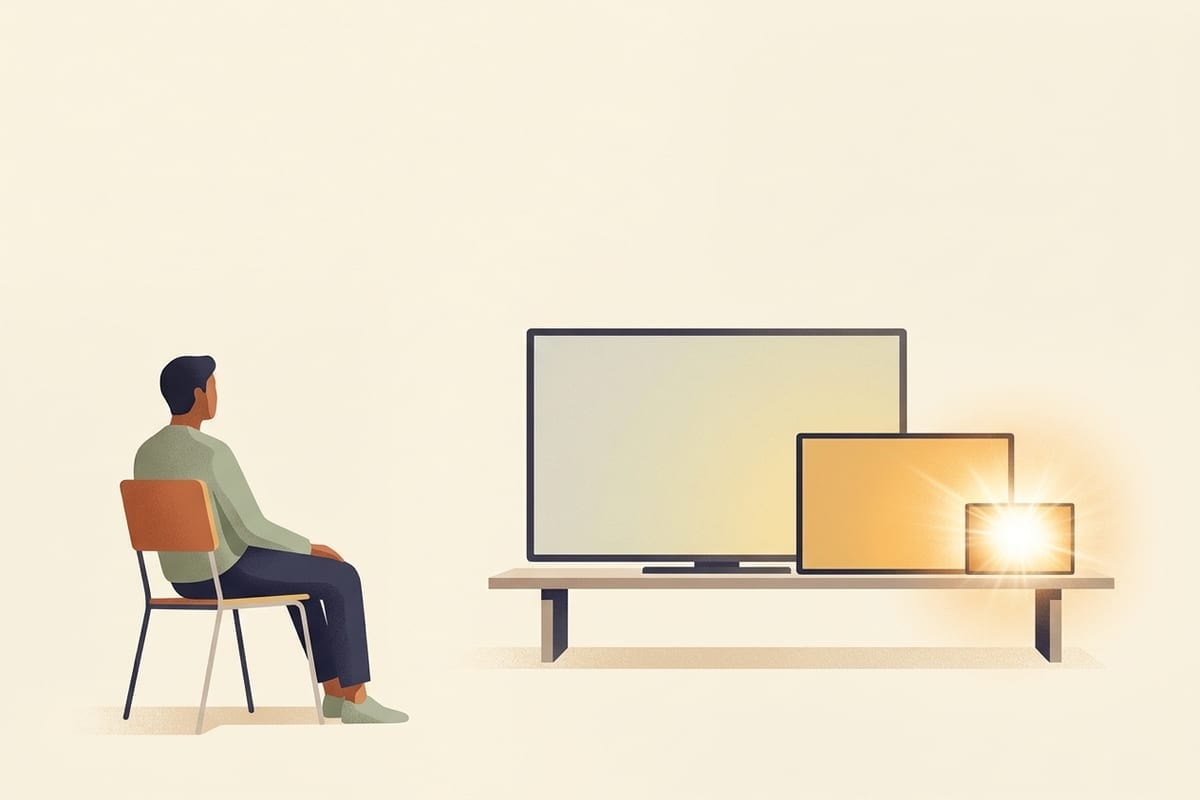
Peak brightness on small windows only represents a fraction of the viewing experience. What matters equally is full-field sustained brightness, which governs how bright the screen looks during a snowstorm in a nature documentary or a sunlit hockey rink. When large portions of an OLED panel illuminate simultaneously, an internal safety circuit called the Automatic Brightness Limiter (ABL) steps in. ABL throttles overall power to prevent catastrophic thermal buildup and power supply overload.
On entry-level and mid-range WOLED sets (such as the standard LG B and C series), full-screen sustained white drops aggressively to roughly 160 to 200 nits. Flagship MLA WOLED sets and 3rd-generation QD-OLED panels handle this significantly better, sustaining between 250 and 300 nits across a 100 percent white window. That extra overhead keeps daytime sports and bright landscape vistas from dimming noticeably as the camera pans across the action.
Both technologies rely on heavy physical heat sinks bonded to the rear of the panels to sustain these extreme light levels. These aluminum or graphite thermal plates draw heat away from the organic materials quickly. Lowering operating temperatures not only allows the driver chips to push pixels harder for longer bursts, but it also directly safeguards the panel against permanent image retention.
For a visual take on this part, Tandem OLED vs QD OLED vs WOLED: What’s The Difference and Which is Better? is a good watch.
Viewing angles, uniformity, and text clarity
OLED has long reigned as the undisputed champion of wide-angle viewing. Unlike LCD panels that wash out, lose contrast, and shift color when you step three feet off-center, self-emissive displays maintain exceptional consistency. Yet when scrutinizing the two panel types side by side from an off-axis armchair, subtle differences emerge.
QD-OLED offers essentially flawless off-axis viewing. Because quantum dots emit light uniformly in all directions without passing through color filter tunnels, there is zero perceptible shift in color hue or luminance even if you stand at an extreme 70-degree angle. Red stays precisely red, and white stays perfectly neutral. If you have an ultra-wide sectional sofa where guests watch sports from the outer edges, QD-OLED ensures that the person sitting on the far armrest sees the exact same image as the person in the sweet spot.
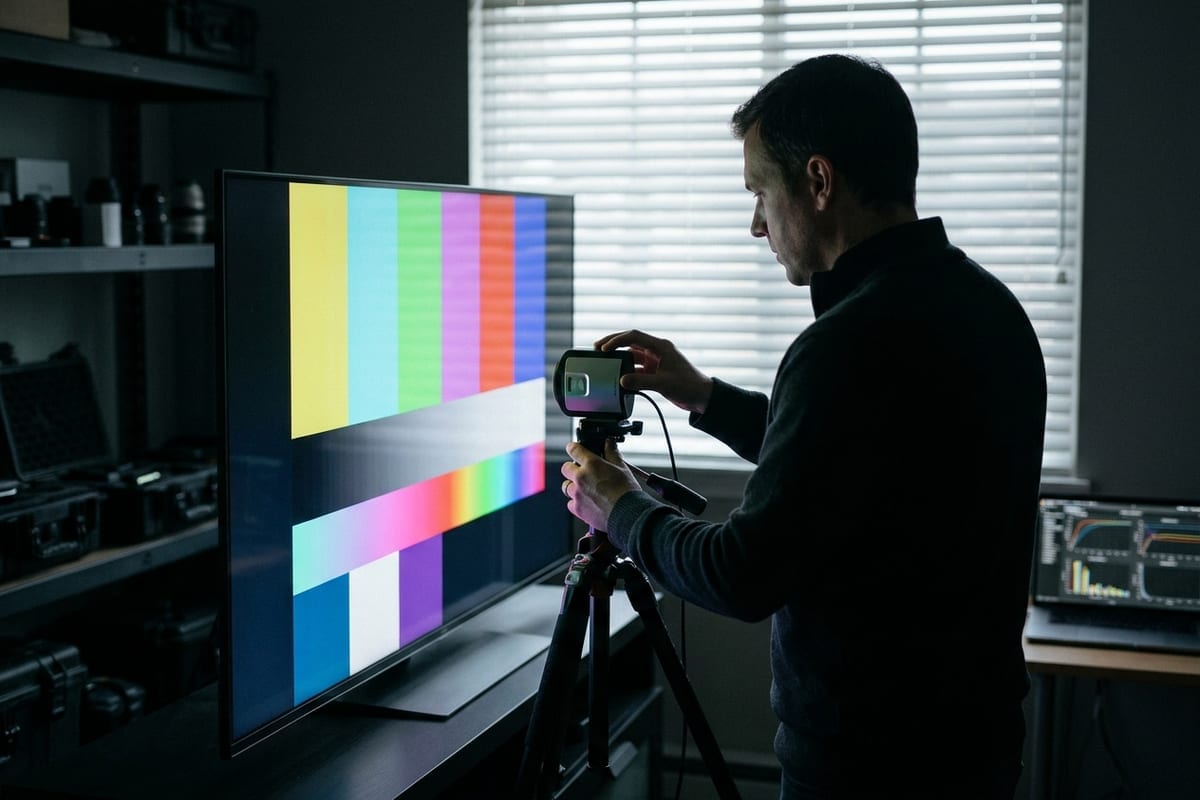
Traditional WOLED panels also provide wide viewing angles, but MLA-equipped panels introduce a minor optical compromise. The dense grid of microscopic lenses can cause a faint greenish or pinkish tint across bright scenes when viewed from severe off-center angles. You will not notice this during regular movie watching from a typical couch, but on full-white screens like hockey games or snow scenes, sharp eyes will catch the slight hue shift at the edges of the display.
When used as a desktop PC monitor or connected to a media computer, subpixel arrangement becomes an unexpected factor. Standard WOLED uses a linear subpixel structure that operating systems handle cleanly. First-generation QD-OLED panels utilized a unique triangular subpixel layout, with the green subpixel placed above the red and blue subpixels. Because Windows ClearType and macOS font smoothing algorithms are hardcoded to assume a standard horizontal RGB stripe, that triangular layout caused slight color fringing on high-contrast text. Black text on a white document would show a faint green halo along top borders and a magenta shadow along the bottom.
Second and third-generation QD-OLED panels updated the subpixel shape and increased the aperture ratio, drastically reducing text fringing. At typical television viewing distances of six to ten feet, the subpixel layout is completely invisible to human vision. However, if you plan to use a 55-inch display mounted above your desk as an ultra-wide productivity workstation, standard WOLED still provides slightly sharper font edges for eight hours of daily spreadsheet analysis.
Longevity, panel reliability, and burn-in realities
Permanent burn-in remains the boogeyman of emissive displays. Modern panels have evolved well past the fragile early generations, but organic compounds still degrade as they emit light. The faster you run a pixel, and the hotter it gets, the sooner its light output drops. If one area of your screen consistently degrades faster than the surrounding pixels, like a static news ticker or sports score bug, it leaves a permanent ghostly imprint behind.
Rigorous third-party torture testing, notably the extensive RTINGS accelerated longevity test running dozens of displays under continuous stress, reveals that both technologies are remarkably durable under varied consumer use, though each has distinct vulnerabilities. Under extreme stress tests running static news channels at maximum luminance for thousands of continuous hours, earlier QD-OLED models showed signs of image retention slightly faster than WOLED models. This occurred because blue OLED emitters degrade faster under high current density than the multi-stack WRGB structure used by LG Display.
However, that same long-term investigation uncovered a completely different longevity challenge on traditional WOLED screens: edge degradation, often referred to in enthusiast forums as edge rot. In older WOLED production runs, microscopic moisture or oxygen occasionally penetrated the panel’s outer seal over years of operation, causing dead pixels to form along the display’s outer perimeter. The tested QD-OLED panels, utilizing an advanced thin-film encapsulation process, remained completely free from edge pixel decay throughout the test run.
For standard household viewing, both panels are engineered to last well beyond the practical lifespan of the television’s smart software. Both LG and Samsung equip their screens with automated maintenance routines:
Pixel shift
The television imperceptibly moves the entire picture by several pixels every few minutes to spread static wear across adjacent subpixels.
Logo luminance control
The onboard processor monitors incoming signals for static elements like channel logos, game heads-up displays (HUDs), or stationary scoreboards, automatically dimming those specific pixels while leaving the rest of the image untouched.
Compensation cycles
When you power the television off into standby after four or more hours of accumulated use, the panel runs an internal diagnostic cycle that scans resistance across the pixel grid and recalibrates voltage delivery to smooth out uneven wear.
If you watch varied content, such as a mix of movies, streaming series, sports, and video games, the risk of developing permanent burn-in within five to seven years on either panel type is minimal. But if your television serves as a continuous background monitor tuned to a single financial news channel 12 hours a day, an emissive panel is the wrong tool for the job. You would be far better served by a traditional Mini-LED display.
Size availability, pricing, and the panel lottery
Your room dimensions and budget might make this choice for you before you ever compare picture quality metrics. WOLED enjoys a massive manufacturing head start. LG Display operates massive 8.5-generation fabrication facilities that cut mother glass into almost every popular dimension on the market. You can purchase a WOLED television as compact as 42 or 48 inches for a bedroom or desk setup, through mainstream 55, 65, and 77-inch sizes, up to massive 83-inch and jaw-dropping 97-inch cinema displays.
Samsung Display’s QD-OLED production lines are more constrained. For televisions, QD-OLED glass cuts natively into only three sizes: 55 inches, 65 inches, and 77 inches. If your living room demands an 83-inch centerpiece to fill your wall, or if your apartment nook can only fit a 48-inch display, you cannot buy a QD-OLED television panel today. You are locked into WOLED or LCD by default.
This size constraint created an industry dilemma known as the panel lottery. To fill out their television portfolios across all screen sizes, brands like Samsung started sourcing WOLED panels from LG Display for specific models. For example, in Samsung’s popular S90-tier lineup, a 65-inch model might contain a genuine QD-OLED panel, while the 42-inch, 48-inch, and 83-inch variants of that exact same model series carry LG-made WOLED panels. In certain global markets, even 55-inch and 65-inch units within the same model number have mixed panel allocations based on production batches. As a buyer, you must check specific model suffixes and panel identification codes before purchasing if you want to ensure you get a true QD-OLED panel.
Pricing reflects these manufacturing economies of scale. WOLED covers a broad price spectrum. An entry-level WOLED television regularly retails between $1,000 and $1,400 for a 65-inch set during seasonal sales. Mid-range workhorses like the LG C-series hover between $1,400 and $1,800. QD-OLED commands a premium. While Samsung’s lower-tier QD-OLED sets compete aggressively with mid-range WOLED, flagship QD-OLED models from Samsung and especially Sony easily command $2,500 to $3,500 at the 65-inch size, and climb past $4,000 for 77-inch panels.
Reader scenarios: matching panel tech to your home
To help you decide without getting lost in technical specifications, let us examine how these differences play out across three common household environments.
The sunlit suburban living room
You have a large family room with tall windows, white walls, and afternoon sunlight streaming across the seating area. The television runs throughout the day for children’s shows, daytime sports, and background viewing, with family movies on weekend evenings.
The right pick: Traditional WOLED (or an MLA-equipped WOLED if budget allows). The integrated circular polarizer keeps ambient light from washing out the panel’s deep black levels, preventing the screen from turning purple during daytime viewing. You get crisp contrast and vibrant images regardless of when you watch.
The dedicated basement home theater
You have an enclosed basement or media room where you control the lighting completely. You use blackout shades or dim accent sconces. You watch high-bitrate 4K HDR physical media, high-end streaming releases, and prestige cinematic dramas.
The right pick: QD-OLED. In a light-controlled environment, QD-OLED’s raised black level limitation is completely neutralized. You gain access to pure RGB color volume, stunning specular highlight saturation in HDR movies, and wide, uniform viewing angles for anyone sitting along the periphery of your theater room.
The multi-use hybrid space and workstation
Your television does double duty. During the day, it sits near an active home office where you might pace while reviewing documents or reading notifications. If you keep a small physical activity setup nearby—such as the setups explored in our Walking Pad Review: Is an Under-Desk Treadmill Worth It?—the display must handle text readability, mixed angles, and diverse daylight glare without missing a beat before transitioning to evening gaming.
The right pick: Mid-range WOLED. Standard WOLED avoids font-smoothing color fringing on computer text, handles scattered office lighting cleanly without purplish contrast loss, and saves you significant money on your initial investment.
Which television panel belongs in your space?
Making a definitive choice between these two screen types requires matching your physical room lighting, viewing habits, and budget against their distinct optical strengths.
Choose a traditional WOLED TV if
Your living room has large, unshaded windows or bright ambient lighting that you cannot fully control during daytime viewing.
You want absolute, inky black letterbox bars on widescreen movies without any hint of purplish or dark magenta tinting.
You need a screen size outside the standard 55-to-77-inch bracket, such as a compact 42-inch gaming display or a massive 83-inch home cinema panel.
You plan to use the display extensively as a PC monitor for reading text, documents, or spreadsheets, where standard subpixel layouts deliver cleaner font edges.
You prioritize the best balance of performance and price. Mid-tier WOLED models deliver exceptional contrast and low input lag for hundreds of dollars less than comparable QD-OLED panels. That cost-to-performance efficiency mirrors the practical engineering we highlighted in our
Yamaha YZF R3 Superbike – Price, Mileage, Review & Customization
analysis: you secure high-tier fundamentals without paying exorbitant premiums for marginal edge-case gains.
Choose a QD-OLED TV if
You watch primarily in a dark room, home theater, or space equipped with effective blackout curtains.
You are an HDR cinephile who values maximum color volume and wants explosions, neon signage, and sunbeams to stay richly saturated rather than washing out into pale white light.
You have wide seating arrangements where viewers sit well off-axis, making QD-OLED’s color-shift-free viewing angles a distinct asset.
You want high full-field screen brightness across large bright scenes without stepping up to specialized micro-lens WOLED displays.
Your budget easily accommodates a premium flagship display in the 55, 65, or 77-inch category.
The bottom line when judging an OLED vs QD-OLED TV is that room lighting matters far more than laboratory test patterns. If you have complete control over your lighting, QD-OLED is the superior display technology, delivering color volume and dynamic highlight saturation that traditional WRGB panels cannot replicate. But for most real-world living rooms where windows stay open and lamps stay on, traditional WOLED remains the smarter, more reliable, and better-value purchase.