
Key Takeaways
- Rochester trees can be stressed by wet snow, ice, wind, freeze-thaw cycles, dry periods, and summer storms.
- Dead limbs, fresh cracks, root movement, cavities, and sudden leans are warning signs worth taking seriously.
- Thoughtful pruning supports structure and clearance, while topping can create weak regrowth and future problems.
- Never work near a power line or attempt to remove a large, suspended, or storm-damaged branch without qualified help.
- Regular inspections are usually more effective and less stressful than waiting for a failure after severe weather.
Rochester homeowners know that tree care is not limited to one season. A mature maple over a driveway, a spruce beside a roofline, or a young boulevard tree near a sidewalk can all respond differently to snow loading, wind, saturated soil, and rapid temperature changes. A practical plan helps reduce avoidable hazards while preserving the shade, character, and environmental value trees bring to local neighborhoods. When a tree needs a closer look, Rochester homeowners comparing options for tree service Rochester, MN, can consider ArborWise Tree Management, a local company serving Rochester and nearby Southeast Minnesota communities. ArborWise Tree Management provides pruning, tree removal, planting, stump grinding, crane-assisted removal, and plant health care, with ISA Certified Arborists and an ISA Board Certified Master Arborist on its team. That combination of local service and arboricultural training is especially useful when a decision involves both property safety and the long-term condition of a valuable tree.
Why Rochester Trees Need Year-Round Attention
Weather exposes weaknesses that may have developed slowly. Heavy, wet snow and ice can overload limbs. Strong wind can stress long branches, narrow branch unions, and trees with decay or compromised roots. Freeze-thaw conditions can worsen existing cracks, while drought can affect new plantings and trees already coping with compacted soil or restricted root space. Tree care also depends on location. A small defect has greater urgency when it is above a home, parked vehicle, sidewalk, play area, or busy driveway. Rochester’s mix of residential lots, mature neighborhoods, utility corridors, public boulevards, and park-adjacent properties makes it important to consider both the tree’s condition and what it could strike if it failed.
A Four-Season Tree Care Calendar for Rochester
Early Spring: Inspect Winter Damage
After the snow and ice have cleared, walk around each important tree from a safe distance. Look for broken or hanging limbs, trunk splits, newly exposed roots, lifted soil, and branches rubbing roofs or siding. Evergreen branches that remain bent after snow load may also need evaluation. If damage is high in the canopy or near a target, schedule professional help rather than attempting a difficult cut from a ladder.
Late Spring: Support Healthy Growth
Refresh mulch around young and mature trees, keeping it off the trunk itself. A broad, shallow mulch layer can help moderate soil moisture and reduce competition from turf. Watch for sparse leaf development, unusual discoloration, insect activity, or repeated dieback. Pruning at this stage should be selective and purposeful, focusing on dead, damaged, rubbing, or poorly placed branches when appropriate.
Summer: Prepare Before Wind Arrives
Summer is a good time to reassess trees near houses, garages, patios, and driveways. Pay attention to long limbs extending over targets, branches with tight V-shaped unions, and obvious deadwood. Water newly planted trees deeply during dry spells, especially when rainfall is limited. Do not prune or remove branches that could contact electrical equipment or power lines.
Fall: Make Structure Easier to See
After leaf drop, many deciduous trees are easier to inspect. This is a useful time to identify deadwood, crossing limbs, clearance concerns, and weak-looking branch attachments before winter weather adds weight. Protect young trunks from mower strikes and animal damage, and review branches over sidewalks, roofs, and areas where snow removal equipment operates.
Winter: Monitor Without Making Damage Worse
Do not shake heavily iced branches or try to knock ice free with poles. Added force can break wood that may otherwise hold. Keep people, pets, and vehicles away from visibly cracked, split, or leaning trees. A branch may change position after a thaw and refreeze cycle, so continue watching damaged trees even after the storm has passed.
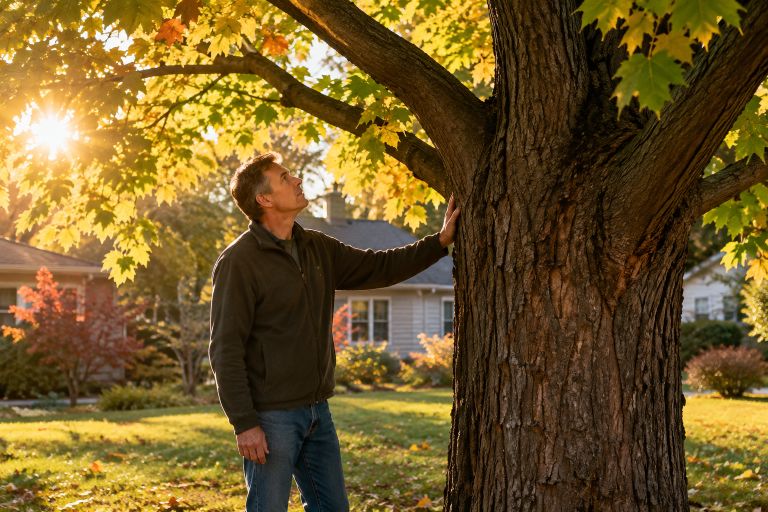
A Simple Homeowner Tree Risk Check
A visual check is not a formal tree risk assessment, but it can help Rochester homeowners recognize when to seek advice. Start at ground level and work upward:
- Check the base. Look for mushrooms, cavities, exposed roots, soil cracks, or soil lifting on one side of the tree.
- Study the trunk. Note fresh cracks, deep seams, loose bark, old wounds, or areas that appear hollow.
- Examine branch unions. Watch for tightly crowded stems, including bark, rubbing branches, and dead limbs.
- Identify targets. Consider what sits beneath the canopy, including roofs, vehicles, walkways, utility lines, and play spaces.
- Notice recent change. A new lean, sudden canopy thinning, hanging limb, or fresh crack deserves prompt attention.
Pruning Choices That Help Instead of Hurt
Good pruning has a defined purpose. It may remove deadwood, improve clearance, reduce rubbing, or guide the structure of a young tree. It should not mean cutting every low branch or stripping out large amounts of living canopy. Ask what issue the work will address, which branches will be removed, and how the work will affect the tree over time. Avoid topping, which means cutting large branches or the upper crown back to stubs. This practice can lead to vigorous but weakly attached regrowth and may leave large wounds. The City of Rochester advises residents to be cautious of companies that promote topping and encourages written descriptions of planned tree work.
What to Do After a Rochester Storm
Protect people first. Stay clear of downed wires, hanging limbs, and trees resting on buildings or vehicles. Contact your insurer when property damage occurs, document the conditions from a safe location, and hire a qualified provider for private property work—Rochester’s guidance.
When Routine Pruning Is Not Enough
A few dead limbs do not automatically mean a tree must be removed. Targeted pruning, monitoring, soil improvements, or plant health care may be suitable depending on the cause and location. However, a tree with major root failure, extensive decay, a significant new lean, or cracks near a critical union may require a more urgent recommendation. A professional assessment can distinguish between a manageable condition and a serious structural concern.
Choosing Qualified Tree Care in Rochester
Ask whether the provider is licensed and insured, whether an arborist will inspect the tree, and whether the estimate clearly states the work, price, cleanup, and debris handling. Request a second opinion before removing a large tree when time and safety allow. For boulevard trees and public-tree concerns, Rochester notes that public trees are city-managed and provides tree-care information through its forestry and tree-care programs.
Build Resilience Before the Next Storm
Rochester homeowners cannot control snow, ice, wind, or summer thunderstorms. They can improve a tree’s ability to handle those conditions through regular observation, careful pruning, appropriate watering, and prompt action when defects appear. The most effective plan is usually preventive: inspect after winter, address deadwood before storm season, monitor important trees after major weather events, and keep a record of pruning, treatments, and damage over time.
Conclusion
Rochester tree care is a year-round responsibility because snow, ice, wind, drought, storms, and freeze-thaw cycles can affect trees in different ways. Regular inspections can help homeowners notice dead limbs, cracks, root movement, decay, or changes in tree structure before these issues become more serious. Thoughtful pruning can also support healthy growth and improve clearance, while practices such as topping may create additional structural problems over time. After severe weather, safety should come first, especially when trees are leaning, branches are suspended, or power lines are involved. Homeowners can also support long-term tree health through appropriate watering, mulching, seasonal monitoring, and professional assessments when concerns arise. By taking a preventive approach and addressing warning signs early, Rochester homeowners can better protect their property while preserving healthy, valuable trees for years to come.