
Understanding Paintless Dent Repair vs. Traditional Body Work
Your vehicle is more than just transportation; it’s a significant investment that represents a considerable financial commitment. As of September 2026, maintaining its appearance and structural integrity is crucial for preserving its long-term value and ensuring its longevity. Even minor dents, dings, and surface imperfections can diminish curb appeal and potentially lead to more serious issues if left unaddressed.
Thankfully, advancements in auto repair and dent removal techniques offer effective solutions to restore your car to its pristine condition. Understanding these options can empower you to make informed decisions that protect your vehicle and its resale value.
In this comprehensive guide, we will explore the nuances of paintless dent repair (PDR) versus traditional body work, discuss what types of damage can be fixed, and provide essential tips for choosing a reliable specialist. Finding a provider who offers honest auto repair is key to ensuring your vehicle receives the best possible care without unnecessary costs. We’ll also delve into how these services protect your factory paint finish and enhance your vehicle’s overall value.
When your vehicle sustains a dent, you generally have two primary repair avenues: Paintless Dent Repair (PDR) or traditional body shop repair. While both aim to restore your vehicle’s appearance, their methodologies, benefits, and impacts on your vehicle’s value differ significantly.
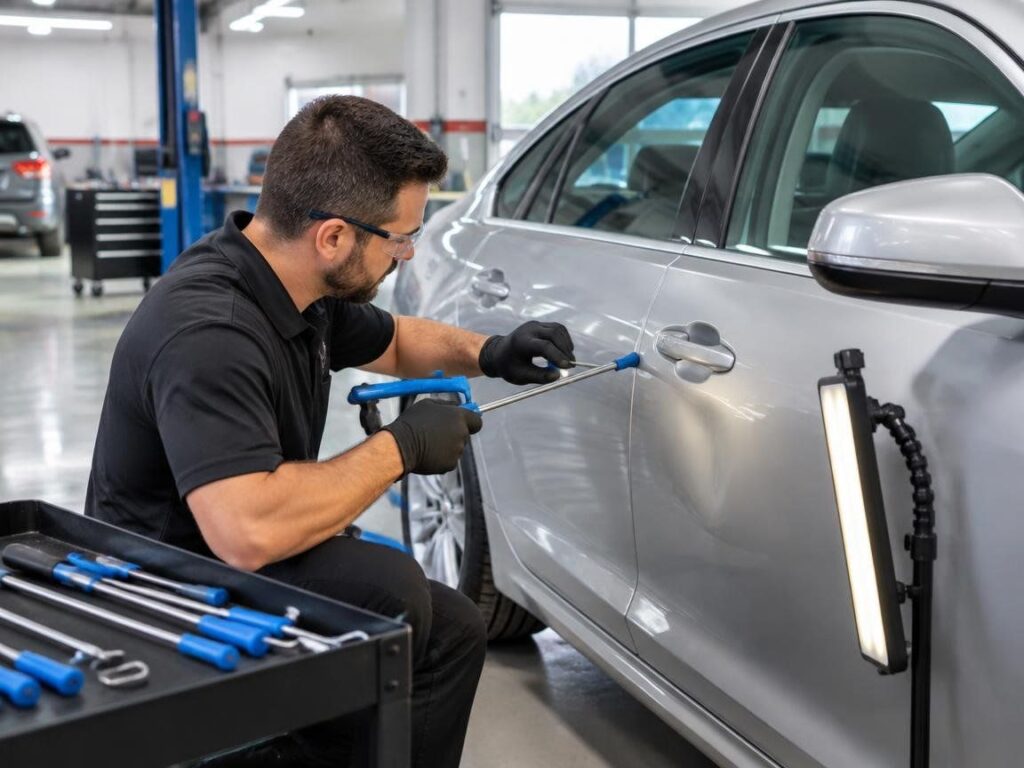
Paintless Dent Repair (PDR) is a highly specialized technique that involves meticulously massaging the metal from the backside of the panel using custom-designed tools. The goal is to gently push the dented area back to its original shape without disturbing the factory paint finish. This method relies on the metal’s “memory” and the flexibility of modern automotive paints, allowing skilled technicians to restore the panel’s smooth surface. The process is non-invasive, meaning there’s no sanding, filling, or repainting involved.
In contrast, traditional body shop repair typically addresses more severe damage, or dents where the paint has been compromised. This process often involves sanding down the damaged area, applying body filler to reshape the surface, and then repainting the affected panel. In some cases, entire panels may need to be replaced. Repainting usually requires blending the new paint with adjacent panels to ensure a seamless color match, which can be a complex and time-consuming process.
The key differences lie in several aspects. PDR preserves the original factory paint, which is a significant factor in maintaining a vehicle’s resale value. Traditional repair, by its nature, involves repainting, which can sometimes be detected by discerning buyers or during vehicle inspections. PDR is generally quicker, often completed in a few hours, while traditional repairs can take days or even weeks due to the multi-step process of filling, sanding, painting, and curing. Furthermore, PDR is typically more cost-effective as it eliminates the need for expensive materials like paint and body filler, and reduces labor time.
The choice between PDR and traditional repair hinges on the nature and severity of the damage. For minor dents and dings where the paint is intact, PDR is almost always the preferred method due to its efficiency, cost-effectiveness, and ability to maintain the vehicle’s original finish.
Modern Metal Alloys: High-Strength Steel and Aluminum
The automotive industry has seen significant advancements in vehicle construction, with modern cars increasingly incorporating advanced materials like high-strength steel (HSS), advanced high-strength steel (AHSS), and aluminum panels. These materials offer improved fuel efficiency, enhanced safety, and greater structural rigidity. However, they also present unique challenges for auto repair, including dent removal.
Fortunately, Paintless Dent Repair has evolved to accommodate these modern alloys. While traditional PDR tools might not be sufficient, specialized tooling and techniques have been developed specifically for HSS, AHSS, and aluminum. These metals behave differently under stress; aluminum, for instance, has less “memory” than traditional steel and can be more prone to stretching if not handled correctly. HSS and AHSS are incredibly strong, requiring more robust tools and precise manipulation.
Experienced PDR technicians are trained to work with these materials, understanding their unique properties and how to gently persuade them back into their original form. This expertise is crucial not only for aesthetic reasons but also for preserving the structural integrity of the vehicle. Repairing dents on these panels without compromising the material’s inherent strength is paramount for maintaining safety standards and the vehicle’s overall value. The ability to perform PDR on these advanced materials means that owners of modern vehicles can still benefit from the factory-finish preservation and cost-effectiveness that PDR offers, ensuring that even the newest models can have their minor dents expertly removed.
Eligible vs. Ineligible Damage Profiles
While Paintless Dent Repair is a highly versatile technique, it’s not a universal solution for all types of damage. Understanding what types of dents are eligible for PDR and which are not is crucial for setting realistic expectations and choosing the right repair method.
Eligible Damage Profiles for PDR typically include:
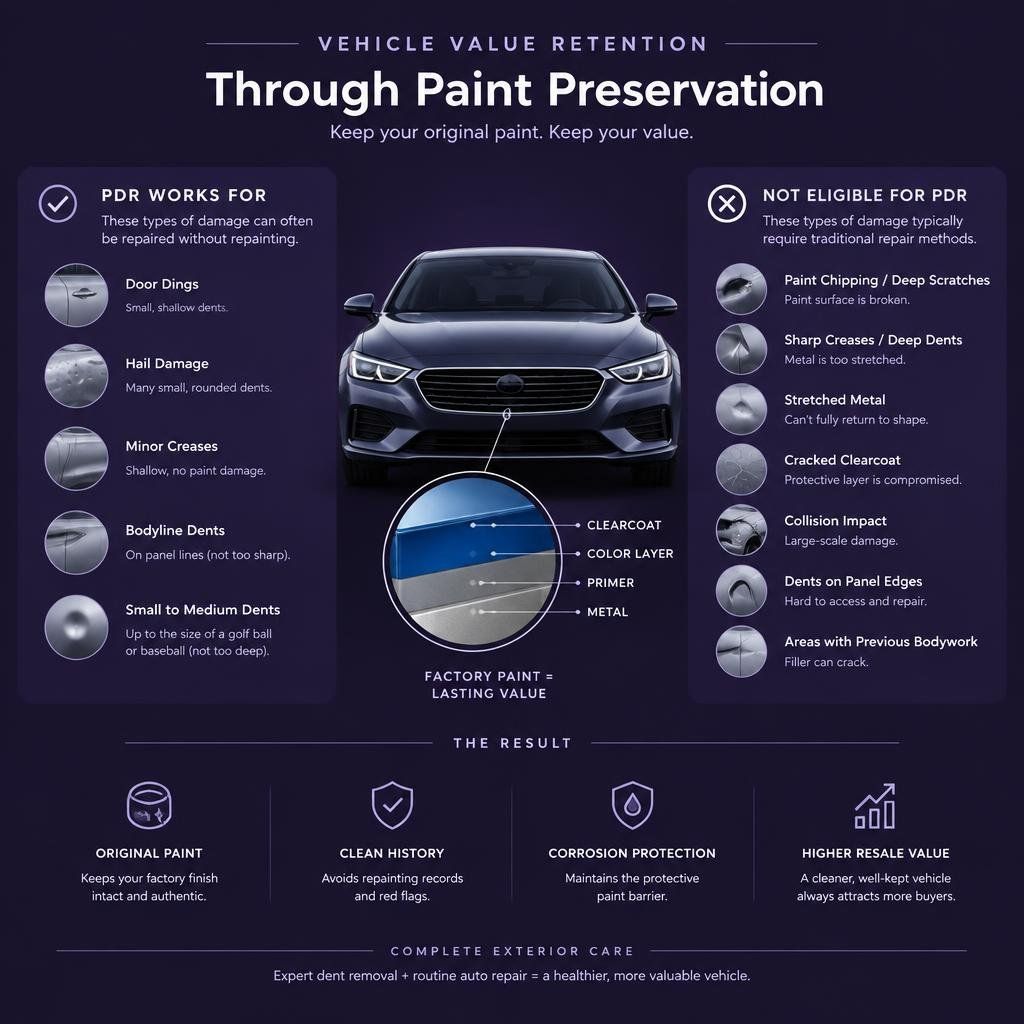
- Door Dings: These are small, shallow dents often caused by car doors hitting each other in parking lots.
- Hail Damage: PDR is the go-to method for hail-damaged vehicles, as it can efficiently remove numerous small, rounded dents without affecting the paint.
- Minor Creases: Small, shallow creases that haven’t stretched the metal excessively or chipped the paint can often be repaired.
- Bodyline Dents: Dents that occur on the vehicle’s body lines, as long as they are not too sharp or deep, can often be massaged out.
- Small to Medium-Sized Dents: Generally, dents up to the size of a golf ball or even a baseball, provided they are not too deep and the paint is intact.
Ineligible Damage Profiles for PDR typically include:
- Paint Chipping or Deep Scratches: If the paint surface is broken, PDR alone cannot fix the cosmetic damage, as it doesn’t involve repainting.
- Sharp Creases or Deep Dents: Dents with very sharp angles or those that have stretched the metal significantly may be too severe for PDR. The metal might be too fatigued to return to its original shape without cracking or further damage.
- Stretched Metal: If the impact was strong enough to stretch the metal, PDR might not be able to fully restore the panel without leaving minor imperfections.
- Cracked Clearcoat: Even if the paint color layer is intact, a cracked clearcoat means the protective layer is compromised, requiring traditional repair.
- Collision Impact: Large-scale damage resulting from collisions, which often involves bent frames, compromised structural components, or extensive panel damage, falls outside the scope of PDR.
- Dents on Panel Edges: Dents located very close to the edge of a panel can be challenging to access and repair effectively with PDR.
- Areas with Previous Bodywork: If a panel has been previously repaired with body filler and repainted, PDR is generally not possible as the filler will crack.
The key determinant for PDR eligibility is the condition of the paint and the extent to which the metal has been stretched or creased. A skilled PDR technician can assess the damage and provide an accurate evaluation of whether PDR is the appropriate and most effective repair solution for your specific situation.
The Role of Auto Repair and Dent Removal in Preserving Resale Value
Maintaining your vehicle’s resale value is a critical consideration for any car owner. The exterior condition of a vehicle plays a substantial role in its perceived value, and this is where expert auto repair and dent removal, particularly Paintless Dent Repair, truly shine.
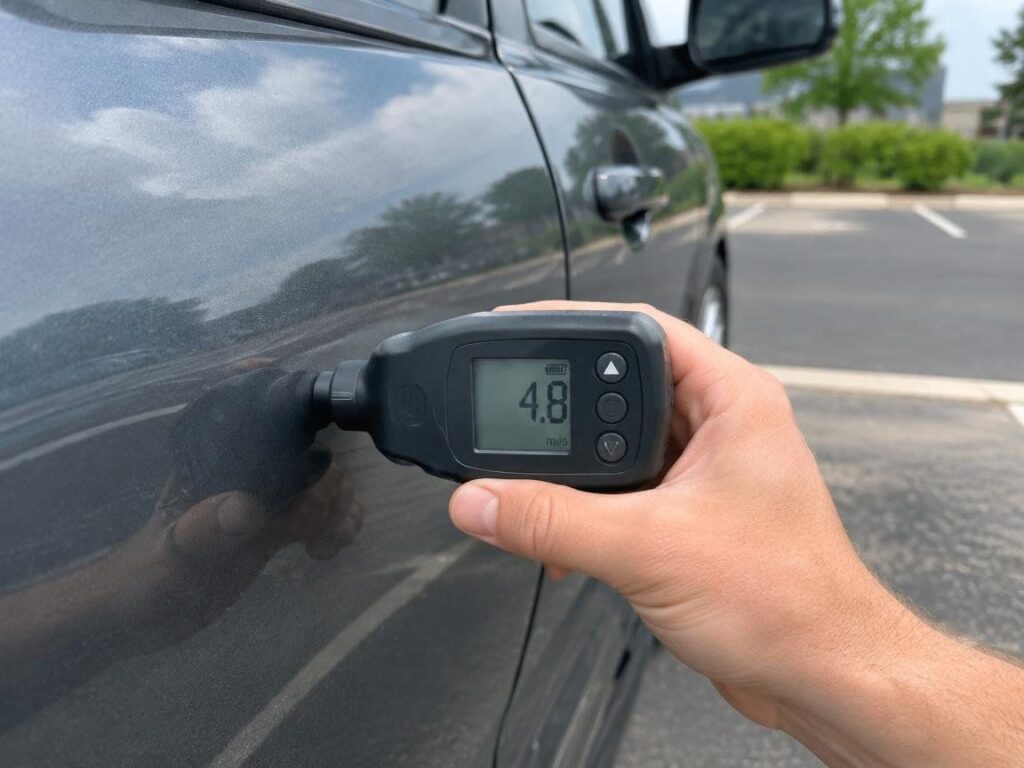
When a vehicle undergoes PDR, its original factory paint finish remains untouched. This is a significant advantage because factory paint is often superior in quality, durability, and color matching compared to aftermarket repaints. Preserving this original equipment finish helps maintain the vehicle’s authenticity and often commands a higher price on the used car market. Potential buyers and appraisers value a vehicle with its original paint, as it suggests a well-maintained car that hasn’t suffered significant damage requiring extensive bodywork.
Furthermore, by avoiding repainting, PDR ensures that the vehicle’s history remains “clean” in terms of paintwork. Traditional body repairs involving repainting can sometimes appear on vehicle history reports, potentially raising red flags for future buyers and impacting the car’s perceived value. PDR, being a non-invasive process, typically does not leave such a record, thus preserving the vehicle’s clean documentation and enhancing its appeal.
Beyond aesthetics, preserving the factory paint also acts as a crucial barrier against corrosion. Any break in the paint, even a tiny chip, can expose the metal underneath to moisture and air, leading to rust over time. By repairing dents without disturbing the paint, PDR helps maintain this protective layer, contributing to the vehicle’s longevity and preventing more costly repairs down the line. A vehicle that is structurally sound, aesthetically pleasing, and free from rust will always hold its value better.
For those who prioritize comprehensive care for their vehicles, seeking out a provider committed to excellence in all aspects of automotive service, from mechanical issues to cosmetic enhancements, is paramount. Such a commitment ensures that every facet of your vehicle’s health is addressed, contributing to its overall integrity and value.
Integrating Auto Repair and Dent Removal for Complete Exterior Care
True vehicle maintenance extends beyond just oil changes and tire rotations; it encompasses a holistic approach to preserving both mechanical performance and aesthetic appeal. Integrating expert auto repair with specialized dent removal services ensures that your vehicle receives comprehensive care, addressing both routine maintenance needs and unexpected cosmetic defects.
Routine maintenance focuses on the internal workings and mechanical wear of your vehicle, keeping it running smoothly and safely. However, the exterior is constantly exposed to environmental factors, parking lot mishaps, and everyday wear and tear. Minor dents, dings, and scratches can accumulate, detracting from your vehicle’s appearance and potentially leading to more significant issues like rust if the paint is compromised.
By combining the expertise of general auto repair with the precision of dent removal, vehicle owners can achieve a complete restoration. This means addressing any underlying mechanical issues while simultaneously restoring the exterior to its pristine condition. For instance, if a vehicle has been involved in a minor fender bender, it might require both structural alignment checks from a general auto repair shop and PDR for surface dents. A coordinated approach ensures that all damage is properly assessed and repaired, maintaining the vehicle’s structural integrity, safety features, and aesthetic value. This comprehensive care strategy safeguards your investment, enhances your driving experience, and ensures your vehicle looks as good as it performs for years to come.
The Dent Removal Process: From Estimate to Completion
Understanding what to expect during the dent removal process can help alleviate concerns and ensure a smooth experience. While the specifics may vary slightly between technicians, the general steps for Paintless Dent Repair (PDR) follow a consistent and transparent methodology.
The journey typically begins with a damage evaluation. Many reputable PDR services now offer convenient ways to get an initial estimate, often by simply texting or emailing photos of the dent from multiple angles. This allows technicians to assess the size, depth, and location of the damage, as well as the type of metal involved. Following this preliminary assessment, a more precise in-person inspection will confirm the scope of work and provide a detailed quote.
Once the repair is approved, the technician will prepare the vehicle. This often involves gaining panel access. Depending on the dent’s location, this might mean carefully removing interior panels, taillights, or other components to reach the backside of the damaged area. The goal is to create a clear pathway for the specialized tools without causing any additional damage.
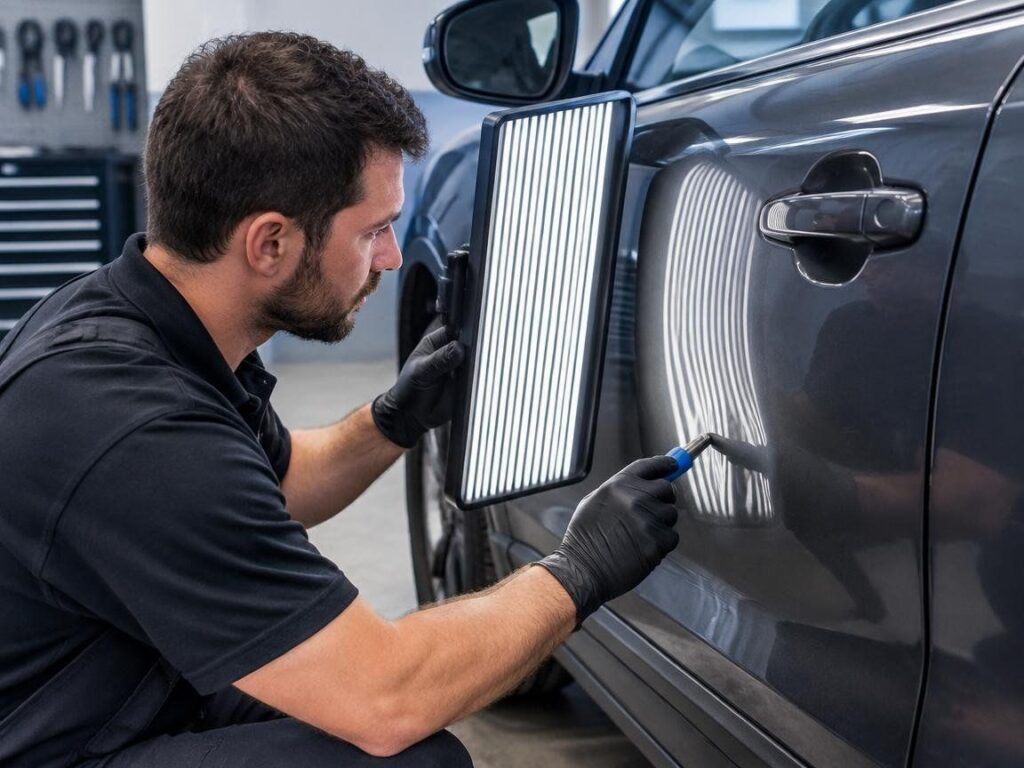
Next comes the core of the PDR process: metal manipulation. The technician uses specialized tools, which can include rods, hooks, and levers, to gently push, tap, and massage the metal from the inside out. A critical tool in this phase is the reflection board (or LED line board), which creates parallel lines on the vehicle’s surface. These lines act as a visual guide, allowing the technician to precisely identify the high and low spots of the dent and monitor their progress as the metal is gradually worked back into its original form. This meticulous process requires immense skill, patience, and a keen eye.
Throughout the repair, the technician continuously checks their work, often using different lighting angles to ensure the surface is perfectly smooth. The process is complete when the dent is no longer visible and the panel’s original contour is fully restored. The final step is a thorough final inspection by both the technician and the vehicle owner to ensure complete satisfaction.
Assessing Cost Factors in Auto Repair and Dent Removal
The cost of Paintless Dent Repair (PDR) can vary significantly based on several factors, making a precise estimate crucial before any work begins. Understanding these determinants helps vehicle owners anticipate expenses and make informed decisions.
The primary factors influencing PDR cost include:
- Dent Diameter and Depth: This is perhaps the most significant factor. Smaller, shallower dents are quicker and easier to repair, thus less expensive. As the dent size increases (e.g., from a 1-inch ding to a 3-inch dent), the cost typically rises. For instance, some experienced PDR providers might charge around $85-$100 for a 1-inch dent, while a 2.5-3 inch dent could range from $150-$200.
- Panel Location: Dents on easily accessible panels like doors or fenders are generally less costly than those on more complex or hard-to-reach areas such as roof rails, body lines, or areas requiring extensive disassembly.
- Metal Type: While PDR is possible on aluminum and high-strength steel, these materials can sometimes require more specialized techniques and tools, potentially influencing the price.
- Hail Density and Extent: For hail damage, the cost is often determined by the number of dents per panel and the overall coverage across the vehicle. Hail damage repair can range from a few hundred to several thousand dollars depending on severity.
- Accessibility: If interior panels or components need to be removed to access the dent from behind, this additional labor will contribute to the overall cost.
- Sharpness of the Dent: Dents with sharp creases are more challenging to repair than smooth, rounded ones, and may incur a higher charge.
Many PDR companies offer free estimates, which is an excellent way to get an accurate assessment of the repair cost. They can often provide these estimates quickly, sometimes within minutes, by analyzing photos of the damage. This transparency allows you to compare options and understand the investment required. For those seeking maximum convenience, the availability of a reputable service offering mobile paintless dent repair can be a significant advantage, often bringing the repair expertise directly to your home or workplace.
Navigating Turnaround Times and Insurance Claims
One of the most appealing aspects of Paintless Dent Repair (PDR) is its efficiency. Unlike traditional body shop repairs that can tie up your vehicle for days or even weeks, PDR often boasts remarkably fast turnaround times. Many minor door dings and small dents can be repaired in just a few hours, or even less than an hour for very small imperfections. This rapid service minimizes disruption to your daily routine, allowing you to get back on the road quickly.
Furthermore, the convenience is often amplified by the availability of on-site or mobile repair services. Many PDR technicians offer to come to your home, office, or other preferred location, performing the repair right there. This eliminates the need to drop off and pick up your vehicle, saving valuable time and effort. For larger jobs, such as extensive hail damage, the repair might still require a shop visit, but even then, the timeline is typically much shorter than traditional methods. Some companies even offer perks like free rental cars for larger repairs exceeding a certain amount, further enhancing convenience.
When it comes to insurance, PDR is widely recognized and covered by most comprehensive insurance policies, especially for damage caused by hail, falling objects, or minor impacts. Since PDR is often more cost-effective than traditional repairs, insurance companies frequently prefer this method.
How to file a claim for dent repair:
- Document the Damage: Take clear photos of the dents from various angles and note the date and circumstances of the damage.
- Contact Your Insurer: Notify your insurance company as soon as possible. Provide them with the details and photos of the damage.
- Get an Estimate: Obtain a detailed estimate from a qualified PDR technician. Many PDR companies are experienced in working with insurance providers and can help streamline this process.
- Understand Your Deductible: Be aware of your comprehensive deductible. Your insurance will cover the repair cost minus this amount.
- Schedule Repair: Once the claim is approved and the estimate is aligned with your insurer, schedule the repair with your chosen PDR specialist.
Key Steps for Filing a Storm Damage Claim:
- Photograph all damage thoroughly.
- Contact your insurance agent promptly.
- Obtain a detailed PDR estimate.
- Review your policy’s comprehensive coverage.
- Coordinate repair directly with your chosen PDR provider.
It’s always wise to confirm your specific policy details with your insurance agent, but generally, PDR for covered events is a straightforward process that helps restore your vehicle without a major financial burden or lengthy downtime.
How to Choose a Qualified Auto Body and Dent Specialist
Selecting the right auto body and dent specialist is paramount to ensuring high-quality repairs and preserving your vehicle’s value. With numerous options available, knowing what to look for can help you make an informed decision.
1. Verifiable Experience and Longevity: Look for technicians or companies with a proven track record. The PDR industry thrives on skill developed over years. Companies like DentXpress, serving Charleston, SC since 1993, boast over 30 years of experience. Similarly, Dented Auto, Inc. and Premier Paintless Dent Repair have over 27 and 25 years of experience respectively. Dent Repair USA has been serving Central Florida since 1999, accumulating over 25 years in the field. This extensive experience indicates a deep understanding of various vehicle types, metal alloys, and dent complexities.
2. Strong Reputation and Customer Reviews: A reliable company will have a solid reputation backed by positive customer feedback. Check online reviews on platforms like Google. For example, DentXpress is noted as the #1 Reviewed Paintless Dent Repair Company in the Lowcountry with over 400 real reviews, and Dent Repair USA holds a 5.0 rating with 430 Google reviews. These high ratings and numerous testimonials are strong indicators of trustworthiness and customer satisfaction.
3. Technician Credentials and Specialized Training: Inquire about the technician’s training and certifications. PDR is an art form that requires continuous learning to keep up with new vehicle designs and materials. A qualified specialist will be proficient in using precision tooling and advanced techniques.
4. Written Warranty: A trustworthy company stands behind its work. Ask for a written warranty on the repairs. This provides peace of mind and assurance that the work will be done correctly and last.
5. Transparency in Pricing and Communication: A reputable specialist will offer clear, upfront pricing and free estimates. They should be able to explain the repair process, the cost factors involved, and answer all your questions without hesitation. Avoid companies that provide vague estimates or pressure you into immediate repairs.
6. Before-and-After Portfolios: Many experienced PDR technicians showcase their work through before-and-after photos. This allows you to visually assess the quality and precision of their repairs.
7. Professionalism and Customer Service: From your initial contact to the completion of the repair, assess the company’s professionalism. Are they courteous, responsive, and clear in their communication? Excellent customer service is often a hallmark of a reliable business.
By prioritizing these factors, you can confidently choose a qualified auto body and dent specialist who will restore your vehicle’s appearance with expertise and integrity.
Frequently Asked Questions About Auto Repair and Dent Removal
Does paintless dent repair show up on vehicle history reports?
One common concern for vehicle owners is how repairs might affect their car’s vehicle history report (VHR), such as those provided by CarFax or AutoCheck. The good news is that Paintless Dent Repair (PDR) generally does not show up on these reports. This is because PDR is a non-invasive repair method that preserves the vehicle’s original factory paint and does not involve replacing panels, sanding, or repainting.
Traditional body shop repairs that involve painting or panel replacement are more likely to be reported to these databases, as they signify more significant damage and alterations to the vehicle’s original condition. Since PDR maintains the integrity of the original panels and finish, it typically leaves no trace that would be flagged by these reporting services. This is a significant advantage for preserving your vehicle’s clean documentation and its resale value, as a “clean” history report is highly desirable for potential buyers.
How do modern vehicle safety sensors affect dent removal?
Modern vehicles are equipped with an array of advanced driver-assistance systems (ADAS) and safety sensors, including radar, ultrasonic sensors, and cameras, which are crucial for features like adaptive cruise control, blind-spot monitoring, and parking assistance. When dents occur near these sophisticated components, it introduces an additional layer of complexity to the repair process.
PDR technicians working on modern vehicles must possess a thorough understanding of these systems. Dents on panels housing ADAS sensors, such as bumpers, side mirrors, or specific body panels, require extreme care. The PDR process itself, while non-invasive, must be performed without disturbing the sensor’s calibration or functionality. In some cases, if a dent is directly over a sensor or if the impact was severe enough to potentially misalign it, the sensor might need to be temporarily removed and then professionally recalibrated after the PDR is complete. This ensures that all safety features continue to operate correctly. Choosing a PDR specialist experienced with modern vehicles and their complex electronics is vital to avoid compromising your vehicle’s safety systems.
Will insurance rates increase after filing a dent repair claim?
The impact of filing a dent repair claim on your insurance rates depends largely on the type of coverage used and the circumstances of the damage. For damage caused by events like hail, falling objects, or vandalism, the repair is typically covered under your comprehensive insurance policy. Comprehensive claims are generally considered “no-fault” incidents, meaning they are not attributed to your driving behavior. As such, filing a comprehensive claim for PDR (especially for widespread damage like hail) is far less likely to cause an increase in your insurance premiums compared to an at-fault collision claim.
However, it’s important to note that insurance policies and state regulations vary. While a single comprehensive claim might not directly increase your rates, a history of multiple claims, even no-fault ones, could potentially lead to a premium adjustment or non-renewal in some instances. Your deductible will also apply, meaning you’ll pay that amount out-of-pocket, and your insurer will cover the rest.
To get the most accurate information regarding your specific situation, it’s always best to consult directly with your insurance agent. They can review your policy details and advise you on the potential implications of filing a claim for dent repair.
Conclusion
In September 2026, preserving your vehicle’s value is more important than ever, and expert auto repair and dent removal play a pivotal role in this endeavor. From the precision of Paintless Dent Repair that safeguards your factory finish and vehicle history, to the comprehensive care that addresses both cosmetic and mechanical needs, making informed choices about your vehicle’s maintenance is an investment in its future.
By understanding the nuances of PDR versus traditional methods, recognizing eligible damage, and knowing how to select a highly experienced and reputable specialist, you empower yourself to protect your automotive asset. Prioritizing preventative care and professional maintenance ensures that your vehicle not only looks its best but also retains its equity and provides reliable transportation for years to come. A well-maintained vehicle, free from unsightly dents and dings, reflects responsible ownership and maximizes your long-term ownership satisfaction and financial return.