
Key Takeaways
- Choose jewelry around daily comfort, routines, wardrobe, and personal taste.
- Start with versatile essentials, then add distinctive pieces with personal meaning.
- Consider metal, gemstone durability, setting security, and care needs before buying.
- Use rings, watches, pendants, and heirlooms to celebrate important milestones.
- Ask about documentation, repairs, sizing, returns, and sourcing for major purchases.
Table Of Contents
- Start With Your Life, Not a Trend
- Build a Practical Jewelry Foundation
- Choose Metals That Suit Your Routine
- Compare Gemstones by Beauty and Wear
- Shop for Rings With Daily Comfort in Mind
- Choose a Watch That Matches Your Schedule
- Use Jewelry to Mark Meaningful Moments
- Check Quality Before You Buy
- Care for Jewelry in Simple Steps
- Common Questions About Choosing Jewelry
- Final Thoughts
Jewelry is most rewarding when it feels like a natural part of everyday life, not an item reserved for a box or a special event. Whether you are browsing designer jewelry and luxury watches for yourself or choosing a gift, begin with the person, the occasion, and the way the piece will actually be worn.
Personal style has room for classic pieces, modern shapes, sentimental designs, and bold accents. The goal is not to follow a strict formula. It is to choose jewelry that feels comfortable, works with an existing wardrobe, and continues to hold meaning over time.
Start With Your Life, Not a Trend
Consider where and when a piece will be worn before focusing on color, size, or price. Someone who works with their hands may prefer a low-profile ring. A person who travels often may value secure clasps and easy-to-pack pieces. For formal events, statement earrings or a striking pendant may have more use than an everyday bracelet.
It can also help to notice which accessories are already worn most often. A person who reaches for a favorite pair of earrings every morning may appreciate another easy, lightweight option. At the same time, someone who rarely wears necklaces may prefer a watch or ring instead. The best choice should fit naturally into existing habits rather than require an entirely new routine.
Ask practical questions before shopping:
- Will this be worn daily, occasionally, or for one particular event?
- Does the wearer prefer subtle designs or noticeable pieces?
- Will the jewelry be exposed to movement, water, lotions, or workplace demands?
- Does it need to coordinate with other jewelry already owned?
Build a Practical Jewelry Foundation
A useful collection does not need to be extensive. A few adaptable pieces can cover workdays, casual plans, celebrations, and meaningful occasions. Begin with items that can be repeated often without feeling limiting.
Versatility does not have to mean choosing only minimal designs. A distinctive texture, an interesting chain, a colored stone, or a meaningful initial can still be easy to wear when the scale and proportions suit the wearer. Building slowly also gives a person time to learn which styles are truly used regularly.
Helpful Foundation Pieces
- Simple studs, small hoops, or another preferred everyday earring style
- A chain necklace, pendant, or short necklace that layers easily
- A comfortable ring or slim band
- A bracelet, bangle, or watch suited to regular wear
- One symbolic piece, such as an engraved pendant or birthstone design
Choose Metals That Suit Your Routine
Metal influences a piece’s color, feel, maintenance needs, and price. Yellow gold offers warmth, while white gold and platinum create a cooler appearance. Rose gold has a soft pink tone, and sterling silver provides a bright, versatile look. Trying on several options can reveal which tone works best with skin tone, wardrobe, and existing jewelry.
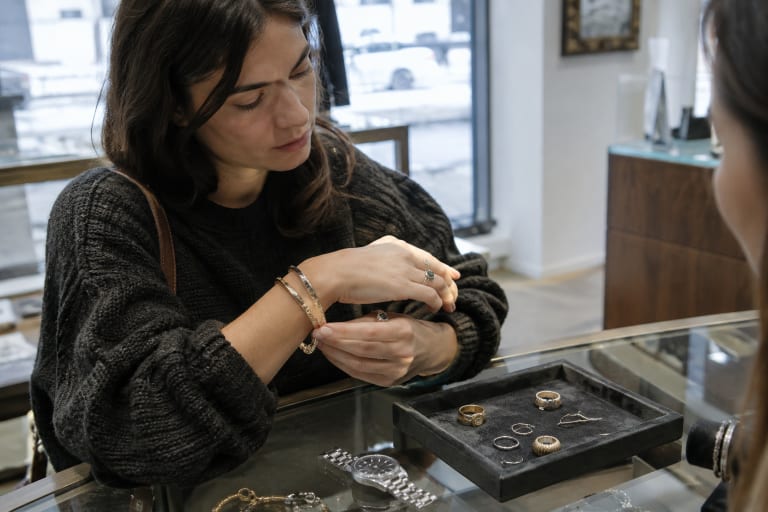
Also ask about the alloy used in the piece, especially if the wearer has experienced skin irritation from jewelry before. Scratches and surface wear are normal over time, but different metals and finishes can show them differently. Two-tone jewelry can be especially useful for people who already wear more than one metal color.
Compare Gemstones by Beauty and Wear
Gemstone shopping should balance appearance with the demands of everyday use. Think about how exposed the stone will be, how much protection the setting provides, and whether the owner is comfortable following specific cleaning instructions. Some stones require more careful handling around heat, chemicals, or impact than others.
For diamond purchases, the cut, color, clarity, and carat weight provide a useful framework for comparing diamonds. It is also worth viewing a stone under more than one type of lighting, since sparkle and color can appear different from one setting to another.
Shape and setting can change the overall look of a gemstone as much as its size. For example, a halo, bezel, or multi-stone design may create a different visual effect from a simple solitaire. When comparing options, look at the complete piece on the hand, wrist, or neckline rather than evaluating the stone in isolation.
Shop for Rings With Daily Comfort in Mind
Rings deserve extra attention because they are often worn for long stretches of time. A setting that looks beautiful in photographs may be less practical if it catches on clothing, gloves, or hair. Try on different designs and move your hand normally before making a decision.
Ring Details Worth Comparing
- Bandwidth: Wider bands make a stronger visual statement, while slimmer bands may stack more easily.
- Setting height: Lower settings may be less likely to snag during daily activities.
- Edge shape: Rounded inner edges can improve comfort during extended wear.
- Size: Finger size can vary with temperature, time of day, and activity.
- Future stacking: Leave room for a wedding band or additional ring if that is part of the plan.
Choose a Watch That Matches Your Schedule
A watch can be a functional tool, a personal accessory, or both. Consider case diameter, thickness, dial readability, strap or bracelet material, and water resistance before choosing a style. The most suitable watch is generally one that sits comfortably on the wrist and works with the wearer’s typical clothing.
Quartz watches are battery-powered, while automatic and mechanical watches rely on mechanical movements and may require periodic servicing. A leather strap can feel refined and lightweight, while a metal bracelet may better suit someone seeking a more durable, all-purpose option.
Try a watch on before buying whenever possible, especially when selecting a larger case or a bracelet-style band. The watch should not feel excessively heavy, slide around the wrist, or interfere with normal movement. A clear dial and comfortable fit can matter more in daily use than a feature that will rarely be needed.
Use Jewelry to Mark Meaningful Moments
Jewelry often becomes more valuable emotionally as the years pass. Engagement rings, wedding bands, graduation watches, anniversary gifts, and family pendants can preserve the memory of an important chapter. An engraving, birthstone, meaningful date, or symbolic motif can make a piece feel distinctly personal.
Heirloom jewelry can also be redesigned or restored when appropriate, allowing its story to continue in a form that suits the next wearer. Before altering an older piece, document its original condition and discuss the options with a qualified jeweler.
Check Quality Before You Buy
Examine clasps, hinges, prongs, links, and settings closely. Look for even finishing and secure construction, and ask about metal markings, gemstone documentation, resizing, warranties, repairs, and return policies. For valuable stones, an independent grading report or appraisal may be helpful for records and insurance.
Responsible sourcing may also matter to the buyer. Questions about traceability, supplier standards, and business practices can help guide a purchase, particularly when choosing gold or a major gemstone piece. The environmental and social factors connected to gold mining are part of the broader sourcing conversation.
Care for Jewelry in Simple Steps
- Remove jewelry before swimming, showering, or using harsh household cleaners.
- Store pieces separately in soft compartments to limit scratches and tangles.
- Wipe away everyday residue with a clean, soft cloth.
- Check prongs, clasps, and hinges periodically for signs of looseness or wear.
- Follow professional guidance for delicate materials, including pearls, opals, and emeralds.
When in doubt, avoid experimenting with aggressive cleaners or abrasive materials. A jeweler can recommend an appropriate cleaning method based on the metal, gemstones, setting, and condition of a particular piece. Regular care is usually easier than trying to correct avoidable wear later.
Common Questions About Choosing Jewelry
How many pieces of jewelry does a person need?
There is no required number. A small collection can be highly effective when it includes dependable everyday options, one or two dressier pieces, and items that carry personal meaning.
Should jewelry match every outfit?
No. Coordinating metal tones, shapes, or colors can create a cohesive look without making every piece match exactly.
Is trendy jewelry worth buying?
It can be. Trend-focused pieces are a good way to explore new looks, especially when balanced with versatile designs that will remain useful beyond one season.
Final Thoughts
The best jewelry choices support the life being lived now while leaving room for future milestones. Start with comfort, quality, and versatility, so each piece feels natural to wear and works across many occasions. Then choose the details, such as engraving, gemstones, or metal tone, that make a piece personal. A thoughtfully chosen ring, watch, pendant, or pair of earrings can become part of a daily routine, gather meaning over time, and grow into a lasting story worth passing along.